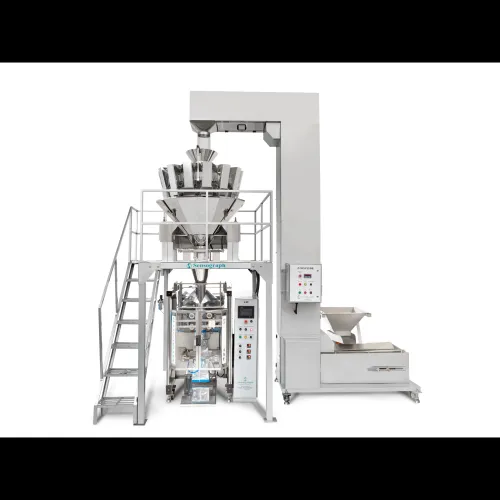

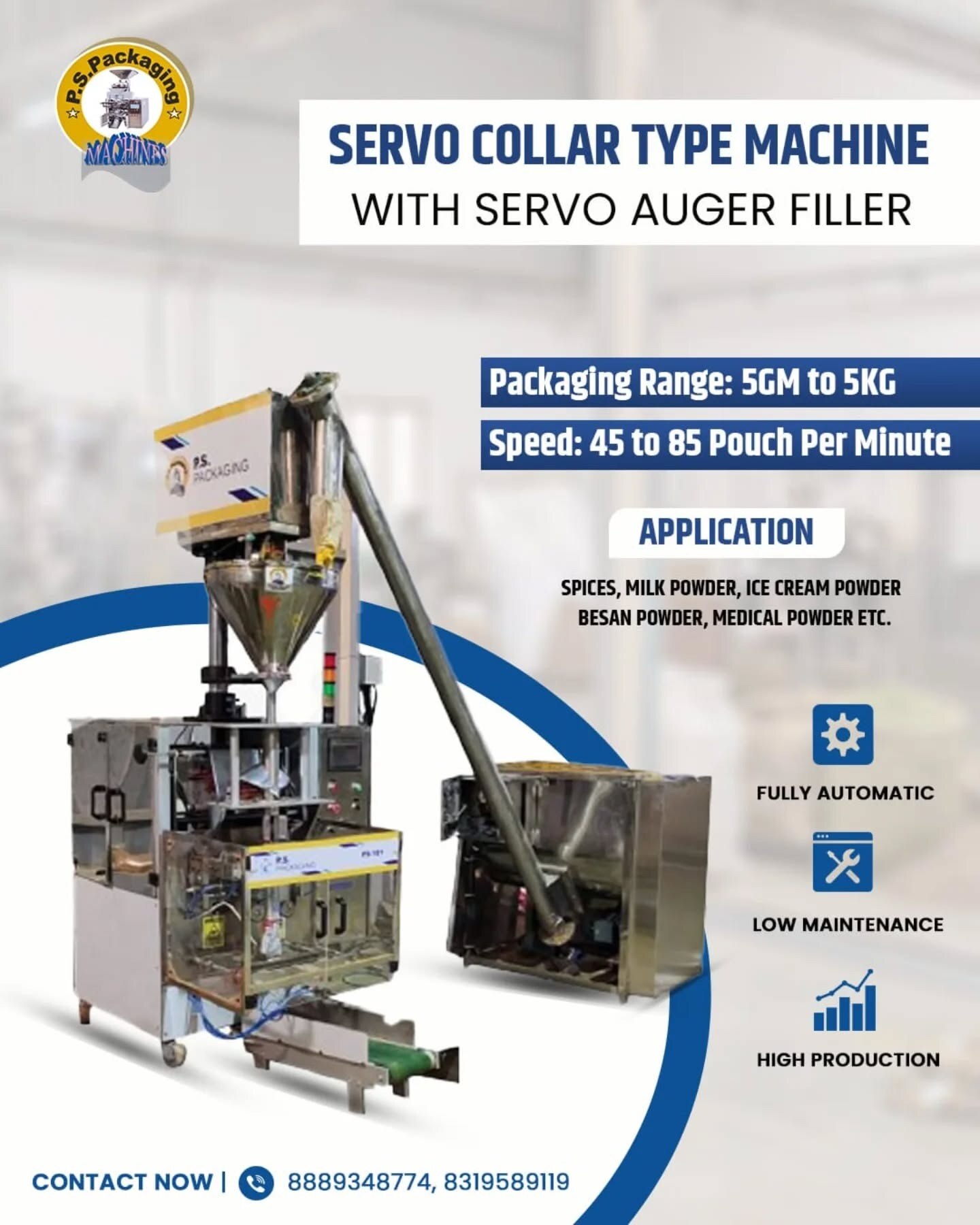
A pouch line can stop because of a weighing fault, a blocked feeder, incorrect discharge timing, a dirty photo-eye, poor film tracking, or a defective seal. Use the checks below to isolate the fault before changing calibration settings, replacing sensors, or calling for multihead pouch packing repair.
Key takeaways
- Check discharge-chute weight before changing weigher settings.
- Clear product bridging and stabilize feed before recalibrating.
- Test pouch length, film tracking, and seal temperature separately.
- Start repair after site checks isolate a mechanical or electrical fault.
Start with the fault location before changing settings
A faulty pouch does not prove a faulty multihead weigher. For automatic pouch packing for machine multihead filling problems in indore, locate the fault by checking the product weight at the discharge chute before changing calibration, target weight, or combination settings.
1. Stop the line and collect several discharges directly from the weigher chute. Weigh each one on a verified bench scale. Accurate chute weights point to the pouch-forming, film-tracking, registration, sealing, or cutting section.
2. Compare the chute weight with the finished pouch. If the chute is correct but the pouch is underweight, inspect missed drops, product spillage, jaw timing, and the transfer funnel. If the pouch weight is correct but the seal leaks or opens, recalibration will not solve the defect.
3. Check the forming collar, film path, registration mark sensor, pull belts, sealing jaws, and knife. Look for film drift, incorrect pouch length, wrinkles across the seal, or product trapped in the seal.
4. Read the control-panel fault history before adjusting the target. Voltage dips, loose terminals, poor earthing, inverter alarms, and servo faults can cause missed discharges or registration loss.
5. Confirm that every weighing hopper moves freely. Remove product buildup or contact from brackets and cable guards, then check zero stability and repeatability. Preserve load-cell cable routing and shielding; do not run replacement cables beside high-current motor wires.
Record individual pack weights, rejected cycles, and seal defects across a meaningful run. Stop site adjustments and arrange qualified multihead pouch packing repair when alarms persist, zero will not stabilise, or mechanical contact and cable damage remain.
Correct inaccurate weights, bridging, and unstable readings
A pouch that is underweight, overweight, or inconsistent needs a measured check, not repeated target-weight adjustments. Place a calibrated test scale at the multihead weigher discharge and compare individual packs with the displayed values; an acceptable average can hide severe underweight packs.
1. Stop and inspect product flow. Remove bridging above the feed gates, break compacted material, and clean buildup from weigh hoppers. Confirm that every hopper opens fully and that no product, bracket, tool, or cable guard touches the weighing assembly.
2. Check zero stability with empty hoppers, then verify calibration using the specified test mass. If zero drifts, inspect load-cell mounting, cable strain, connector condition, shielding, and routing beside motor or inverter wiring before recalibrating.
3. Correct the cause of poor combinations. If each head holds too much product for the target, the controller has fewer combinations near target, causing giveaway, waiting, or missed discharges. Adjust feed quantity and combination limits only after confirming the target weight and head balance.
4. Record a meaningful run of individual weights. Separate mean giveaway, weight spread, rejected or missed cycles, and seal defects; do not approve the line from its average alone. Check incoming voltage, earthing, loose terminals, and the control-panel fault history when readings or discharges are intermittent.
This sequence is central to multihead packing machine troubleshooting in Indore. If readings remain unstable after mechanical, electrical, and calibration checks, stop production and arrange qualified multihead pouch packing repair; preserve the original load-cell and servo-cable routing, then verify zero, repeatability, and fault interlocks after repair.
Solve ten-head and fourteen-head weigher faults
Check product distribution and usable combinations before replacing a load cell. Ten-head packing machine problems often arise because each hopper holds too much product for the target, leaving too few combinations near target and causing giveaway, slow cycles, or missed weighments.
A ten-head weigher has 1,023 theoretical non-empty combinations; a fourteen-head model has 16,383. Product flow, minimum fill, hopper timing, and target weight reduce those choices during production.
Run these checks:
- Confirm every hopper receives product. Compare feeder amplitude, inspect for a partly blocked radial feeder, and clear bridging or buildup before changing speed.
- For an overload, empty the affected hopper, check gate movement, inspect the load-cell mounting for contact, and verify that the target weight and upper limit are correctly entered.
- If the controller reports insufficient combinations, reduce excessive hopper fill, correct uneven distribution, and check that minimum-fill settings do not exclude usable hoppers.
- For missed or late discharges, compare weighment-complete, discharge, and pouch-index signals in the timing screen. Check chute blockage and collection-chute discharge time before increasing speed.
- Fourteen-head packing machine issues frequently follow faster operation: unequal feeder amplitude and product accumulating in a few hoppers leave heads unavailable. Restore even flow before raising the target speed.
- Read the fault history and check incoming voltage, loose terminals, earthing, inverter alarms, and servo alarms. A supply fault can cause missed discharges without a calibration error.
Stop and isolate the machine if alarms return, a hopper weighs erratically, or a load cell shows physical damage.
Find pouch-length, film-tracking, and sealing defects
Begin at the discharge chute: weigh individual pouches and compare the result with the displayed multihead value. If the fill weight is correct, stop changing weigher calibration and inspect the pouch path instead; calibration cannot correct a wrong cut position or leaking seal.
Check the film system in this order:
- Measure the actual mark-to-cut distance against the programmed pouch length. Observe the photoelectric mark sensor during each cycle; clean its lens and check mark contrast, polarity, and registration gain before replacing it.
- Watch the encoder or film-pull feedback while the film advances. Slip at the pull belts produces changing pouch lengths even when the sensor reads correctly.
- Track the film through the forming collar. Film running off-centre, excessive tension, or a misaligned collar creates diagonal cuts, uneven sides, and wrinkled seals.
- Inspect the seal jaws for product dust or film residue. A wrinkled, leaking, or open seal points to contamination, short dwell time, uneven pressure, poor jaw parallelism, or film entering outside its specified sealing-temperature range.
- Let the jaws reach thermal steady state, then check seal integrity across the machine’s speed range. Temperature alone does not prove a sound seal; inspect the entire seal for channels, unbonded areas, and product trapped in the joint.
Record defects by product lot and season. Humidity, static, and caking in Indore can alter film behaviour and create faults that disappear after a dry-weather adjustment.
Decide when site checks end and repair begins
Stop changing target weight after the discharge-chute test confirms that the weigher is accurate but the pouch still has a length, registration, forming-collar, cutting, or sealing defect. Calibration cannot fix a misregistered film path or a leaking jaw.
End site checks and arrange qualified multihead pouch packing repair when any of these conditions remains:
- Zero does not stay stable, or individual weights drift after removing product and confirming that no hopper, bracket, tool, cable guard, or buildup touches the weighing assembly.
- The fault history shows inverter, servo, sensor, or controller alarms, or the machine misses discharges after you check the incoming voltage, terminals, earthing, and connectors.
- A load-cell or sensor cable is damaged, substituted, poorly shielded, strained, or routed alongside high-current motor wiring. The repair must restore the original routing rather than hide the symptom through recalibration.
- Weight spread, missed cycles, rejected packs, or seal defects remain unacceptable during a recorded run of individual packs, even when the displayed average looks correct.
- Seals leak after the jaws reach thermal steady state, with clean surfaces and verified dwell, pressure, parallelism, temperature, and machine speed.
Ask PS PACKAGING to document zero stability, repeatability, fault interlocks, and seal integrity after repair. Do not accept a successful startup as proof that the line is fixed.
Related products
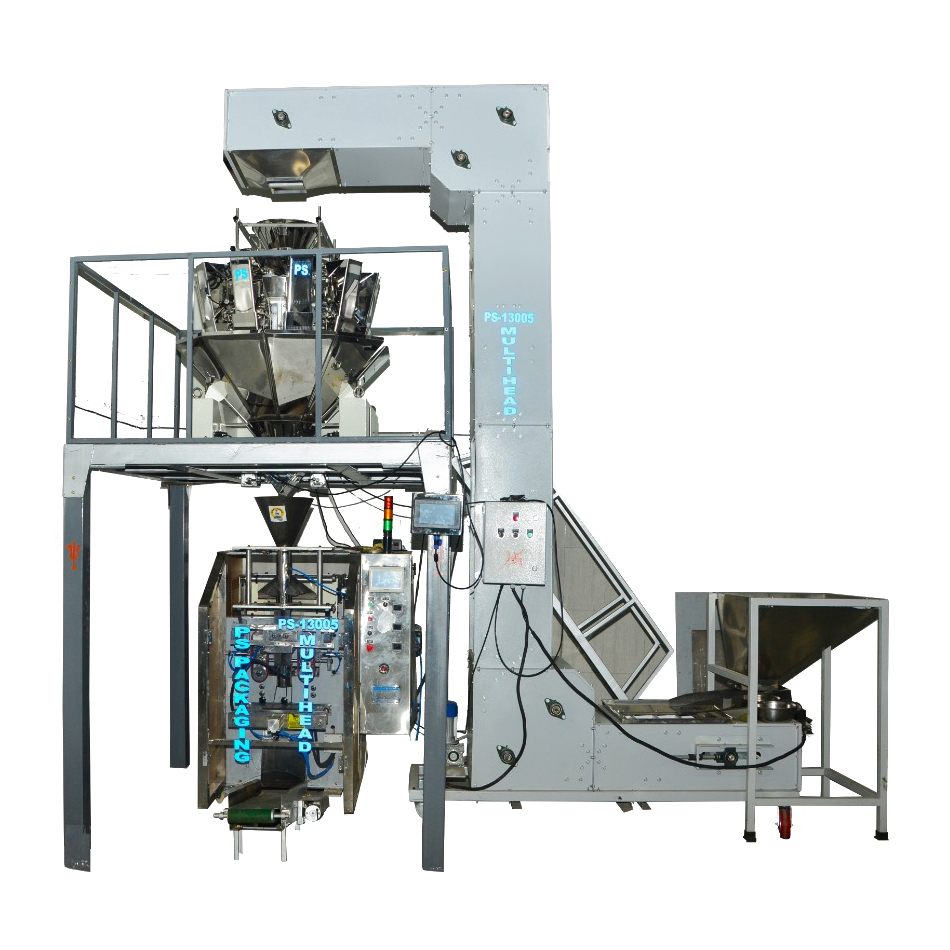 | Multihead Head Packing Machine Multihead Packing Machine The Multihead Packing Machine is a fully automatic, high-speed packaging solution designed for precise weighing, filling,... View product → |
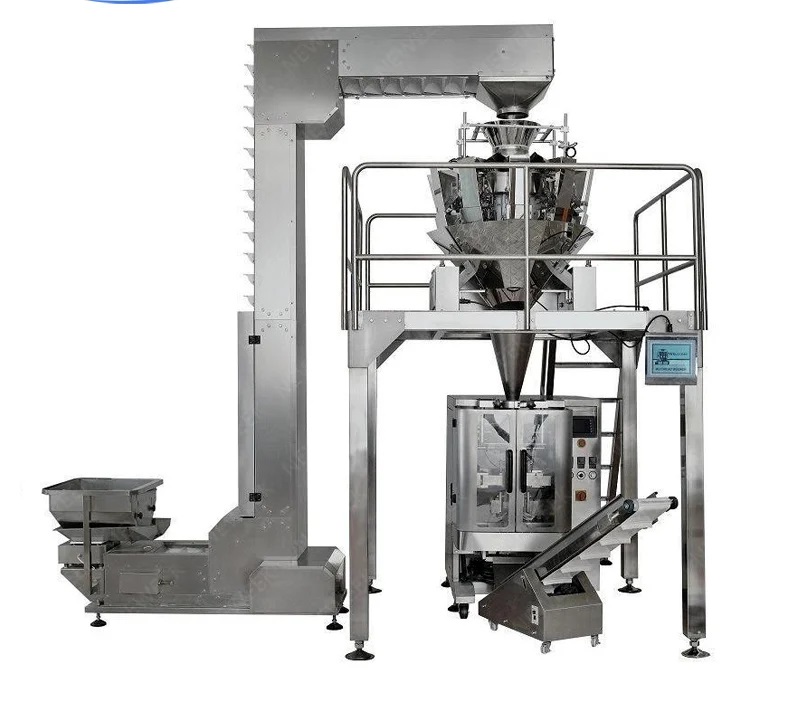 | Multihead Head Packing Machine Multi Head 10 Head Packing Machine Manufacturer & Supplier in Indore | PS Packaging Price: Get Best Price / Request a Quote MOQ: 1 Unit The Multi Head 10 Head Packing Machine from PS... View product → |
Frequently asked questions
How do you locate an automatic pouch packing machine filling fault?
Check the product weight at the multihead weigher discharge chute before changing calibration, target weight, or combination settings. This separates a weighing fault from a pouch-forming or sealing fault.
How do you correct inaccurate weights, bridging, and unstable readings?
Inspect product flow, hopper buildup, bridging, load-cell stability, and feeder timing. Remove compacted material, keep the feed consistent, and recalibrate only after the mechanical cause is corrected.
What causes ten-head packing machine problems and fourteen-head packing machine issues?
Check hopper gates, load cells, product distribution, discharge timing, and combination selection. The number of heads does not identify the fault; compare each head’s filling behaviour and weight readings.
When should multihead pouch packing repair begin?
Begin repair when cleaning, product-flow checks, calibration, film alignment, and seal-setting checks do not remove the fault. Record the failed test and isolate the affected mechanism before replacing parts.
Related product
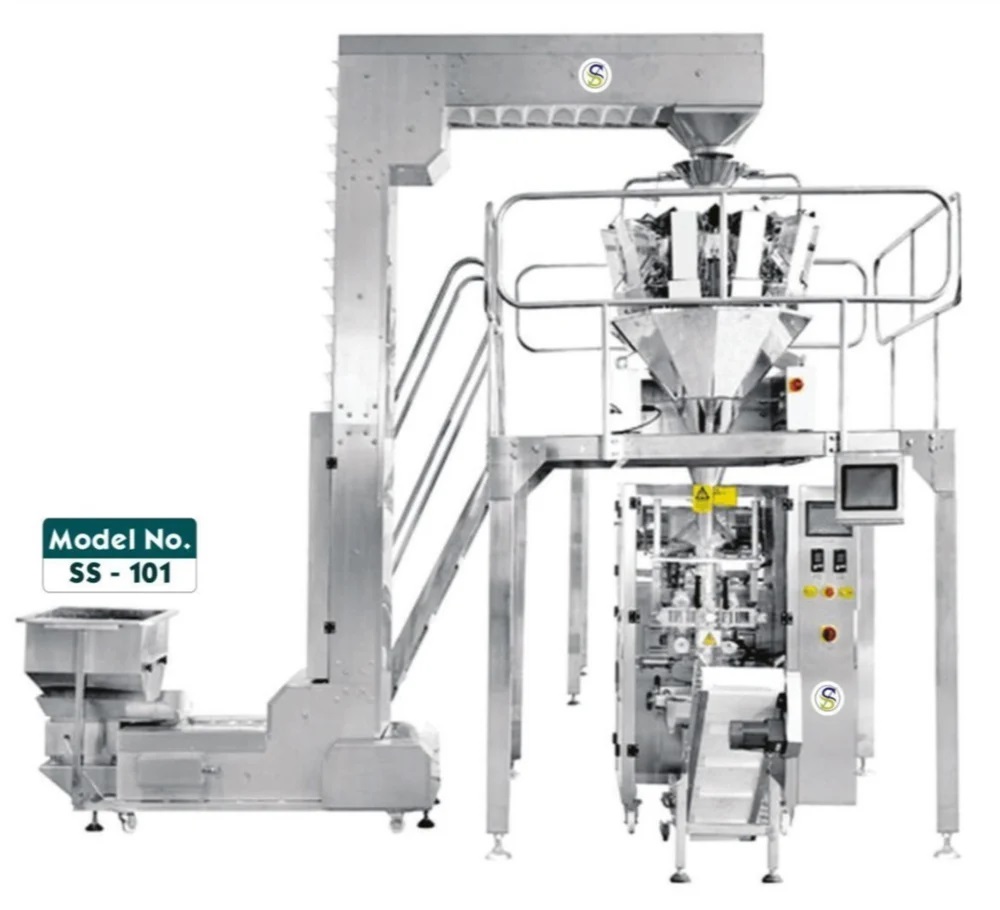 | Multihead Head Packing Machine Multi Head 14 Head Packing Machine Manufacturer & Supplier in Indore | PS Packaging Price: Get Best Price / Request a Quote MOQ: 1 Unit The Multi Head 14 Head Packing Machine from PS... View product → |