
Choosing between four, 10, and 14 weighing heads depends on more than advertised bags per minute. You will be able to calculate the required output, compare giveaway and operating cost, test peanut-handling performance, and specify the machine and supplier checks that matter before requesting a quotation.
Key takeaways
- Choose four heads for lower output, simpler products, and limited production runs.
- Use 10 or 14 heads when speed and weighing combinations justify added cost.
- Compare giveaway, labour, changeover time, maintenance, and output—not bags per minute alone.
- Verify peanut size range, target weight, seal quality, electrical supply, and local service before buying.
How a multihead peanut weigher turns loose kernels into sealed pouches
1. Load loose peanuts into the product hopper. Feeder channels distribute them into individual weigh hoppers, where each hopper holds a measured portion. Stable feeding matters: irregular flow makes some hoppers underfilled and slows the weighing cycle.
2. The controller checks the filled hoppers and selects the combination whose total is closest to the target weight. It opens those hopper gates, releasing the charge through the collection chute into the waiting pouch.
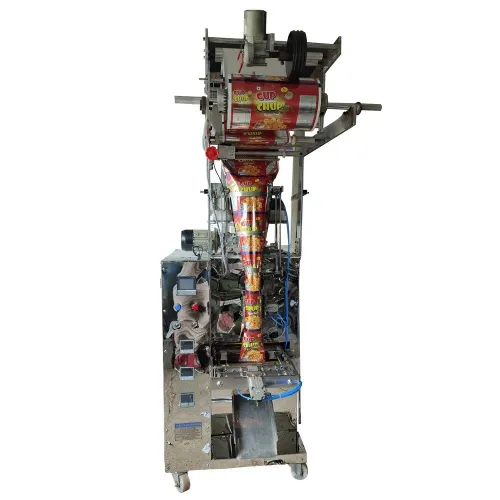
3. At the same time, the VFFS bagger pulls film around a forming collar, makes the longitudinal seal, opens the pouch, receives the peanut charge, and completes the top seal.
4. Synchronise both machines. The weigher must release only when the pouch is ready, while the bagger must seal after the peanuts clear the seal area. Poor timing produces empty pouches, double fills, peanuts trapped in seals, and stoppages.
5. Extra heads do not automatically mean more bags per minute. Actual output is limited by feeder stability, weighing-cycle time, discharge clearance, film-pulling speed, sealing time, and peanut flow. A multihead packing machine can lose its theoretical advantage when product bounces, clumps, or clears the chute slowly.
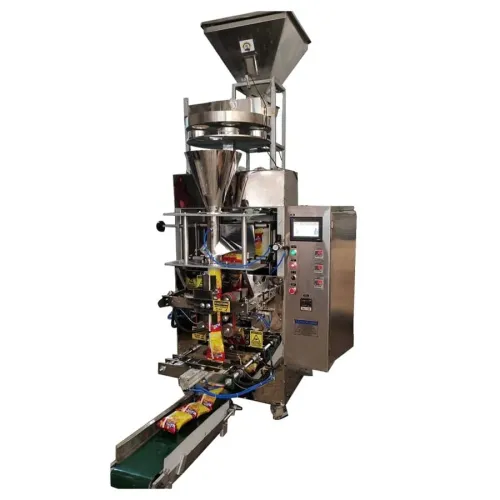
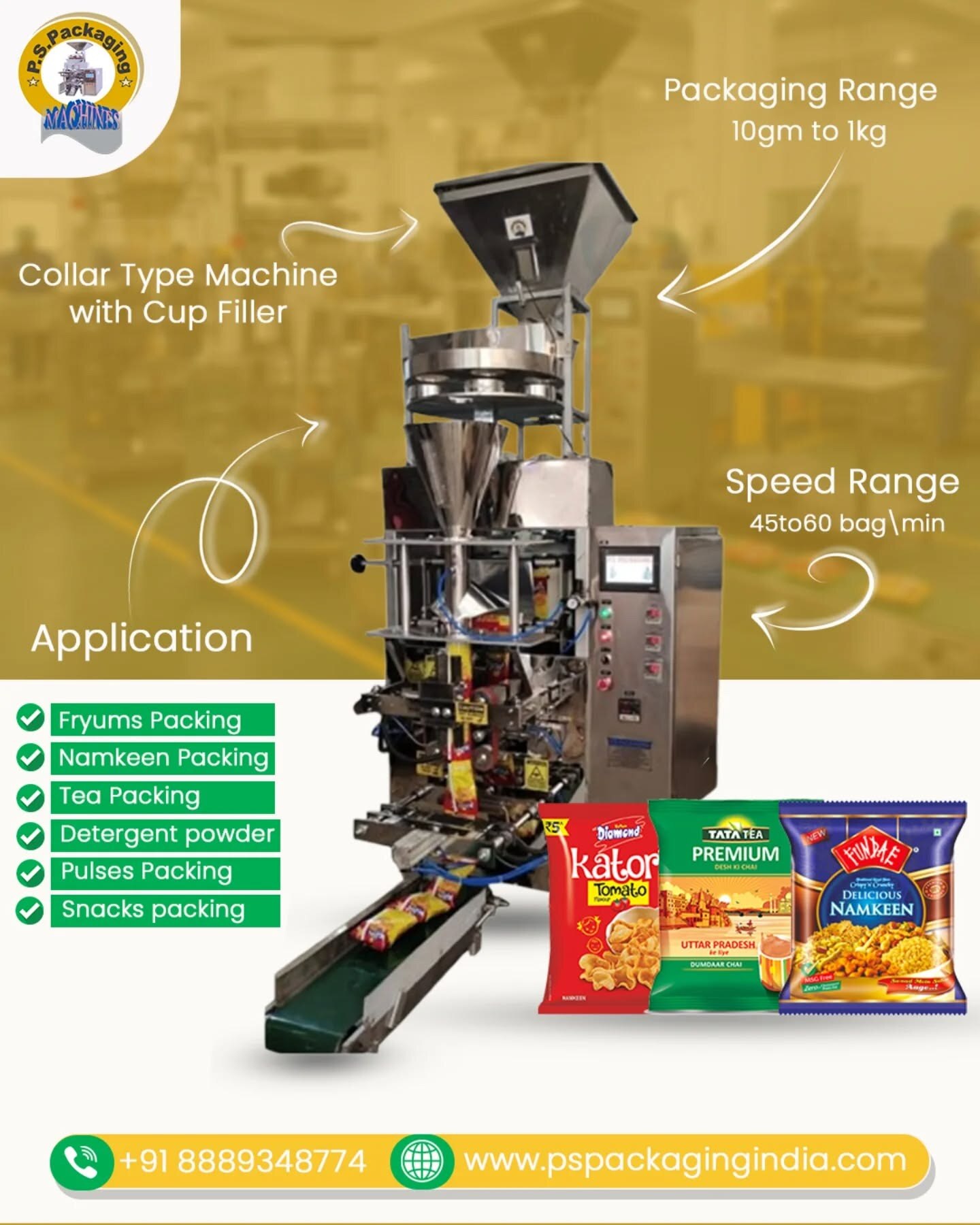
6. Check “four-head” carefully in an Indian quotation: it may mean a four-lane linear weigher or a four-head combination weigher. Before comparing any peanut packing machine, ask for the number of weigh hoppers, layout drawing, hopper volume, and target-weight range.
What four, 10, and 14 heads change for different peanut grades
Head count changes the number of weight combinations available, not a guaranteed bags-per-minute figure. A four-head combination weigher has 15 non-empty combinations; a 10-head unit has 1,023. A 14-head unit has 16,383. More combinations can find a closer target when peanut distribution is consistent, reducing giveaway.
| Model | Combination advantage | Verify before choosing |
|---|---|---|
| Four-head | 15 combinations; compact option | Confirm it is a combination weigher, not a four-lane linear weigher |
| 10-head | 1,023 combinations; finer target selection | Test small packs and expensive grades for giveaway |
| 14-head | 16,383 combinations; greatest selection range | Confirm hopper volume, cleaning time, and sustained speed |
Request a side-by-side quotation for attainable packs per minute, target fill-weight range, hopper capacity, weighing accuracy, pouch width and length, film structure, and maximum sustained speed. Do not accept a speed claim produced with another grade.
Test these separately:
- Whole peanuts, split kernels, roasted peanuts, coated peanuts, and mixed-size or mixed-density products.
- Kernel-size distribution, bulk density, oil residue, moisture, breakage, skins, dust, clumping, and weight variation.
Fines and skins collect around hopper gates and discharge chutes. Controlled vibration, steep contact surfaces, removable chutes, and dry-cleaning access help; excessive vibration increases breakage, bounce, and giveaway. Ask for a factory test using your product, film, pouch dimensions, target weight, and settings.
A result from another peanut grade is not evidence for your multihead packing machine line.
When does upgrading from four heads to 10 or 14 pay off?
A line needing 24,000 packs across two eight-hour shifts has 960 scheduled minutes. Subtract 90 minutes for loading, cleaning, changeover, film changes, breaks, and expected downtime: 870 net minutes. With 85% planned utilisation, the required sustained rate is 24,000 ÷ (870 × 0.85) = 32.4 packs per minute.
Compare that requirement with the supplier’s quoted sustained rate, not the controller’s instantaneous display. Divide 32.4 by the quoted sustained rate to see how much capacity the line consumes; then confirm the figure in a factory test using your target weight, peanut grade, pouch dimensions, and film.
| Head count | Upgrade case | Four-head case |
|---|---|---|
| 4 | Small batches, seasonal demand, narrow SKU range, larger packs, lower capital cost | Sensible when output fits the net-minute calculation |
| 10 | Small target weights, several pack sizes, costly giveaway, higher daily volume | Easier to justify when stoppages are expensive |
| 14 | Very high volume or a line with little tolerance for stoppages | Justify only with demonstrated sustained output and accuracy |
A 10- or 14-head peanut packing machine pays off when added throughput, reduced giveaway, and fewer interruptions recover its extra cost. Include operator time, cleaning, changeovers, and lost production—not nominal speed alone. A four-head model remains the better choice when those losses are infrequent and larger packs make weighing easier.
Compare total cost, not only the bags-per-minute claim
A four-head machine can cost less upfront, yet a 10- or 14-head option can win financially through lower giveaway, fewer rejects, and higher sustained output. Compare the full annual cost, not the bags-per-minute display.
Request separate quotation lines for:
- Machine price, forming sets, weighing hoppers, installation, commissioning, training, freight, and spares
- Electricity calculated from connected load
- Feeding and supervision labour
- Film waste during threading and changeover
- Rejected packs, peanut giveaway, and cleaning labour
- Preventive maintenance, consumable parts, and downtime between batches
| Option | Main financial advantage | Cost risk to verify |
|---|---|---|
| Four-head | Lower capital cost | More giveaway or slower recovery after stoppages |
| 10-head | Better combination selection and throughput | Higher purchase, maintenance, and cleaning cost |
| 14-head | Greater capacity for high-volume lines | Extra heads do not pay back at low utilisation |
Calculate giveaway from actual filled-bag weights minus the declared target, then multiply the excess product by annual packed quantity and peanut cost. A claim such as ±1 g or ±0.5% is incomplete unless it names the product, target weight, sample size, operating speed, and whether the result is typical or guaranteed.
Verify declared quantity against Legal Metrology requirements and the applicable maximum permissible error. Machine accuracy is not packaged-commodity compliance.
Require a factory acceptance test with your peanuts, film, pouch dimensions, target weights, and settings. The report must show every bag weight, mean giveaway, rejected bags, seal defects, sustained rate, and each stoppage cause. Give this evidence to an automatic packing machine supplier before comparing quotations.
What to specify and verify before buying in Indore
1. Turn “multihead peanut packing for machine in indore” into a written specification: list every target weight, acceptable weight error, required bags per minute, pouch style and dimensions, film type and thickness, peanut grade, hopper volume, food-contact material, dust-control method, cleaning process, changeover frequency, and operator role.
State whether you pack whole, split, roasted, coated, or mixed-size peanuts.
2. Ask for timed demonstrations, not estimates. Record the minutes needed to remove product-contact parts, dry-clean oil, skins and fines, change forming sets, and recalibrate load cells. Inspect the discharge chute: it must keep peanuts away from the seal area.
Open every cleaning panel and reject designs with hidden ledges, trapped residue, or inaccessible hopper gates.
3. Obtain connected electrical load, phase, frequency, compressed-air pressure and consumption, required air quality, and dust-control requirements. Confirm controlled vibration, removable chutes, steep contact surfaces, and feeder settings that limit breakage, bounce, fines and weight variation. A machine that exceeds your electrical or air capacity cannot deliver its quoted output.
4. For any packaging machine manufacturer in Madhya Pradesh or automatic packing machine supplier, verify the actual maker, controller and load-cell brands, feeder motors, sensors, heaters, belts, forming sets, spare availability, commissioning schedule, and Indore breakdown response.
Require a factory test using your peanuts, film and pouch size, with weights, giveaway, rejected bags, seal defects, sustained speed and stoppage causes recorded. PS PACKAGING belongs on the same documented comparison, not outside it.
Related products
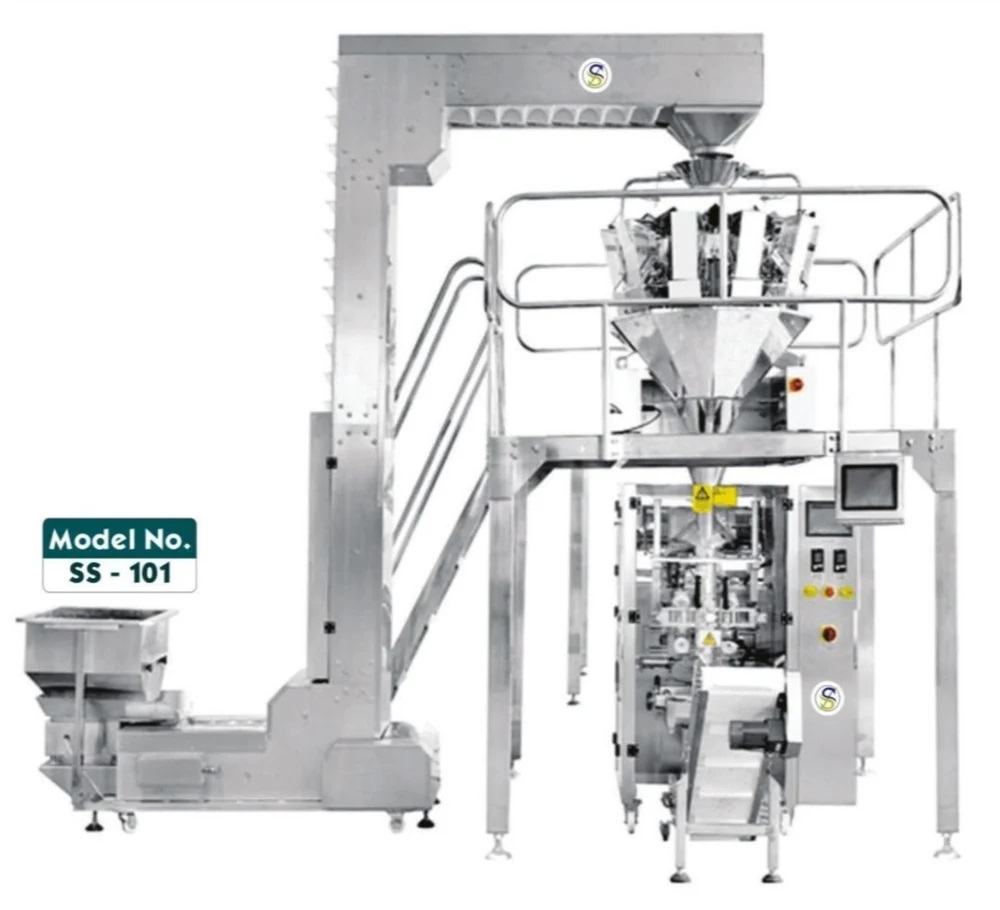 | Multihead Head Packing Machine Multi Head 14 Head Packing Machine Manufacturer & Supplier in Indore | PS Packaging Price: Get Best Price / Request a Quote MOQ: 1 Unit The Multi Head 14 Head Packing Machine from PS... View product → |
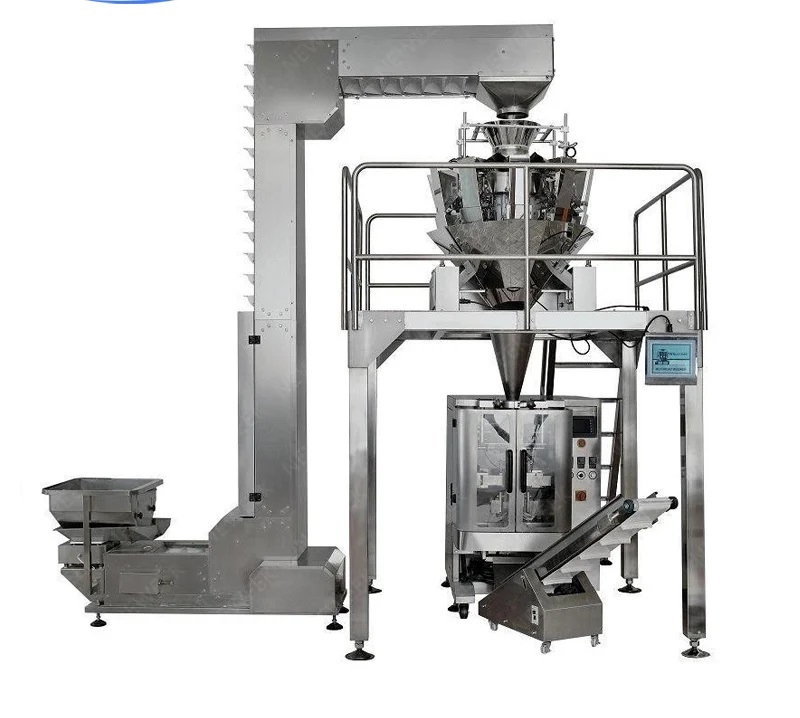 | Multihead Head Packing Machine Multi Head 10 Head Packing Machine Manufacturer & Supplier in Indore | PS Packaging Price: Get Best Price / Request a Quote MOQ: 1 Unit The Multi Head 10 Head Packing Machine from PS... View product → |
Frequently asked questions
How does a multihead peanut packing machine fill and seal pouches?
Loose peanuts enter a product hopper, move through feeder channels into individual weigh hoppers, and combine measured portions before dropping into bags. The machine then forms or receives the pouch, fills it, seals it, and discharges the finished pack.
What is the difference between four-head, 10-head, and 14-head peanut packers?
More heads provide more possible weighing combinations in each cycle. Four heads suit lower output and simpler peanut products, while 10 or 14 heads support higher throughput and more accurate combination weighing when the product feeds consistently.
When does upgrading from four heads to 10 or 14 heads pay off?
An upgrade pays off when added saleable output, lower labour demand, reduced giveaway, and shorter production time recover the higher purchase and operating cost. Compare actual orders, target weights, changeovers, and working hours rather than the headline bags-per-minute figure.
What should you verify before buying a peanut packing machine in Indore?
Confirm the machine’s peanut size and shape range, target weight range, feeder design, pouch dimensions, sealing method, electrical requirements, cleaning access, spare parts, installation, operator training, and local service response.
Related products
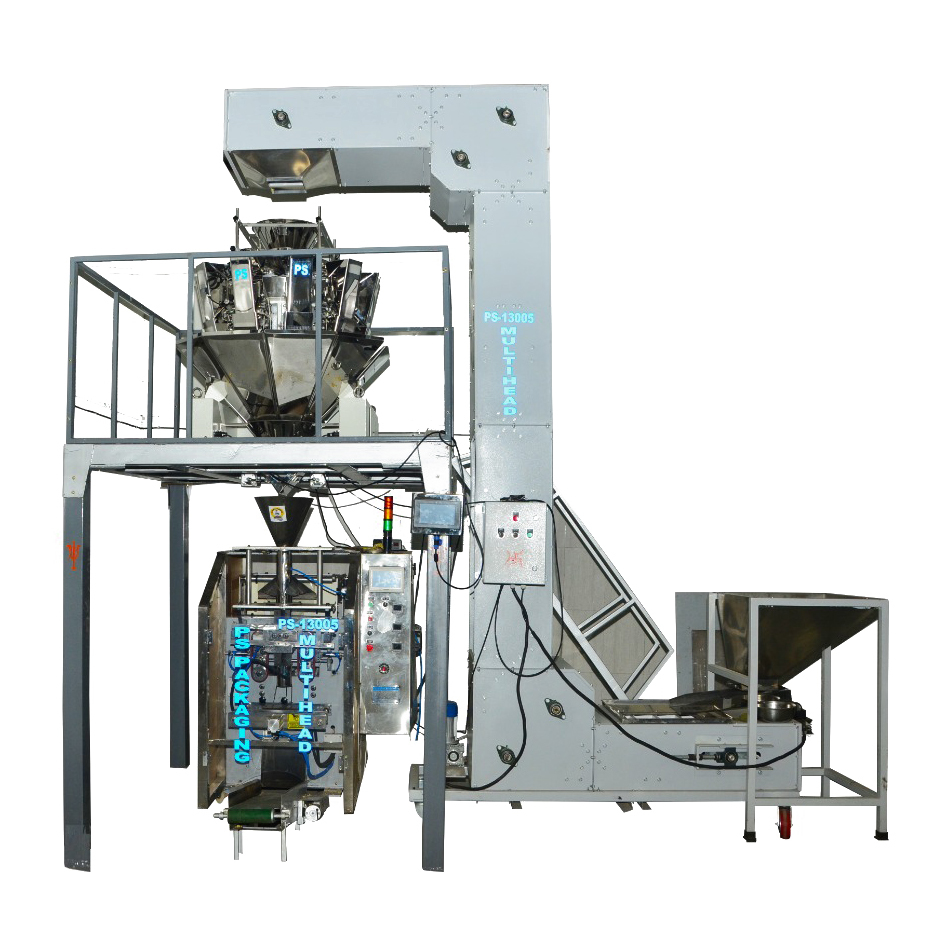 | Multihead Head Packing Machine Multihead Packing Machine The Multihead Packing Machine is a fully automatic, high-speed packaging solution designed for precise weighing, filling,... View product → |
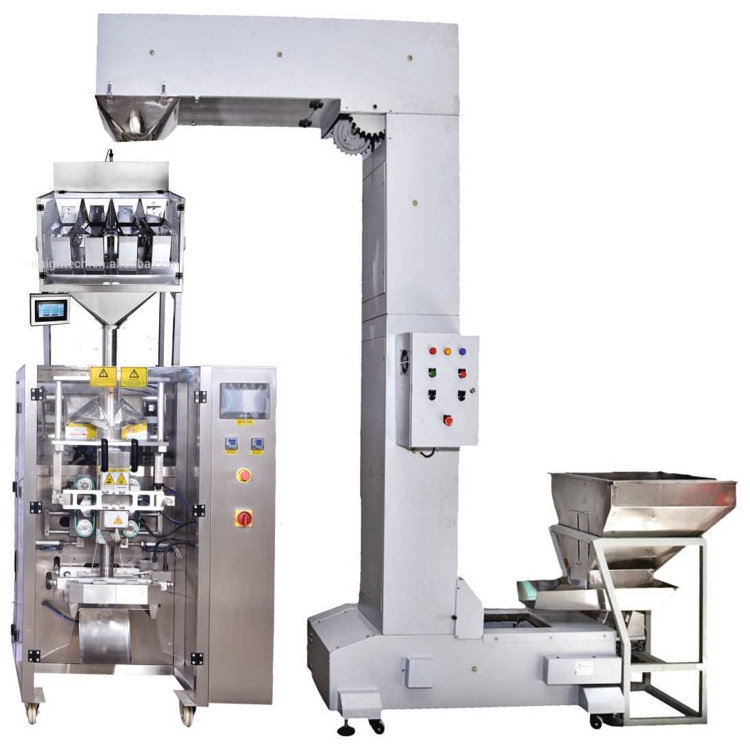 | 4 Head Packing Machine 4 Head Collar Type Packing Machine Manufacturer in Indore, India High-Speed Automatic 4 Head Collar Type Packing Machine by P.S. View product → |