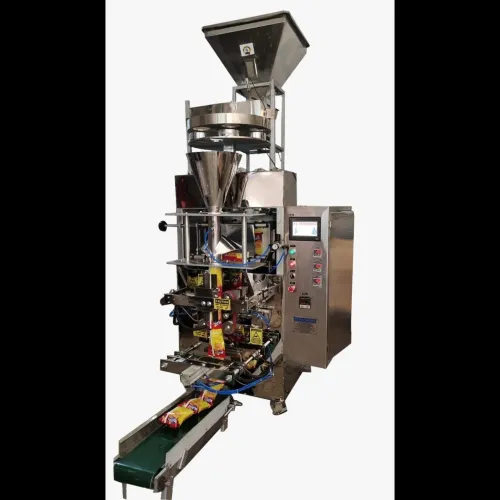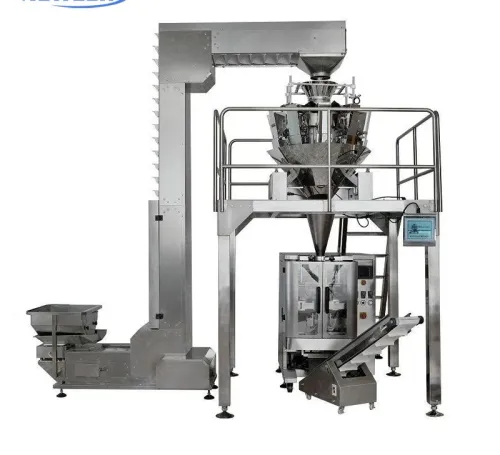


Choosing ten or fourteen heads is not a simple speed upgrade: the right configuration depends on product behaviour, pack weight, giveaway, available space, and the capability of the complete bagging line. By the end, you will know how to compare both machines, test saleable output, specify the quotation, and identify when a multihead weigher is the wrong filler.
Key takeaways
- Choose ten heads for simpler products and fourteen for tighter accuracy or higher speeds.
- Match the weigher to free-flowing, non-sticky products with consistent particle size.
- Demand test results showing giveaway, speed, accuracy, and rejected packs.
- Compare quotations only after confirming hopper size, pack range, controls, and service.
How the ten- or fourteen-head weighing cycle works
Loose product becomes a sealed bag through a timed sequence: the machine distributes it across ten or fourteen active weigh hoppers, selects a combination that matches the target weight, and releases that combination into the bagging system.
- Product enters the distribution cone and spreads into radial feed channels.
- Each weigh hopper receives product until its load cell records a usable weight.
- The controller calculates combinations of hopper weights and chooses the total closest to the target.
- Selected hoppers open together, dropping the measured portion into a forming tube or premade pouch.
- The bagger forms and fills the pack, then seals it using heat sealing or the specified pouch-sealing method.
- The finished pack leaves through the discharge conveyor; an underweight or overweight pack goes to rejection if the line includes checkweighing.
The controller repeats this cycle while the next hoppers fill. A timing hopper can hold a weighed portion for synchronized discharge, but it is not an additional weighing hopper. Confirm whether the quoted head count means active weigh hoppers, booster hoppers, timing hoppers, or a combination.
In a multihead weigher packing for machine line, the advertised cycle rate is not the same as sealed bags per minute. Product settling, hopper discharge, bag forming, film tracking, filling, coding, sealing, and rejected packs all consume time, so judge output from a witnessed test at your target weight.
Which head count fits your product and pack target?
Choose a multi head 10 head packing machine when your product flows consistently, particle size is reasonably uniform, and the target pack weight is moderate for the hopper size. It usually delivers adequate combination flexibility with a smaller footprint, lower purchase cost, and fewer weighing components to clean and maintain.
| Decision factor | Ten heads | Fourteen heads |
|---|---|---|
| Best fit | Stable, free-flowing product and moderate pack weights | Variable bulk density, small target weights, or tight giveaway control |
| Combination choices | Adequate for routine weights | More combinations to approach the target weight closely |
| Hopper sizing | Easier to match to small snack or confectionery packs | Risk of excessive product per hopper if hoppers are oversized |
| Space and maintenance | Smaller machine and fewer components | Larger footprint and more weighing parts |
| Output benefit | Strong where product flow already limits speed | Useful only if extra combinations or cycle capacity remove a bottleneck |
Choose a multi head 14 head packing machine when ten hoppers cannot provide enough usable combinations without exceeding your weight tolerance. Extra heads stop improving saleable output when the bag-maker, sealing unit, coding system, rejected-pack handling, or product flow sets the limit.
Confirm what the quotation counts. Active weighing hoppers create combination capacity; booster and timing hoppers mainly synchronize discharge. Ask for hopper volume, target weight, allowable tolerance, expected giveaway, bulk-density range, particle-size range, and a witnessed test using your product.
A fourteen-head machine with oversized hoppers can be less accurate on small packs than a correctly sized ten-head machine.
Which products belong on a multihead weigher?
Reliability starts with the product, not the head count. A multihead weigher performs best when pieces separate easily, flow consistently, and survive repeated drops into the collection hopper.
| Product characteristic | Suitable condition | Warning sign |
|---|---|---|
| Flow behaviour | Free-flowing, discrete pieces such as pulses, nuts, seeds, snacks, candy, and frozen foods | Sticky or oily material bridges hoppers and smears contact surfaces |
| Shape and size | Similar pieces within a defined particle-size range | Stringy, highly irregular, or oversized pieces lodge between gates |
| Density and moisture | Stable bulk density and moisture content from batch to batch | Density changes make the same hopper volume produce different weights |
| Product strength | Pieces tolerate repeated handling and discharge | Fragile namkeen or brittle confectionery breaks, creating dust and weight variation |
Dust creates another problem: it coats load cells, gates, and stainless-steel surfaces, which can slow discharge and destabilise readings. Powder, paste, and wet products usually need a different dosing system.
Run your own product trial before choosing a 10-head or 14-head machine. Record:
- Target pack weight and allowable tolerance
- Bulk-density and particle-size range
- Moisture or oil content
- Giveaway, discharge stability, product damage, and rejected packs
Ask the supplier to test production batches, not a hand-selected sample. The trial should use the proposed contact-part material, hopper volume, filling speed, and bagging line; a catalogue claim of “high accuracy” means little without those conditions.
How do you verify real packed output before buying?
A catalogue cycle rate is not saleable output. A fast weigher connected to a slow VFFS machine still produces slow packs, while rejects, unstable product, film tracking faults, coding delays, and poor sealing reduce the number you can sell.
Treat the phrase multihead weigher packing for machine as unproven until the complete line passes a witnessed trial.
1. Supply your product, target weight, tolerance, bulk-density range, particle size, moisture or oil content, and approved film. Record the active weighing-head count, hopper volume, filling-tube size, maximum film width, bag-length range, sealing method, and synchronized discharge rate.
2. Run the quoted ten- or fourteen-head line at the target weight for a sustained trial, using the proposed elevator, weigher, VFFS bagger, coder, metal detector, checkweigher, and take-away conveyor. Count only correctly filled, sealed, coded, accepted packs; exclude startup bags, rework, underweight packs, damaged seals, and rejects.
3. Repeat the test after stopping and restarting the line, then record average saleable packs per minute, weight results, giveaway, rejected-pack percentage, film waste, and stoppage time. Put these figures, test duration, product lot, and acceptance limits in the purchase order.
Ask whether “head count” means active weighing hoppers or includes booster and timing hoppers. Those extra hoppers can improve discharge timing but do not equal extra weighing combinations. Require the supplier to state the guaranteed saleable rate, not merely weighing cycles per minute.
What must the quotation specify before you compare price?
Do not compare packaging machine price in India until the automatic packing machine supplier defines exactly what the quote includes. A bare weigher, a weigher with VFFS bagger, and a complete line can look like competing offers but are not equivalent.
| Quote scope | Included equipment | Price comparison |
|---|---|---|
| Bare weigher | 10 or 14 active weighing hoppers, platform and controls | Excludes bag forming, sealing and conveying |
| Weigher plus VFFS | Weigher, elevator, bagger, coder and basic discharge | Check whether compressor, nitrogen flushing and detector are excluded |
| Complete line | Filling, sealing, metal detection, checkweighing, installation, freight, taxes, training and spares | Compare the delivered, commissioned cost |
Demand these figures in writing:
- Target pack weight, tolerance, expected giveaway, bulk-density range, particle-size range, moisture or oil content, hopper volume and the test product quantity.
- State whether “10 head” or “14 head” means active weighing hoppers only, or includes booster and timing hoppers. Extra timing hoppers improve discharge timing, not combination capacity.
- Name every product-contact material, cleaning method, tool-less removal points, washdown rating, drainability and access around load cells and discharge chutes.
- Request the calibration procedure: certified test weights, zero checks, repeatability checks, rejected-pack handling and weighing-software version. If quantity is sold by weight, ask whether OIML R 61 legal-for-trade requirements apply.
- Specify electrical load, compressed-air consumption, change-parts cost, warranty, installation responsibility and acceptance-test method.
PS PACKAGING can be asked to quote the same product, pack weight and test method against another supplier, making accuracy and saleable output comparable rather than relying on “high accuracy.”
Related products
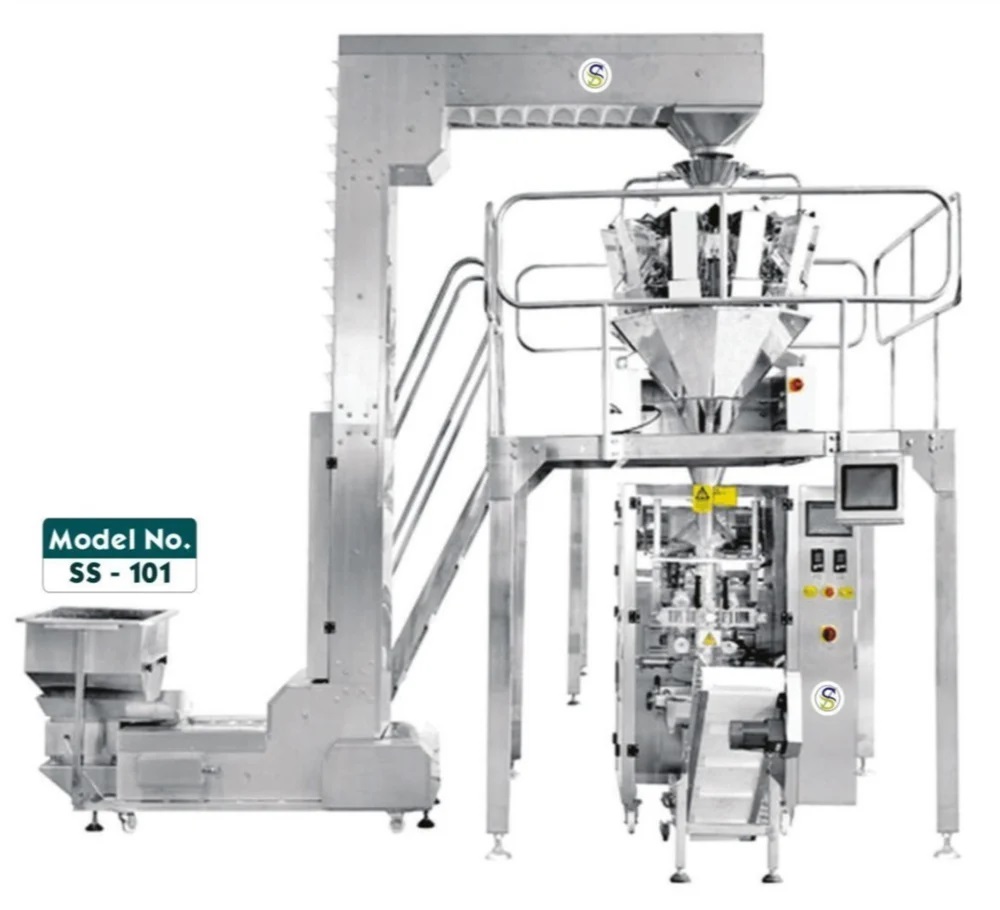 | Multihead Head Packing Machine Multi Head 14 Head Packing Machine Manufacturer & Supplier in Indore | PS Packaging Price: Get Best Price / Request a Quote MOQ: 1 Unit The Multi Head 14 Head Packing Machine from PS... View product → |
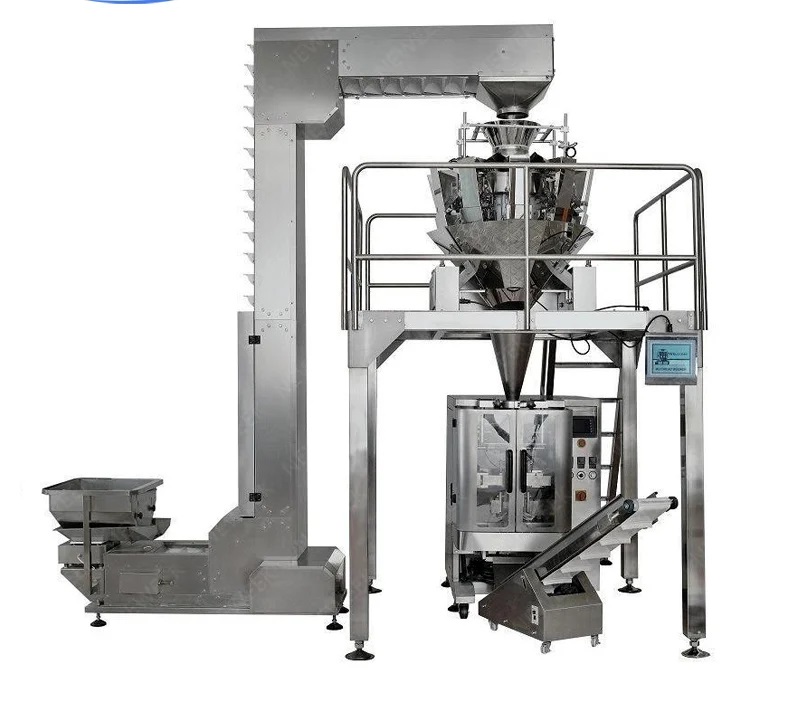 | Multihead Head Packing Machine Multi Head 10 Head Packing Machine Manufacturer & Supplier in Indore | PS Packaging Price: Get Best Price / Request a Quote MOQ: 1 Unit The Multi Head 10 Head Packing Machine from PS... View product → |
Frequently asked questions
How does a ten- or fourteen-head weighing cycle work?
Product spreads across the active weigh hoppers. The controller selects a combination whose total approaches the target weight, then opens those hoppers to discharge into the bagging system.
Which head count fits my product and pack target?
Choose based on product flow, target weight, required speed, hopper capacity, and acceptable giveaway. Ten heads suit simpler applications; fourteen heads provide more combinations for tighter targets and higher output.
Which products belong on a multihead weigher?
Multihead weighers suit free-flowing, portionable products such as snacks, pulses, grains, seeds, confectionery, and many frozen or dried foods. Sticky, powdery, fragile, or irregular products need a suitability test before purchase.
How do I verify real packed output before buying?
Run your product at the intended target weight and speed, then record average weight, giveaway, weighing accuracy, cycle rate, rejected packs, and seal quality across a representative production test.
What must a quotation specify before I compare price?
Require the head count, hopper volume, target-weight range, speed, accuracy or giveaway commitment, product-contact materials, bag dimensions, weighing controls, sealing system, installation, training, warranty, spares, and service response.