
Underweight pouches, salt bridges, leaking seals and unexplained stoppages rarely come from one faulty part. You will be able to separate product, mechanical, pneumatic, electrical and control faults, then choose an Indore technician with the right testing equipment instead of hiring a general fabricator for a controls problem.
Key takeaways
- Isolate power and air before opening the machine or clearing a jam.
- Remove salt bridging and check bucket contact before replacing load-cell parts.
- Match salt flow to a cup filler, auger or weigh-dosing system.
- Ask repair providers about pneumatic, sensor, sealing and calibration experience.
Start with the symptom, then isolate the machine safely
Random pack weights from a salt packaging machine usually point to a mechanical feed problem before a failed load cell or controller. Check for salt touching the weigh bucket, a fouled or loose load cell, hopper vibration, a loose mounting, or a gate that does not close fully.
Moisture adds another common cause: caked salt bridges in the hopper, then collapses into the dosing path.
| Symptom | Most likely cause | Check before replacing parts |
|---|---|---|
| Packs alternate between light and heavy | Salt bridge, unstable hopper vibration, or product touching the weigh bucket | Inspect the hopper, bucket clearance and mounting; remove caked salt |
| Every pack is consistently light or heavy | Incorrect gate opening, cup setting or calibration | Check the actual fill movement and weigh samples at production speed |
| Weight changes when the machine vibrates | Loose frame, hopper or load-cell mounting | Stop vibration sources and tighten approved mounting points |
| Filling stops or becomes intermittent | Blocked chute, damp salt or incomplete gate closure | Clean and dry the product path; check gate travel |
Do not open the machine while it is capable of starting. Isolate it in this order:
- Stop production from the controls and wait for the final cycle to finish.
- Turn off the main electrical isolator and apply a lock and warning tag.
- Close the compressed-air isolation valve, bleed the regulator and confirm zero pressure on the gauge.
- Block moving parts where gravity or stored tension could move them, then test the start control and verify that electrical, pneumatic and mechanical energy are absent.
Only after zero energy is confirmed should you open guards, the hopper, dosing assembly or electrical enclosure. Record the fault and retain sample weights before changing settings.
Check the salt and choose the right dosing system
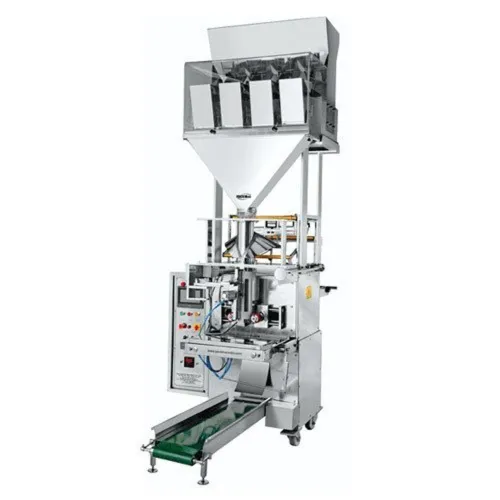
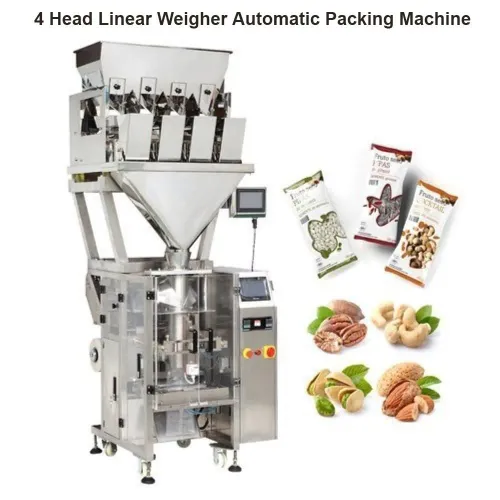
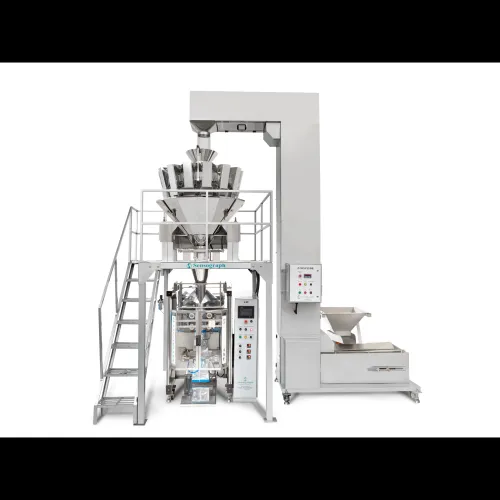
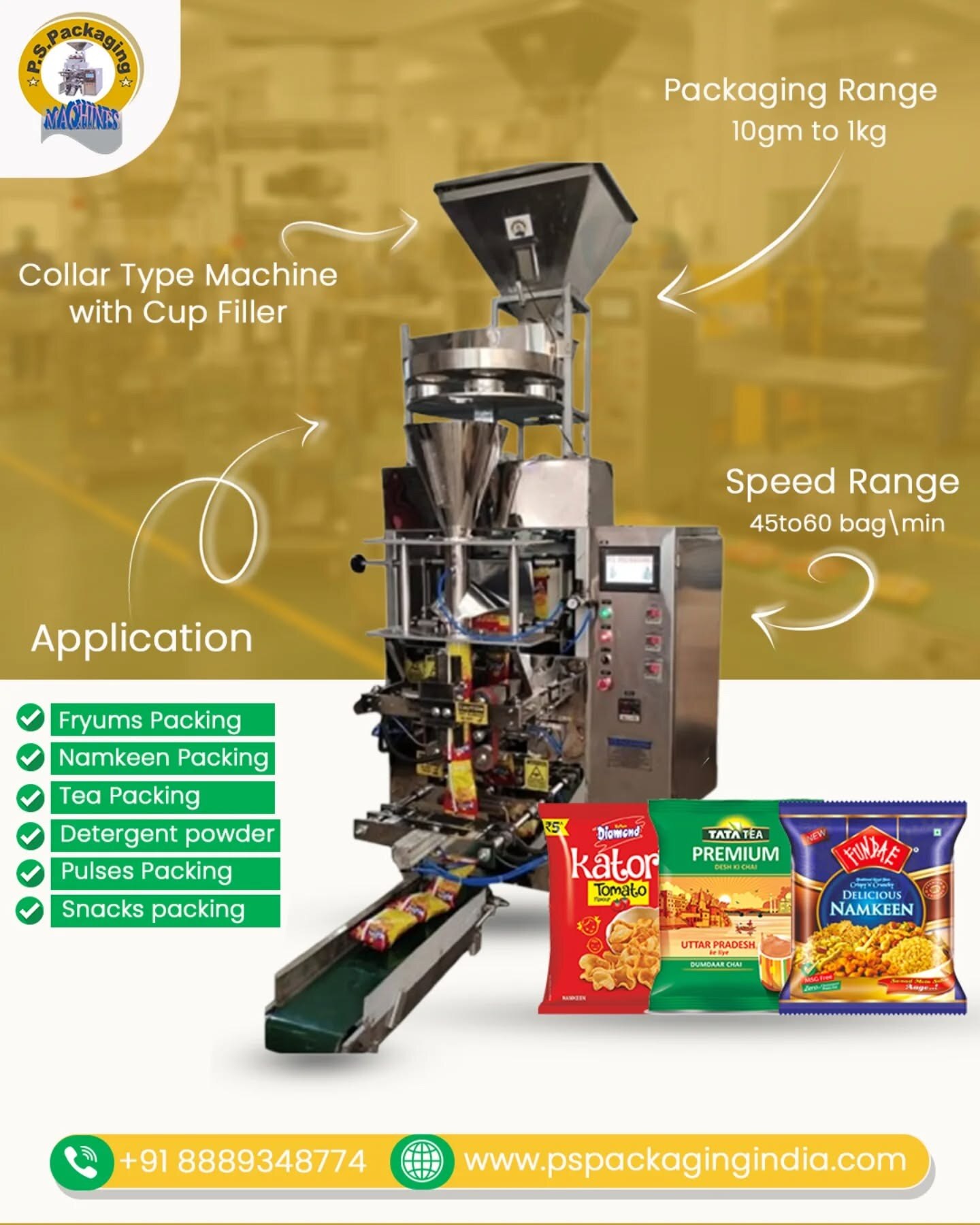
Choose the filler from the salt’s flow and the required weight: free-flowing crystals suit cup dosing, fine or cohesive salt suits an auger, and tight tolerances favour multihead weighing.
| Option | What it means | When it applies |
|---|---|---|
| Collar type cup filler packing machine | Fills a fixed volume, then discharges it into the pouch | Use for free-flowing, uniform-grain salt and stable bulk density at a consistent pack weight |
| Auger filler | A screw meters salt into each pouch | Use for fine salt, powdery grades, or salt that does not flow reliably through cups; inspect for bridging and compaction |
| Multihead weigher | Combines several weighed portions to reach the target weight | Use when density varies, the weight tolerance is tight, or cup volume cannot hold net weight accurately |
A collar filler’s setting controls volume, not guaranteed weight. Bulk density changes with particle size, grain shape and moisture, so check repeated weighments at the actual production speed; adjusting the cup alone does not prove legal net weight.
Moisture creates lumps that bridge the hopper, interrupt cup filling and block discharge. Remove the moisture source, clean and dry the product path, confirm agitation or vibration works, and verify free flow before changing the dosing system.
A multihead weigher gives better weight control but demands a rigid, stable frame. Vibration, salt touching a load cell, fouled weigh buckets or slow discharge timing will produce erratic readings. Fine salt can also cling inside an auger tube, causing underfilled packs and sudden weight drift.
Fix inaccurate weights without adjusting parts at random
Do not turn the calibration knob first. Record individual net weights from consecutive salt packs at normal production speed, noting whether every pack is high, every pack is low, or the readings swing in both directions.
1. Confirm the measurement. Weigh the empty pouch to establish tare, verify the checkweigher with a certified test weight, and compare its reading with a separate calibrated scale. A false tare or faulty checkweigher can make a good salt packaging machine appear inaccurate.
2. Inspect product flow. Look for wet salt, caking, bridging, a blocked feed path, inconsistent hopper level, or crystals sticking to the weigh bucket. A collar-type cup filler needs repeated weighments at production speed because bulk density, moisture and particle size change the delivered volume.
3. Check mechanical causes before changing settings. Ensure no product touches the weigh bucket, the bucket closes fully, the load cell is clean, its mounting is tight, and hopper vibration is not transferring into it. Inspect loose brackets, worn gates and damaged bearings.
4. Test the dosing cycle. Compare cup or auger output across repeated cycles, then check gate timing and refill timing. Underweight packs point to incomplete filling or bridging; overweight packs point to overfill, delayed shut-off or product falling after the gate closes.
5. Recalibrate only after correcting the cause, then verify actual net weights again. Document the setting, product condition and results so changes remain traceable. For salt sold in India, revalidate declared-quantity performance under the Packaged Commodities Rules after altering the filler, controller or checkweigher.
Trace pouch, sensor, pneumatic and stoppage faults
A pouch fault is easiest to identify by watching where the cycle breaks and measuring the relevant input while the machine runs, not by trusting the alarm message alone.
| Failure | Check | Typical clue |
|---|---|---|
| Sealing | Inspect salt in the seal, jaw alignment, pressure, dwell time and film heat-seal compatibility | Leaks or weak seals remain after temperature increases; scorching confirms excessive heat, not a cure |
| Film tracking | Watch film tension, forming-collar alignment, drag and encoder feedback | Pouch length wanders, film drifts sideways or the cut lands off-centre |
| Photoelectric sensor | Clean and align the mark sensor; test the actual printed laminate for gloss and contrast | Registration fails with printed film but works during a dry cycle |
| Pneumatic circuit | Measure pressure while cycling; inspect water, the filter-regulator-lubricator, tubing, solenoid valves and flow controls | Jaws travel incompletely, cuts are missed or discharge cylinders stall |
| Motor or drive | Check motor noise, coupling, overload status and commanded versus actual speed | Film feed stops or runs unevenly while controls remain responsive |
| PLC or HMI | Review alarm history, input/output states and the event sequence before stopping | Different alarms follow one failed sensor, loose connector or interlock |
| Power supply | Measure 24-VDC and other supply rails under load, not only at rest | Random resets, sensor dropouts or multiple unrelated alarms appear together |
Record pressure, voltage, alarms and sequence timing during a running test. A technician who tests only a dry cycle can miss film drag, registration faults and salt contamination.
When stoppages vary, check a shared upstream cause before replacing the PLC: a 24-VDC drop, failed proximity sensor, loose terminal or safety-circuit interruption can create several messages.
Choose the right repair resource in Indore
A general fabricator can repair a guard or frame, but motion control, safety interlocks and recipe software need a technician who supports your exact machine. Match the fault to the repair resource:
| Fault area | Best repair resource | Evidence of capability |
|---|---|---|
| Dosing, load cells, random weights | Filler specialist | Calibration weights and mechanical inspection |
| PLC, HMI, servo or safety circuit | Packaging OEM or controls integrator | PLC backup, electrical drawings and alarm-history diagnosis |
| Jaw, laminate, cut or seal faults | Sealing specialist | Trial packs tested for leaks and seal strength |
| Air, terminals, sensors or power | Pneumatic or electrical technician | 24-VDC voltage testing under load and pressure checks |
Before appointing an automatic packing machine supplier, ask for:
- The salt machine make and model they support, including the controller, sensor and servo part numbers.
- Confirmation that exact spares are available, not merely equivalent-looking sensors or load cells.
- Electrical drawings, PLC and HMI backups, and a record of the changes made.
- A written test protocol covering repeated weights at production speed, pouch tracking, sealing, alarms and safety interlocks.
- A defined post-repair warranty stating parts, labour, response time and exclusions.
A packaging machine dealer near me is not automatically a repair specialist. PS PACKAGING should be assessed on the same evidence: whether its technician can diagnose the filler, controls and salt-related corrosion rather than simply replace parts. Require inspection of fouled load cells, loose mounts, hopper vibration and closing gates before approving recalibration.
Related products
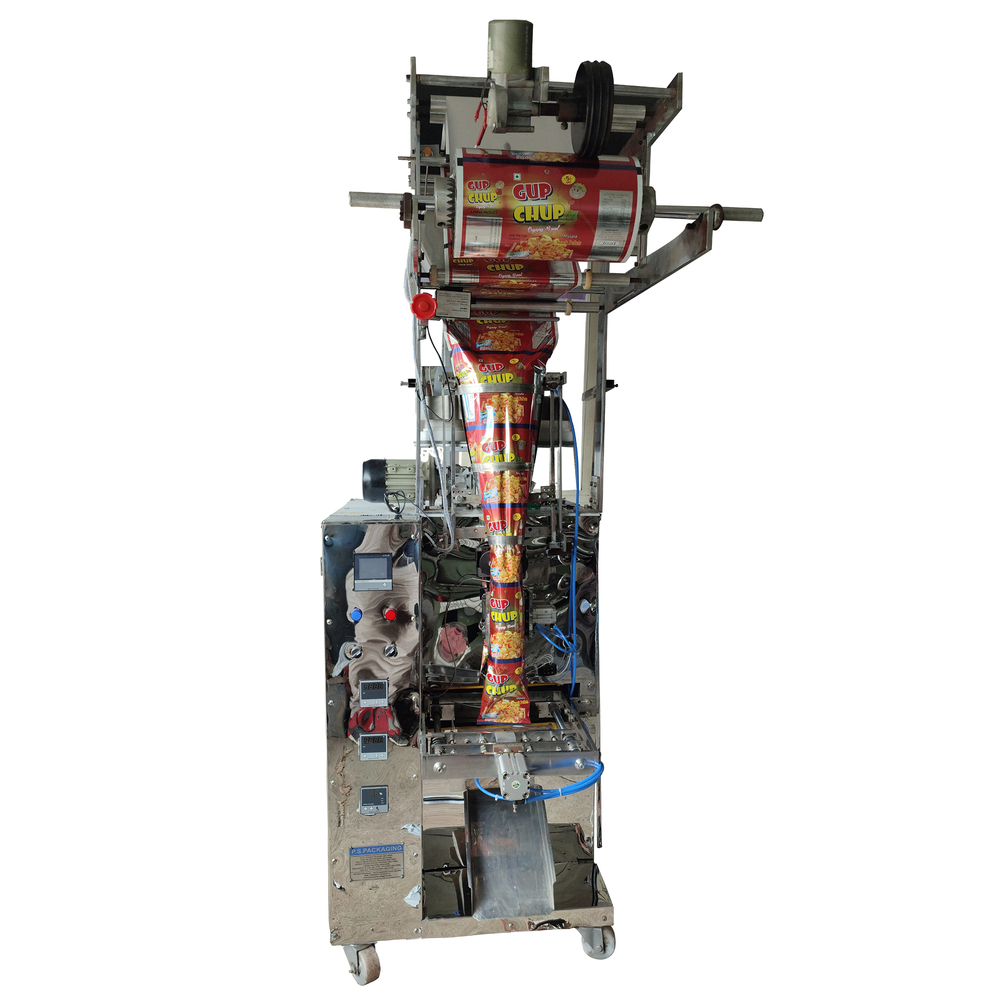 | Industrial Packaging Machine Pneumatic Cup Filler Packing Machine Manufacturer & Supplier in Indore | Patna | Nagpur -PS Packaging The Pnematic Cup Filler Packing Machine from PS Packaging, Indore, Madhya Pradesh is... View product → |
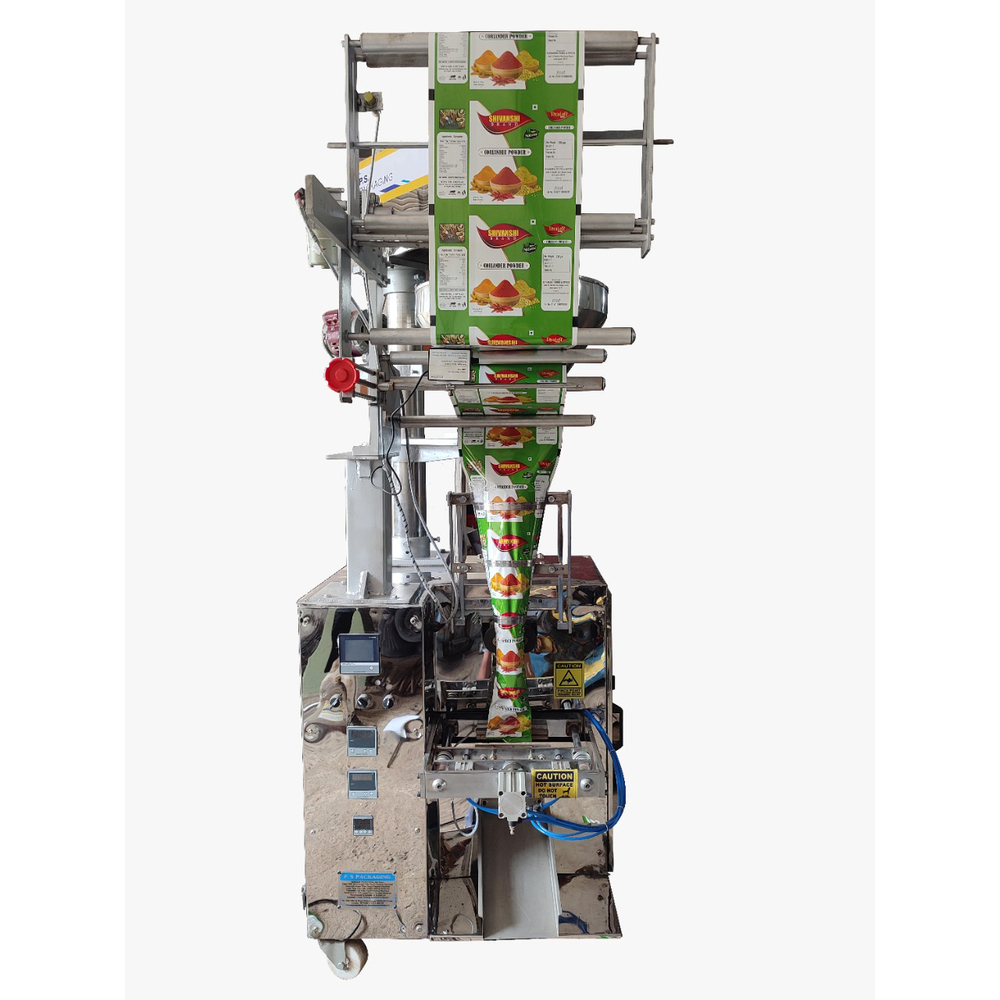 | Industrial Packaging Machine Pneumatic Auger Filler Packing Machine Manufacturer & Supplier in Indore | PS Packaging The Pneumatic Auger Filler Packing Machine from PS Packaging, Indore, Madhya Pradesh is a reliable... View product → |
Frequently asked questions
What should you check first when a salt packaging machine gives random weights?
Isolate the machine safely, then check for salt touching the weigh bucket, a fouled or loose load cell, hopper vibration, loose mounting and a gate that fails to close fully.
How do you choose a dosing system for salt?
Assess the salt’s grain size, moisture, flow behaviour, target pack weight and required speed. A collar type cup filler packing machine suits free-flowing, consistent products; irregular or difficult-flowing salt may need a different dosing method.
How can you fix inaccurate weights without adjusting parts at random?
Confirm the product path is clean, the bucket moves freely, the load cell is mounted correctly and the gate closes fully. Then test with known weights and calibrate the weighing system according to the machine manual.
How do you trace pouch, sensor, pneumatic and stoppage faults?
Inspect pouch alignment, sealing surfaces, photoelectric sensors, air pressure, tubing, solenoid valves and interlock signals in sequence. Record the exact stop condition before changing settings.
How do you choose a salt packaging machine repair resource in Indore?
Ask an automatic packing machine supplier or packaging machine dealer near me for experience with salt dosing, load-cell calibration, sensors, pneumatics, sealing units and spare-parts support.
Related products
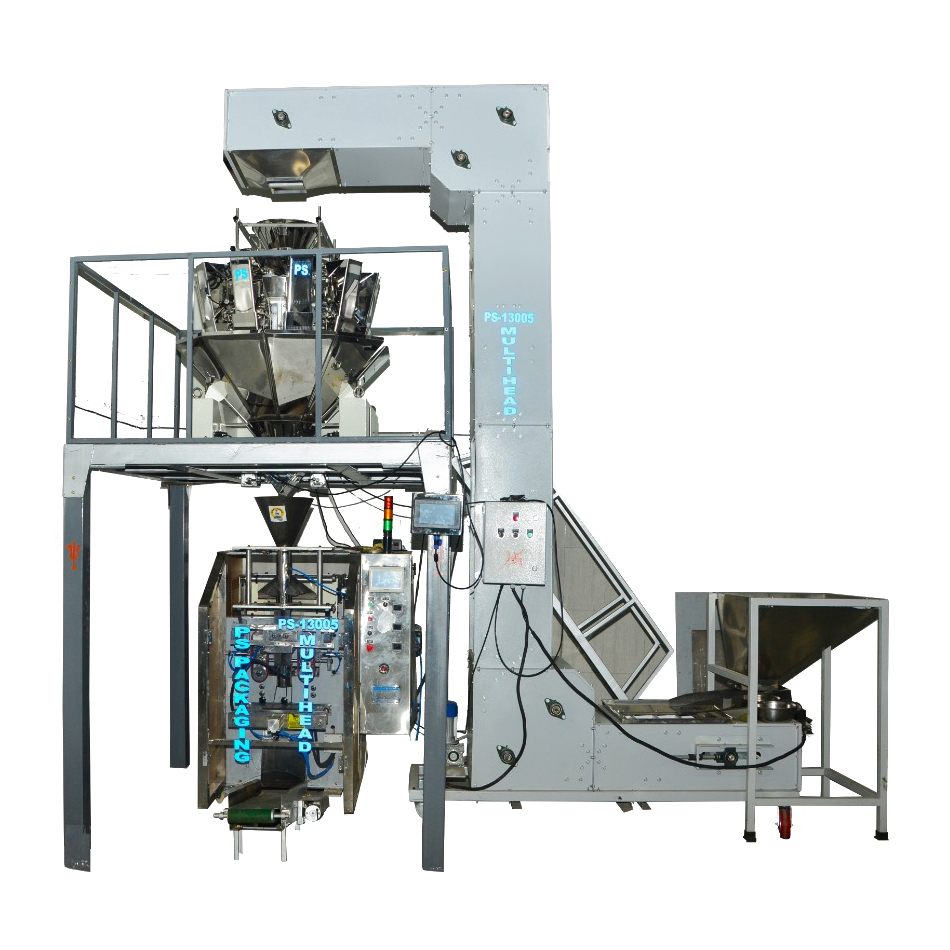 | Multihead Head Packing Machine Multihead Packing Machine The Multihead Packing Machine is a fully automatic, high-speed packaging solution designed for precise weighing, filling,... View product → |
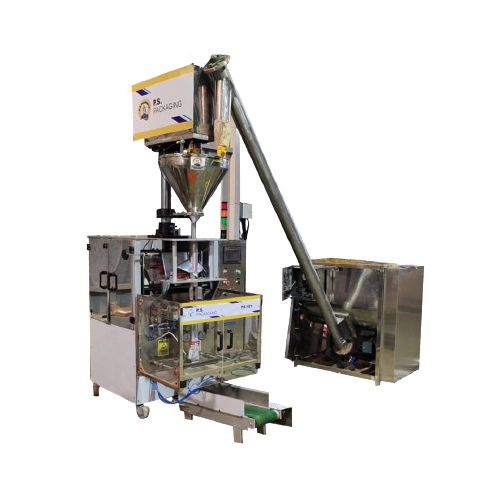 | Servo Auger Filler Packing Machine Collar Type Servo Auger Filler Packing Machine Collar Type Servo Auger Filler Packing Machine The Collar Type Servo Auger Filler Packing Machine is a high-performance packaging solution designed... View product → |