
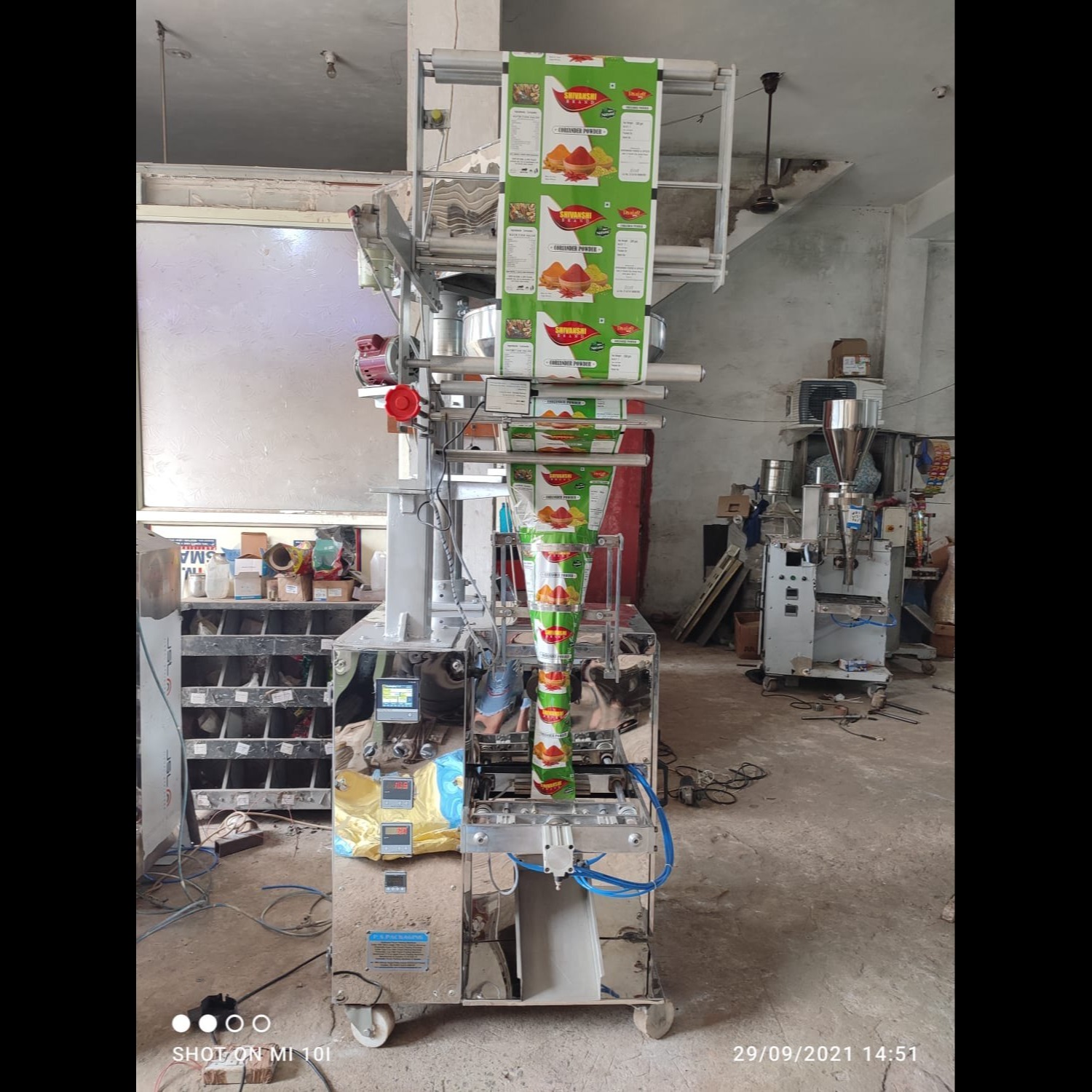
Benefits of Pneumatic Auger Rice Packaging Machine for Patna Processors
A pneumatic auger does not make every rice product easier or more accurate to pack; its value depends on the grain profile, target pack weight, filling method and compressed-air system. By comparing those factors and running a product-specific test, you can decide whether this machine improves your line or whether a weigher or cup filler is the better fit.
Key takeaways
Use an auger for free-flowing rice grades with consistent bulk density.
Check hopper bridging, rat-holing and dust before choosing the filler.
Specify target weight, air pressure, contact materials and seal controls.
Run your own rice through a witnessed trial before purchase.
How a pneumatic auger fills and seals a rice pouch
A pneumatic auger is an air-powered screw doser, not a pneumatic conveying system. The auger flight rotates inside a tube, carrying rice from the hopper and releasing a measured volume into each pouch.
1. Load cleaned rice into the hopper. An agitator or level-control system keeps rice moving toward the auger inlet; without it, bridging can cause underweight packs.
2. The pneumatic motor or cylinder indexes the auger for a programmed number of rotations. Flight pitch, rotation speed and fill level determine the dose, so changing rice flow behaviour can change weight consistency.
3. The rice drops through the outlet into a pre-made pouch or a pouch formed from roll film. Sensors confirm pouch position before dosing; a missed pouch can spill rice into the sealing jaws.
4. The machine settles the product below the seal area, removes trapped grains from the mouth, and closes the top seal with heated jaws. Cooling or pressure dwell then sets the seal before discharge.
5. A finished pack leaves by conveyor for coding, inspection and collection. Record weight checks, seal strength and dust release during the run.
A rice packaging machine with pneumatic auger dosing can improve repeatability, reduce manual scooping and keep a motor away from the immediate filling zone. It still needs suitable guarding, grounding, dust extraction and correctly rated electrical parts. Pneumatic actuation also depends on clean, dry compressed air, so specify the air class, pressure and verification method.
Which rice grades suit an auger, and which hopper problems matter
Long-grain whole rice is not automatically an auger product. An auger meters by screw rotation, so grain size, breakage and flow determine whether each flight carries a repeatable dose or creates bridging, compaction and surging.
Grade Dosing effect Hopper risk
Long-grain milled rice Whole kernels can bridge or segregate; long flights need a suitable pitch and tube clearance. Arching at the outlet and uneven feed after refill
Short- or medium-grain rice More compact kernels usually feed more evenly, but high moisture can make them stick. Clumping and buildup on hopper walls
Parboiled rice Hard, dry kernels can flow freely but may bounce, segregate or generate fines after handling. Inconsistent refill recovery
Broken rice or blends Fines give the auger controlled feeding where gravity alone surges; mixed sizes can separate. Fine material compacts while larger pieces bridge
Rice flour or powder blends Screw dosing is often more suitable than a gravity-only hopper. Raths, dust leakage and packed material above the screw
Moisture is a critical trial variable. Wet or warm rice can stick to the hopper and flights; very dry rice produces more dust and may flow too quickly. Record the actual moisture level, broken-grain percentage and particle-size distribution.
Specify whether “pneumatic auger” means a screw driven by a pneumatic motor or cylinder, not pneumatic conveying. Ask for the process-flow diagram, air-consumption figure and utility schedule before comparing a rice packaging machine for pneumatic auger in Patna.
Pneumatic operation does not remove combustible rice-dust risks: use extraction, sealed transfer points, ignition control and cleanable surfaces.
Pneumatic auger versus cup, weighing and servo systems
Choose a pneumatic auger only when your rice feeds consistently through a screw and the required accuracy does not justify a weighing system. “Pneumatic” must mean an auger driven by an air motor or cylinder, not rice conveyed by air.
The distinction affects utilities, dust control and maintenance for any packaging machine for food industry use.
Option Main strength Choose it when
Pneumatic auger Compact, continuous screw dosing Rice has stable flow and bulk density, and the target pack tolerates practical screw-dose variation
Volumetric cup filler Simple volume-based dosing Free-flowing rice has consistent grain size and density, and moderate accuracy is acceptable
Single-head weigher Weighs each dose directly You need better weight control than cups provide but accept slower output
Multihead weigher Combines several weighed portions You need high accuracy and speed for free-flowing ric