
Choosing between one weighing head and a multihead system affects more than speed: it changes the dosing method, operator workload, footprint, cleaning routine, and cost of every production run. By the end, you will be able to calculate the capacity you need, compare like-for-like quotations, and specify a machine that suits your sugar, pouch sizes, and working conditions.
Key takeaways
- Use a single head for simpler, lower-throughput sugar packing lines.
- Choose multihead weighing when target output requires faster repeated cycles.
- Match the weigher to sugar crystal size, flow, dust, and sticking behaviour.
- Compare the complete line, including film, sealing, labour, cleaning, and service.
How Multihead and Single-Head Sugar Lines Actually Dose and Pack
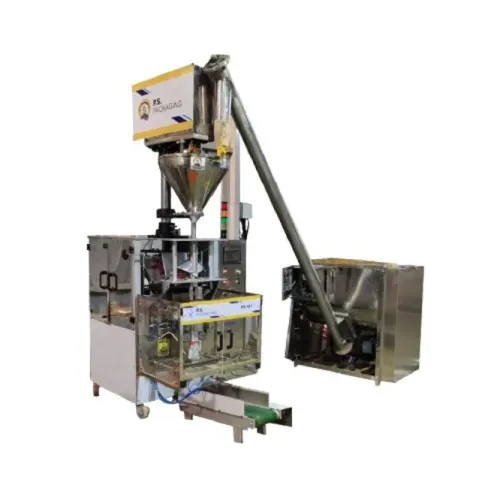
In Indore, the sugar packing machine multi head versus single head decision starts with the weighing cycle, not the advertised number of heads. A single-head net weigher feeds sugar into one load-cell hopper until it reaches the target weight.
Its gate opens, the dose drops into a formed film pouch or premade bag, and the sealing unit closes the pack.
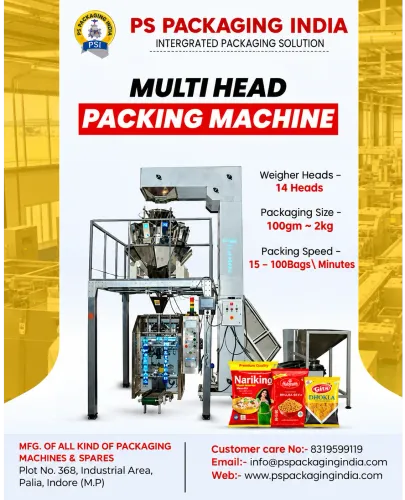
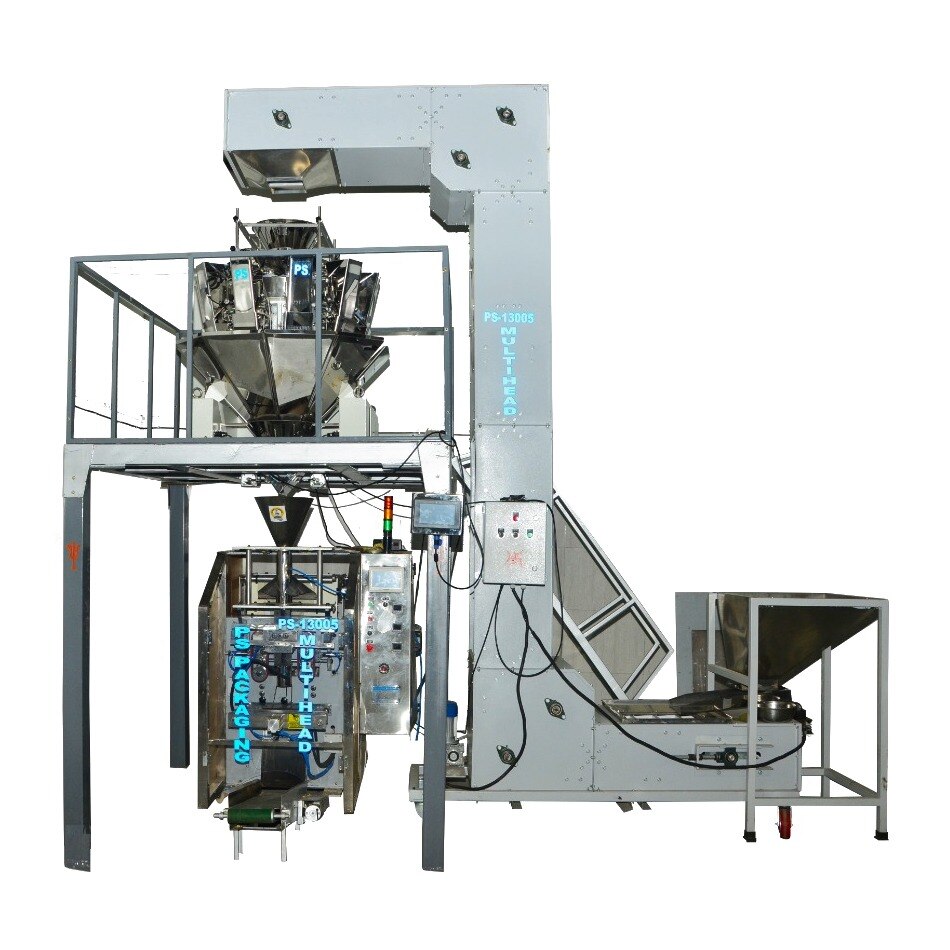
A multi head packing machine runs several weighing opportunities at once. Each hopper receives a partial amount, then the controller selects a combination whose total is closest to the target. Those selected hoppers discharge together into the pouch, after which the film former, filler tube, and sealing jaws complete the pack.
| Machine | One weighing and packing cycle | What limits output |
|---|---|---|
| Single-head sugar packing machine | Fill one hopper, stop at target, discharge, form or receive the pouch, then seal it | Time to complete one weighment and the bagger’s sealing cycle |
| Multihead packing machine | Part-fill several hoppers, calculate a close combination, discharge selected hoppers, then seal the pouch | Hopper refill, combination timing, discharge, film movement, and sealing |
Head count therefore does not equal finished packs per minute. A large target weight can require slower filling; dusty or uneven sugar can delay stable weighing, while longer seal dwell or frequent size changes stops the packing rhythm.
A multihead system can reduce giveaway, but only after its feed rates, combination settings, and discharge timing match your sugar and pouch. A single head remains sensible where lower output, simpler controls, easier fault diagnosis, or frequent weight changes matter more than peak speed.
Match the Weighing Method to Sugar Crystal Size and Flow
Free-flowing granulated sugar usually suits gravimetric multihead weighing better than auger filling. Several weigh hoppers hold partial doses, and the controller selects a combination closest to the target weight. This reduces dependence on bulk density, but only when feeding and discharge timing remain stable.
| Method | Best fit | Accuracy risks |
|---|---|---|
| Multihead weighing | Free-flowing granulated sugar with consistent crystals | Dust, unstable feed, bridging, poor calibration, or discharge timing errors |
| Single-head net weighing | Lower output or frequent weight changes | A slow or uneven fill affects every individual weighment |
| Volumetric cups | Sugar with stable, tightly controlled bulk density | Crystal size, fines, temperature, and humidity change the volume-to-weight relationship |
| Auger filling | Powders and difficult-flowing materials | Granulated sugar can create extra agitation, dust, and density-dependent dosing |
Crystal size and fines alter how tightly sugar packs, so bulk density can shift between lots. A volumetric sugar packing machine calibrated on one batch can then drift high or low on the next. Gravimetric weighing is less sensitive to that change, but perform routine zero and span checks.
Humidity makes sugar tacky and encourages clumping. Clumps bridge over an outlet, while dust can interrupt product flow and contaminate sensors or seals. Test the actual sugar grade for flowability, including bridging and refill behaviour, before choosing a multihead packing machine. Record mean weight, standard deviation, giveaway, and out-of-tolerance packs during the trial.
Choose One Head or Multiple Heads from Your Real Capacity
Calculate required good packs per hour before comparing head counts. Divide daily demand by operating hours, then allow for planned uptime and rejects: required gross rate = daily packs ÷ hours ÷ uptime ÷ (1 − reject rate).
For sugar packing machine multi head versus single head in Indore, use your actual pouch weight and film, not a supplier’s empty-machine speed.
| Option | Capacity fit | Operating trade-off |
|---|---|---|
| Single-head line | Lower demand, frequent weight changes, or limited budget | Fewer load cells and simpler fault diagnosis, but each weighment limits cycle rate |
| Multi head packing machine | High daily demand, longer runs, or higher packs per minute | More simultaneous weighments and throughput, but higher capital cost, footprint, and setup complexity |
Choose a single head when one operator can feed, monitor, and clear faults without slowing production, and when changeovers matter more than peak speed. It also suits a line producing several pouch weights in short batches, where a multihead machine spends time reconfiguring.
Choose multiple heads when the required rate exceeds a single head’s sustained output after downtime, rejects, sealing dwell, cleaning, and film changes are counted. Confirm that the extra output justifies the purchase, electrical supply, floor space, maintenance skill, and added operator training.
- Record target weight, daily packs, operating hours, uptime, reject rate, labour cost, changeover minutes, and budget.
- Reject any comparison based only on advertised packs per minute; demand a sustained trial using your sugar and pouch.
- Select multihead only when its measured throughput and reduced giveaway recover the added cost within your payback period.
Compare the Total Line, Not the Advertised Head Count
A “single head” quote is ambiguous: it can mean one net-weighing head feeding a separate bagger, or a complete one-head filling-and-packing line. Compare each station, not the machine name, before choosing a sugar packing machine.
| Option | Single-head quotation | Multihead packing machine quotation |
|---|---|---|
| Weighing | One load cell and dosing gate; state whether a bagger is included | Number of weigh hoppers, load cells, combination software, feed and discharge timing |
| Packing | Bag former or premade-pouch station, sealing jaws, conveyors and controls listed separately | Same items, including transfer chute and pouch support |
| Output | Sustained packs per minute at each target weight | Validated speed, not the headline cycle rate; include target weight and sugar grade |
| Safety | Guards, interlocked doors, emergency stops and electrical protection | The same, plus access guarding around multiple hoppers and discharge points |
| Maintenance | Tool-free access, calibration procedure, spare load cell and gate details | Hopper removal, load-cell protection, software backup and fault-diagnosis procedure |
Write stainless-steel product-contact grades, food-contact material declarations, cleanability, dust control, earthing and seal-temperature controls into the purchase order. “Stainless-steel body” does not prove that every chute, gasket or hopper is suitable for food use.
- Require controlled net-quantity settings, checkweigher integration and records supporting Legal Metrology and FSSAI review.
- Test actual sugar, film and pouch weights in Indore; record mean weight, standard deviation, giveaway, rejects, sustained speed, seal integrity, dust, changeover and cleaning time.
- Price installation, training, validation, consumables, guarding, preventive maintenance and response time, not just the machine.
Validate the Choice with Your Sugar, Film, and Production Conditions
Approve the line only after a witnessed trial using your actual sugar grade, pouch size, film, target weights, and Indore production conditions. An empty-machine demonstration cannot validate sugar packing machine multi head versus single head in Indore.
1. Write the protocol before the trial. Define target weight, permitted tolerance, minimum sustained packs per minute, maximum giveaway, seal acceptance criteria, changeover limit, cleaning limit, and the allowed percentage of rejected packs.
2. Run each machine long enough to expose variation, not just a short sample. Record mean weight, standard deviation, out-of-tolerance packs, giveaway, sustained speed, dust emissions, seal integrity, changeover time, and cleaning time.
3. Test the difficult conditions. Include your finest sugar fraction, hopper refilling, film roll changes, pouch-size changes, and the longest sealing dwell your film needs. A multihead machine’s headline speed proves little if dust, large doses, or sealing delays reduce output.
4. Demand a signed comparison sheet showing machine settings, head count, dosing method, sample size, raw weight records, photographs of seals, and the cause of every rejected pouch. Ask the supplier to retain samples from both runs.
PS PACKAGING can help document this comparison during a local site trial, including food-contact materials, dust extraction, grounding, cleanability, and checkweigher settings for your packaging machine for food industry. Confirm declared net quantity, Legal Metrology declarations, and FSSAI packaging requirements before approving artwork.
Related products
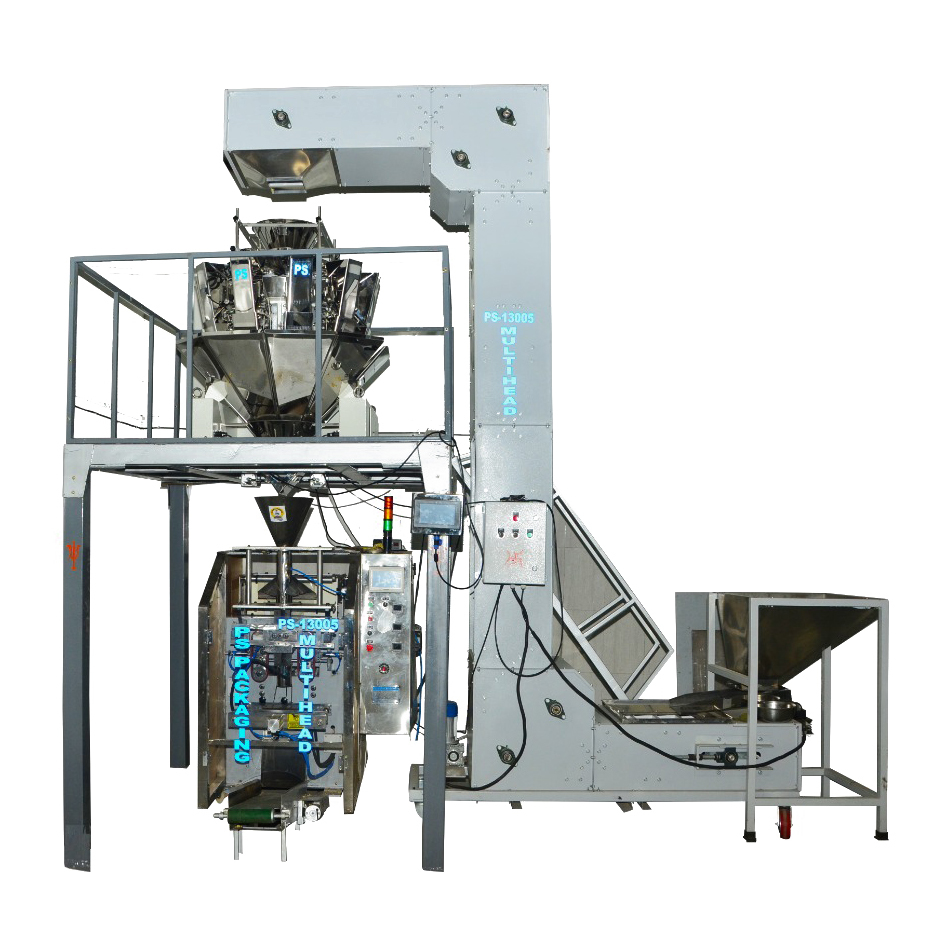 | Multihead Head Packing Machine Multihead Packing Machine The Multihead Packing Machine is a fully automatic, high-speed packaging solution designed for precise weighing, filling,... View product → |
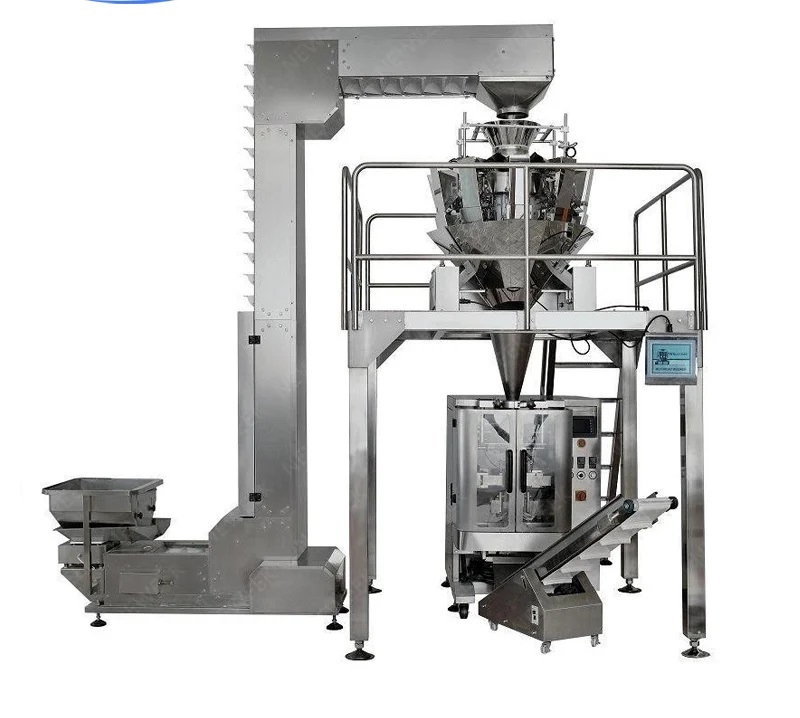 | Multihead Head Packing Machine Multi Head 10 Head Packing Machine Manufacturer & Supplier in Indore | PS Packaging Price: Get Best Price / Request a Quote MOQ: 1 Unit The Multi Head 10 Head Packing Machine from PS... View product → |
Frequently asked questions
What is the difference between a single-head and multihead sugar packing machine?
A single-head machine fills one load-cell hopper to the target weight in each cycle. A multihead packing machine weighs portions across several hoppers, combines them to reach the target, and packs more cycles per minute.
When is a single-head sugar packing machine the better choice?
Choose a single-head line when your required output is modest, the pack format is simple, and lower equipment complexity matters more than maximum speed.
When should you choose a multihead packing machine for sugar?
Choose multihead weighing when the required packs per minute exceed a single hopper’s practical cycle rate and the sugar flows consistently through the feeder and weigh hoppers.
What should you compare besides head count?
Compare weighing accuracy, actual packs per minute, sugar loss, feeder design, hopper capacity, film compatibility, sealing performance, cleaning time, controls, labour, power, maintenance, and service support.
How do sugar crystal size and flow affect the machine choice?
Fine, dusty, irregular, or sticky sugar can need different feeder settings and contact surfaces than free-flowing granulated sugar. Test your actual sugar before selecting the weigher and packer.
Related products
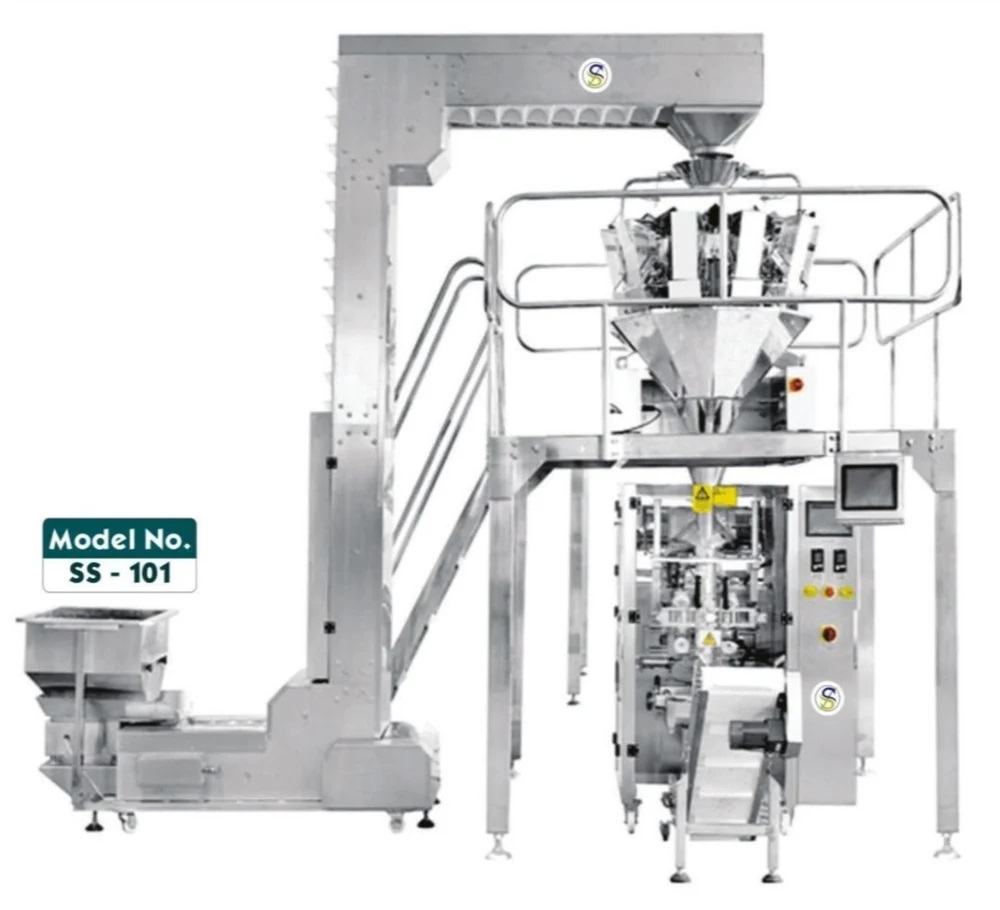 | Multihead Head Packing Machine Multi Head 14 Head Packing Machine Manufacturer & Supplier in Indore | PS Packaging Price: Get Best Price / Request a Quote MOQ: 1 Unit The Multi Head 14 Head Packing Machine from PS... View product → |
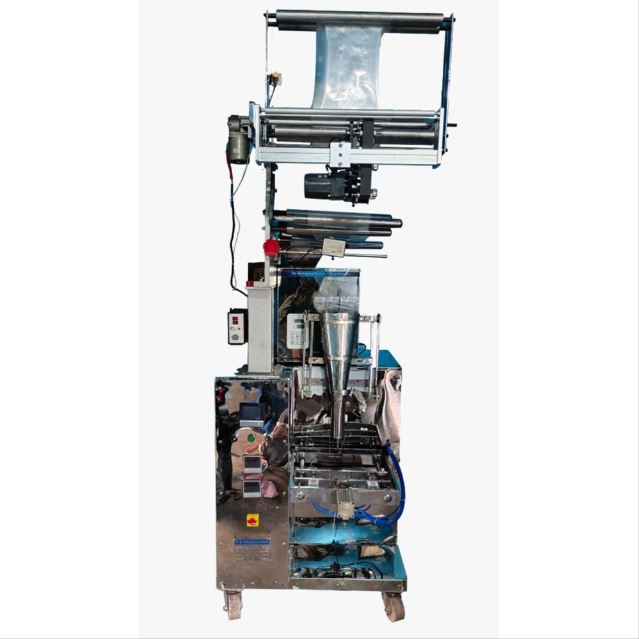 | Industrial Packaging Machine Manufacturer & Supplier in Indore | PS Packaging The Single Head Packing Machine from PS Packaging, Indore, Madhya Pradesh is a durable and efficient... View product → |