
Tea grade, bulk density, dust content, pouch size, and film structure determine whether a collar-cup filler will produce saleable packs. By the end, you can match the filler to your tea, estimate practical output, define a meaningful trial, and compare an itemized machine quotation instead of relying on a headline speed or price.
Key takeaways
- Choose a cup filler when tea bulk density stays within a known range.
- Measure actual filled-pack weights, not only the machine’s stated speed.
- Test dusty blends, film tracking, seal strength, and pouch appearance.
- Specify trial conditions, documents, output, and acceptance limits in the quotation.
When does a cup filler suit your tea grade?
A collar type cup filler packing machine suits tea when the product flows freely and its bulk density stays within a known range; it measures volume, not weight. Orthodox leaf, CTC granules, and consistent particulate blends usually fit better than dusty tea, high-fines blends, or material that settles unpredictably.
| Grade | Suitability | What to check |
|---|---|---|
| Orthodox leaf tea | Good | Even particle size, low dust, gentle handling |
| CTC granules | Good | Free flow, stable bulk density, limited settling |
| Cut tea | Conditional | Irregular pieces, fines percentage, bridging at the outlet |
| Fannings | Conditional | Flowability and density consistency |
| Dust | Poor | Dust entering the longitudinal or end seal |
| Particulate blend | Good if uniform | Separation, moisture, settling, and component density |
Check the full particle-size distribution, bulk-density range, moisture, flowability, and settling after filling. Dust in the seal area creates weak, contaminated seals; excessive agitation can also crush leaves and increase fines.
- Choose a weigh filler when density varies sharply or tight net-weight control matters. It is the wrong choice when simple, stable volumetric dosing would provide adequate control at lower complexity.
- Choose an auger filler for cohesive, powder-like tea. It becomes unsuitable for intact leaves because the screw can damage them.
- Choose a multihead weigher for high-value tea or mixed components. It is excessive for low-value, uniform grades.
- Use manual filling only for low-volume or highly variable production; labour and inconsistency make it unsuitable for sustained output.
How does the machine turn loose tea into a pouch?
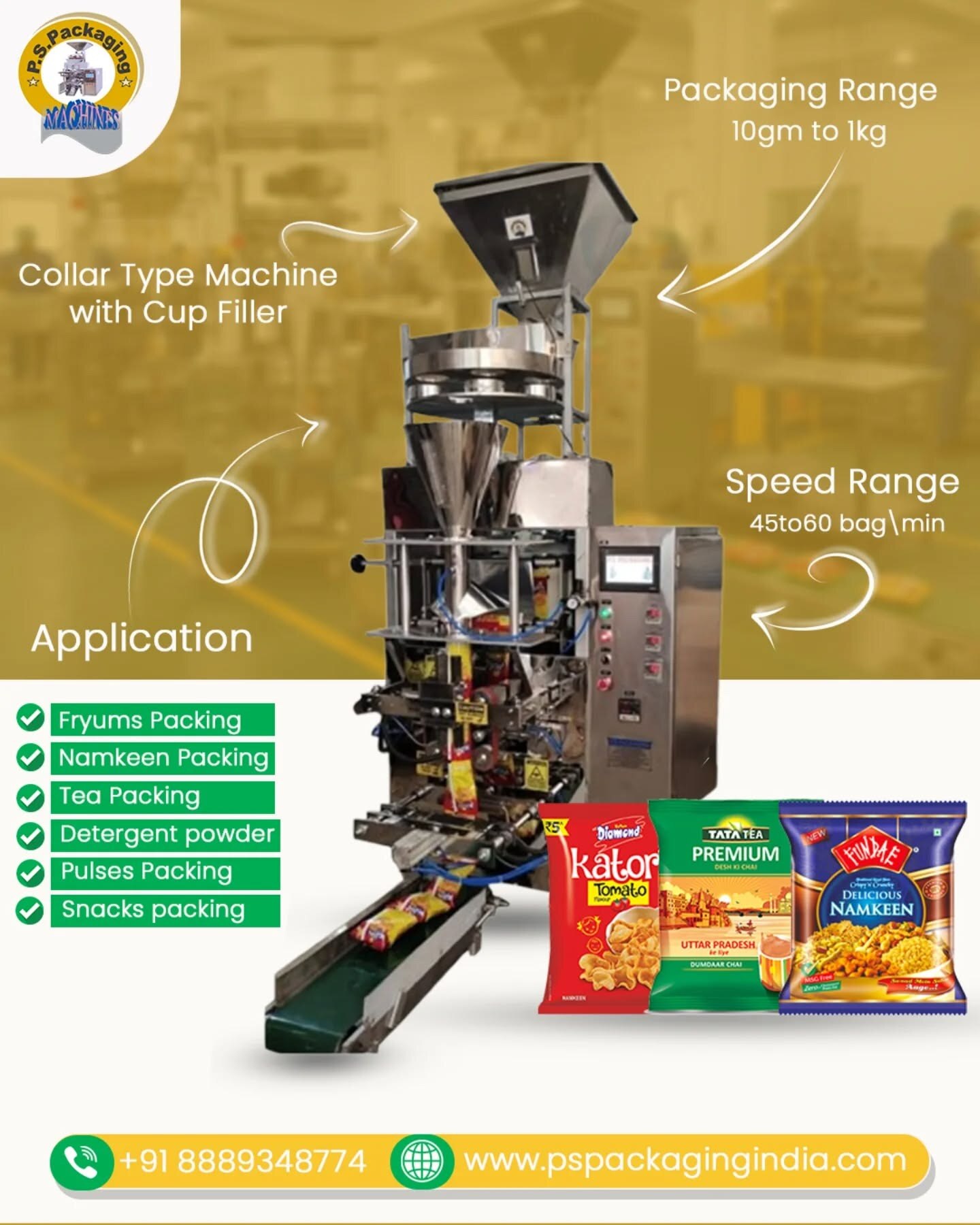
A complete cycle turns loose tea into a pouch through a measured volume, not a measured mass. Specify the tea’s bulk-density range and target fill range, rather than giving the supplier only “25 g” or another nominal weight.
1. The film unwinds from the roll, while a photocell reads the printed registration mark and keeps each cut aligned. The film then passes around the forming collar, which creates a tube with the specified width.
2. Adjustable volumetric cups open above the tube and release tea into it. Cup volume sets the approximate dose; cup count mainly affects filling rate and output, not weight accuracy. Operators must check the dose with actual tea after changing leaf grade, moisture, or settling.
3. Vertical sealing closes the fin or back seam. Horizontal jaws seal the top of one pouch and bottom of the next, then cut between those seals. A coder marks the batch, date, or other required information before the finished pouch discharges.
4. For 25 g, 50 g, 100 g, 250 g, and 500 g packs, match cup volume to tea density and match film width to pouch width. Pouch length comes from jaw spacing and the forming set; larger 250 g or 500 g volumes often need a wider or longer format.
A forming collar built for one pouch width cannot cover every advertised size automatically. For a cup filler tea pouch packing machine, ask whether separate dosing cups, collars, forming sets, or jaw adjustments are required and price the changeover.
A buyer searching “collar type cup filler tea packing for machine in Indore” should verify those tooling details separately from location.
How should you verify weight accuracy and real production speed?
A performance trial must use your actual tea grades, moisture condition, target pack sizes, and proposed film. An empty-film demonstration proves only that the jaws and film drive can move; it does not prove saleable weight or output.
- Run the cup filler with each agreed tea and pack size. Collect a defined sample of consecutive filled pouches, then weigh every pouch on a calibrated scale.
- Record the mean, minimum, maximum, and range of the sample. Agree the acceptable weight variation in writing before commissioning, including the method used to calculate it.
- Adjust the measuring cup, then repeat the consecutive-pack check. Do not accept the cup’s nominal volume as evidence of weight accuracy.
- Repeat the test after changing leaf grade, blend, cup volume, or bulk density. Tea that settles differently can change the net weight without any change to the machine setting.
The supplier’s speed is an upper mechanical rating, not saleable pouches per minute. Request a continuous run at the required pouch length and pack size, including 500 g doses where applicable, and record stoppages for tea flow, sealing dwell, film type, film splices, hopper refilling, dust cleaning, rejects, and operator intervention.
Use the actual production crew and proposed film during the run. A short demonstration hides the time lost to refilling and cleaning, while the recorded good-pouch count reveals the output you can schedule and sell.
Which tea, film, and seal problems must the trial expose?
A production trial must expose failures hidden by a clean demonstration: bridging at the hopper outlet, changing bulk density, crushed leaves from agitation, electrostatic film behaviour, escaping dust, and leaves trapped in the longitudinal or end seal.
Inspect the machine while it runs at the intended fill rate, not only while empty film travels through it.
| Trial point | What to inspect | Failure exposed |
|---|---|---|
| Hopper and dosing path | Bridging, surging flow, density changes, and agitation damage | Irregular fills or crushed tea |
| Film and forming set | Static, wrinkles, tracking, tension, and print registration | Misregistered or unstable pouches |
| Sealing area | Dust and broken leaves on the longitudinal and end seals | Leaks, weak seals, and rejected packs |
| Cleaning access | Sealing jaws, product-contact surfaces, ledges, and extraction points | Uncleanable residue and slow changeovers |
Define the film with the supplier before testing: laminated roll stock or another heat-sealable structure, sealant layer, total thickness, moisture and oxygen barrier, print registration, film tension, seal temperature, dwell time, pressure, and pouch format. Run the actual tea and laminate, then condition samples at the humidity expected in Indore and along the distribution route.
Open and pull-test seals after conditioning, and check that the film still protects hygroscopic tea. A machine’s category does not prove compatibility.
What should an Indore buyer include in the quotation and acceptance check?
A quotation becomes comparable only when it names the exact scope. Treat “tea packing machine manufacturer in Indore” as a starting point, not evidence that the cup volume, pouch sizes, or tea handling suit your line.
- Request separate prices for the VFFS body; cup filler and cup sets; forming collars; date or batch coder; photocell; conveyor; checkweigher; metal detector; dust extraction; spare heaters, thermocouples, belts, cutters, and sensors; installation; training; and commissioning.
| Supplier check | Ask for | Acceptance concern |
|---|---|---|
| Local service | Response time for jaw and sensor faults | No written target |
| Remote support | Troubleshooting in your operating language | Phone-only help |
| Spares | Heaters, thermocouples, belts, cutters, collars, and cups held locally | Unpriced or long-lead parts |
Ask the film supplier for a food-contact declaration and migration documentation. Separately verify Indian Legal Metrology packaged-commodity declarations, declared net quantity controls, and applicable food-safety requirements; a volumetric machine setting proves none of these.
There is no meaningful single tea packaging machine price. Pouch range, automation, stainless-steel specification, cup tooling, inspection equipment, dust handling, and service alter the total.
Compare PS PACKAGING with other Indore suppliers only after a documented trial using your tea, proposed film, 25 g to 500 g packs, and agreed acceptance limits. Record fill-weight results, seal quality, coding, dust control, saleable speed, and commissioning deliverables before signing.
Related products
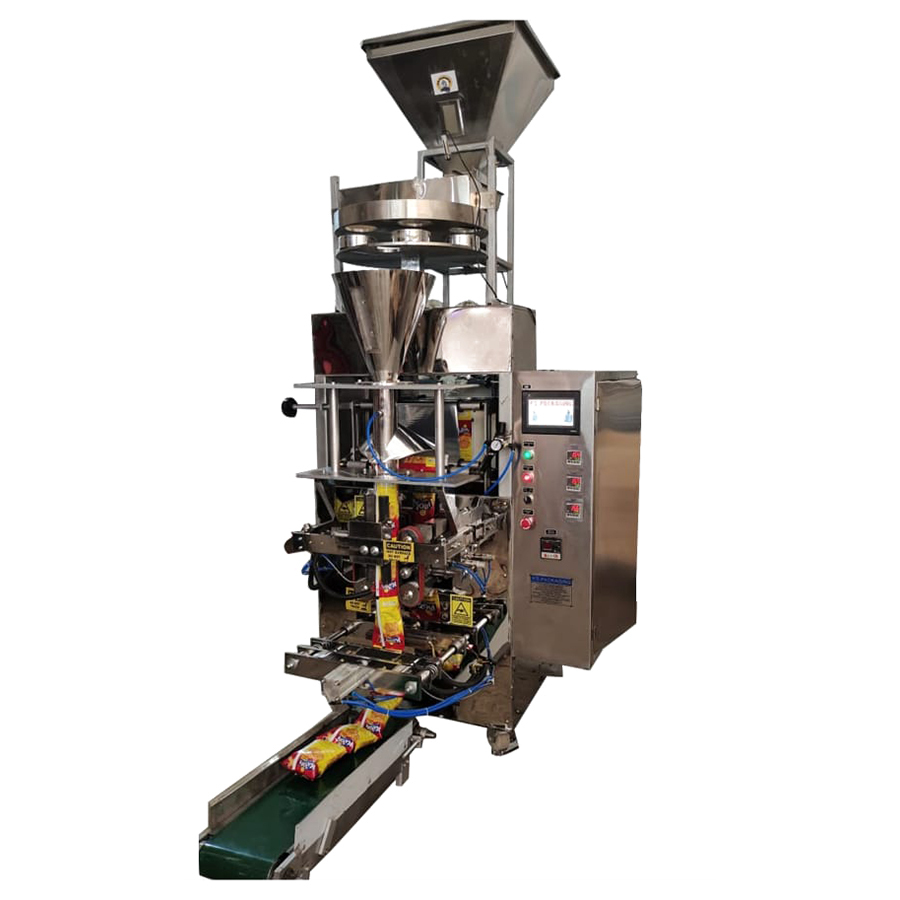 | Industrial Packaging Machine Collar Type Cup Filler Packing Machine The Collar Type Cup Filler Packing Machine is a robust and efficient packaging solution designed to deliver accurate filling and reliable sealing for... View product → |
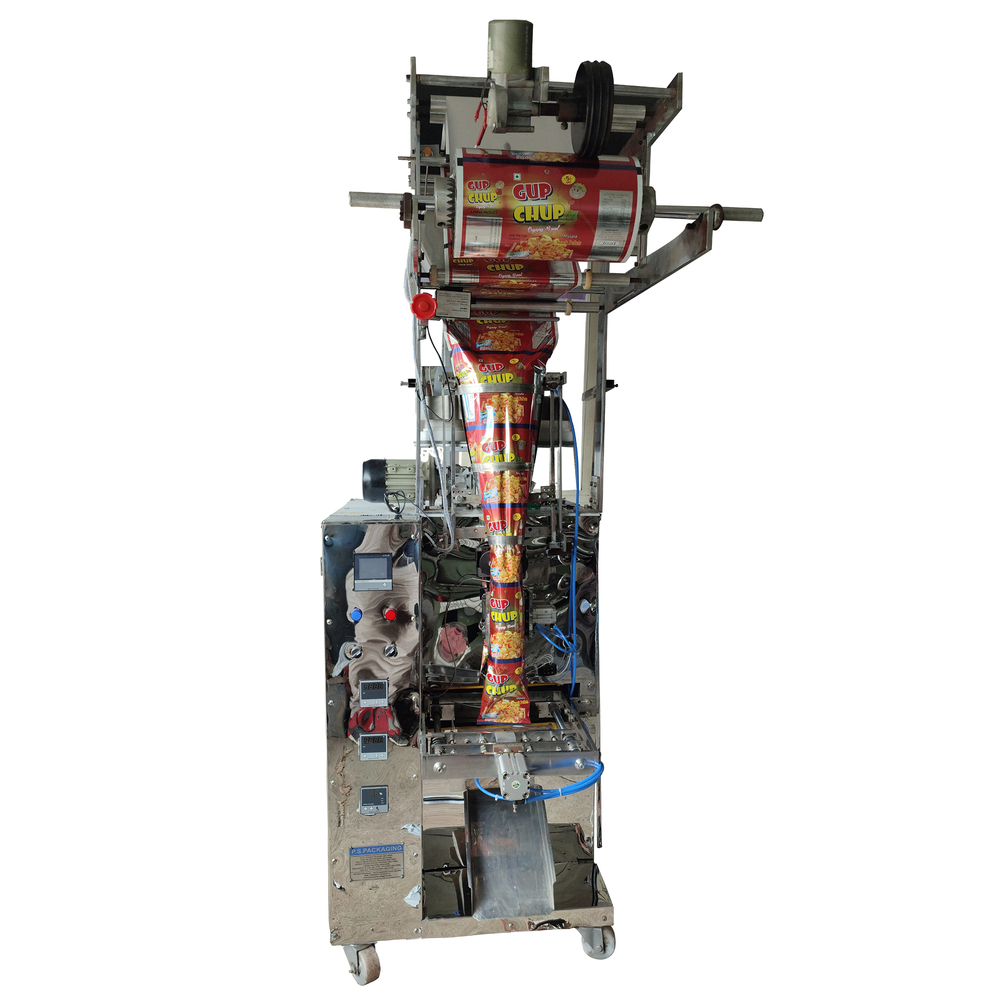 | Industrial Packaging Machine Pneumatic Cup Filler Packing Machine Manufacturer & Supplier in Indore | Patna | Nagpur -PS Packaging The Pnematic Cup Filler Packing Machine from PS Packaging, Indore, Madhya Pradesh is... View product → |
Frequently asked questions
When does a collar type cup filler suit tea?
It suits free-flowing tea with a stable bulk density, including consistent orthodox leaf, CTC granules, and particulate blends. Dusty tea, high-fines blends, and tea that settles unpredictably require closer testing because the filler measures volume rather than weight.
How does a cup filler turn loose tea into a pouch?
The machine forms packaging film around a collar and tube, fills a measured cup with loose tea, drops the portion into the pouch, and seals the film. The exact sequence and pouch format depend on the machine configuration.
How should you verify tea pouch weight and production speed?
Run the intended tea, film, pouch size, and target weight. Weigh samples across the run, record variation, count accepted sealed pouches per minute, and separate stoppages, rejects, and operator intervention from the headline speed.
Which tea and film problems should a machine trial expose?
The trial should reveal inconsistent bulk density, dust, fines, bridging, poor flow, film tracking errors, weak or contaminated seals, wrinkles, leaks, and pouch-forming problems. Test the actual tea blend and packaging film rather than a substitute.
What should an Indore buyer include in the quotation and acceptance check?
Specify the tea grade, target weight, pouch dimensions, film structure, sealing method, electrical requirements, expected accepted pouches per minute, weight tolerance, changeover scope, included parts, documentation, installation, training, and the conditions for acceptance.
Related product
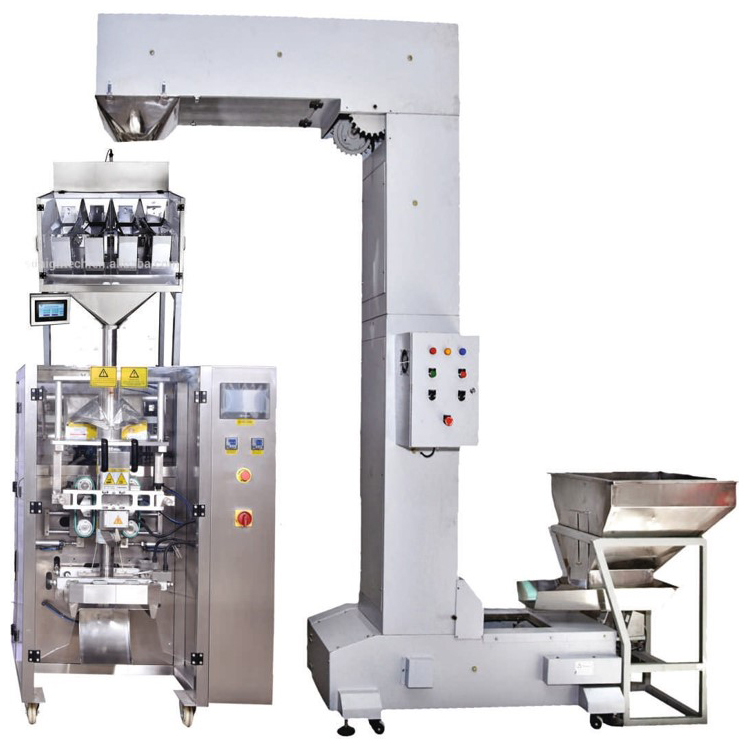 | 4 Head Packing Machine 4 Head Collar Type Packing Machine Manufacturer in Indore, India High-Speed Automatic 4 Head Collar Type Packing Machine by P.S. View product → |