
A cup filler measures volume, while an auger controls screw displacement, so the same besan setting can produce different pouch weights as density, moisture, aeration, and hopper conditions change. By comparing the failure points and running a controlled trial with your own flour, you can choose the dosing method that limits giveaway, stoppages, and underweight packs.
Key takeaways
- Set cup volume against bulk density, not the target weight alone.
- Control sieve size, moisture, aeration, and powder flow before judging drift.
- Use auger filling when repeatable mass matters more than simpler dosing.
- Run identical product, pack, speed, and weight tests during the Indore trial.
Why a cup setting does not guarantee besan weight
A cup filler measures besan by volume, not by mass. The machine fills a cavity to a preset level, opens or rotates it over the pouch, and releases that fixed volume. The same cup setting therefore does not guarantee the same weight.
| Method | What it measures | Main source of weight change |
|---|---|---|
| Cup filler | Fixed cavity volume | Besan bulk density and compaction |
| Auger filler | Screw rotation and feed volume | Screw fill, powder flow, and calibration |
A pouch becomes lighter when the besan is fluffy or aerated and heavier when particles settle tightly in the cup. Moisture pickup, particle-size changes, roasting differences, and hopper refilling can all alter density. Vibration can compact the powder; air entering during refill can expand it.
The cup has not changed, but the mass inside it has.
On a besan packing machine, calibrate with the actual besan lot, weigh individual pouches, and adjust the cup after density changes. Recheck at the start and end of a hopper load. A packaging machine for flour may run quickly until operators stop it for weight corrections, bridging, leakage, or cup cleaning.
An auger offers a different metering method, but trial data—not the nominal cup volume—should decide whether the cup meets your declared net weight and allowable giveaway.
The besan conditions that make cup filling drift
Low bulk density and fine, irregular particles make besan bridge across a hopper outlet instead of feeding each cup evenly. A wide particle-size distribution also lets fine flour settle between larger particles, changing the mass delivered by the same cavity.
| Besan condition | Cup-filler effect | Auger implication |
|---|---|---|
| Aerated, low-density powder | Early packs become light; settling later increases weight | Screw compression can stabilise feed, but discharge density still needs checking |
| Moisture pickup or high fat content | Particles become cohesive, causing bridging and caking | Auger feeding remains controllable, but buildup on the screw needs cleaning |
| Uneven particle size or roasting batch | Segregation changes bulk density and causes drift during the run | Calibration is easier, but the feed hopper still needs agitation |
| Warm or damp product | Lumps block the cup inlet and leave cavities partly filled | Lumps can overload or stall the screw |
Check besan after hopper refill, not only at the first setting. Pneumatic agitation can aerate it; excessive vibration can compact it. Record moisture, bulk density, and fat content for each batch, because a cup measures volume while your declaration is mass.
For a Besan packing machine cup filler versus auger in Indore, include ambient humidity, air dryness, dust extraction, and operator handling in the trial. These conditions can change bridging and weight variation more than the nominal machine speed.
What pneumatic cup equipment and cup design must control
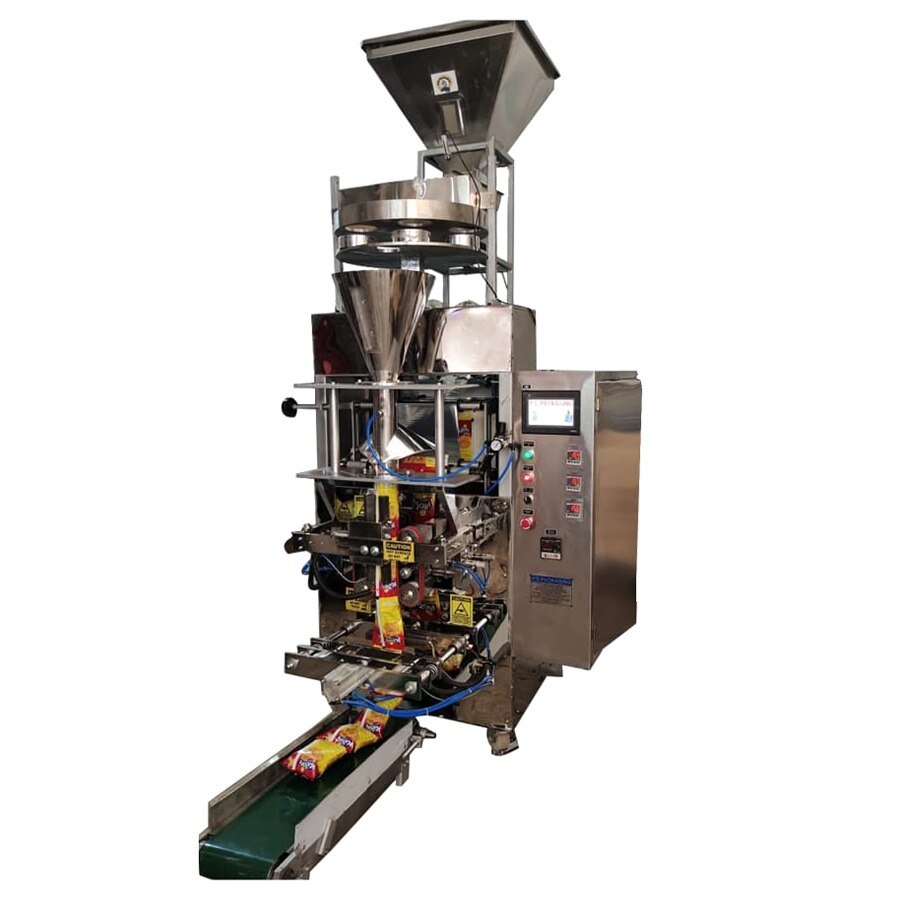
A pneumatic cup filler packing machine handles besan consistently only when its air circuit, cup geometry, and powder feed remain repeatable. Specify regulated, dry compressed air, stable cylinder timing, and cushioning; pressure fluctuations or wet air can change gate travel, cup indexing, and sealing alignment.
Check these mechanical details before accepting the machine:
- Use cups with smooth, rounded interiors and adjustable volume; worn edges or excess clearance let powder leak before discharge.
- Match cup diameter and depth to the target weight, leaving enough fill height for besan to settle without compacting.
- Fit a scraper that removes surplus powder without compressing the cup or disturbing its level.
- Control hopper level with gentle agitation; aggressive stirring aerates besan, while poor agitation permits bridging above the cups.
| Control point | Cup filler | Auger filler |
|---|---|---|
| Metering action | Fixed volume; density changes alter mass | Screw revolutions; feed consistency still determines mass |
| Air and motion | Regulated air must index cups and gates identically | Motor speed and torque must remain stable |
| Powder feed | Consistent head pressure prevents uneven cup filling | Agitation prevents starvation; level control prevents flooding |
| Wear check | Inspect cup edges, guides, scraper, and gate seals | Inspect screw flights, tube clearance, and seals |
Run the machine at the lowest and highest specified air pressures. If individual cup weights drift after cleaning, refill, or prolonged operation, the design is not controlling the powder condition well enough.
Where auger filling improves control—and where it creates work
Choose an auger filling system for besan when tight weight control, repeatability, or frequent recipe changeovers matter more than the cup filler’s nominal speed. The screw meters a controlled displacement, while an agitator or level control keeps besan feeding the screw inlet.
This gives a powder filling machine better control than a plain volumetric cup, but it cannot correct inconsistent bulk density or poor hopper flow.
A cup filler remains sensible when the besan is free-flowing, the buyer accepts regular weight checks, and low equipment cost matters. Some lots flow consistently enough for cups; others bridge, aerate, or vary in density after hopper refill.
Accept these auger operating demands:
- Fine besan can create dust when the screw shears and aerates powder, so specify an enclosed hopper, filtered venting or extraction, and static-control provisions.
- The screw inlet can starve or flood, causing underweight or overweight packs; monitor hopper level and agitator settings.
- Flour can cake around the screw, requiring planned cleaning and inspection during production.
- Changing target weights or recipes may require new screw settings, tooling, or a longer setup.
- Screw wear, inconsistent fill, and density changes still require individual pack-weight checks.
Judge the machine by sustained trial results, including startup, hopper refill, low-hopper running, and restart—not by strokes per minute alone.
How to run a fair cup-versus-auger acceptance test
Test the besan packing machine with the buyer’s actual besan grade, target weights, packaging film, and intended production speed. Run enough pouches to capture variation, not merely a five-pack demonstration. Include start-up, hopper refill, low-hopper, and restart periods for both cup and auger filling.
Record these measurements for every run:
- Individual net weight, sample count, average, minimum, maximum, range, standard deviation, and giveaway against target
- Pouches per minute, rejected packs, adjustment time, stoppages, bridging, leakage, and operator interventions
- Besan moisture, bulk density, particle-size condition, hopper level, and product temperature
- Film seal temperature, seal failures, pouch length, air trapped in the pack, dust at the discharge, and cleaning time
| Measurement | Cup filler | Auger filler |
|---|---|---|
| Net-weight stability | Record each pouch as density changes | Record each pouch as screw loading changes |
| Speed | Measure sustained output, not empty-machine speed | Measure sustained output with dust controls operating |
| Downtime | Log cup adjustment, bridging, and leakage | Log refilling, cleaning, screw adjustment, and dust interruptions |
| Utilities | Record air pressure and dryness, plus electrical load | Record electrical load, extraction airflow, and static-control operation |
Use the same operators and weighing scale. For a packaging machine for flour, document ambient humidity, dust extraction, and cleaning results; these conditions can change practical uptime even when advertised capacity matches.
How to choose the machine after an Indore site trial
Choose the machine that delivers acceptable individual weights under your actual Indore operating conditions, not the one with the higher advertised speed. Compare the same besan lot, film, target weight, and production rate across start-up, hopper refill, low-hopper, and restart runs.
| Option | Measured results | Utilities, cleaning, and support |
|---|---|---|
| Cup filler | Check every pouch’s weight, range, and giveaway; repeat after density or moisture changes. | Confirm dry compressed air at the machine’s specified pressure, electrical supply, cup access, dust removal, and time needed to clean bridges and clinging flour. |
| Auger filler | Check weight repeatability, screw calibration time, dust generation, and performance at low hopper level. | Confirm motor power, electrical stability, enclosure, filtered venting, static control, tool-free cleaning, and availability of screws, seals, and sensors. |
| Decision | Reject an option that misses your allowable range during any required condition, even if its average is good. | Price downtime: include air treatment, extraction, operator training, spare-part delivery, and technician response in the comparison. |
Ask PS PACKAGING to record the test data and utility requirements in writing, including air pressure and dryness, electrical load, cleaning steps, replacement-part lead times, and local service coverage.
For besan packing machine cup filler versus auger in Indore, choose the cup only when its measured giveaway and checks fit your process; select the auger when repeatability outweighs added cleaning and dust-control work.
Related products
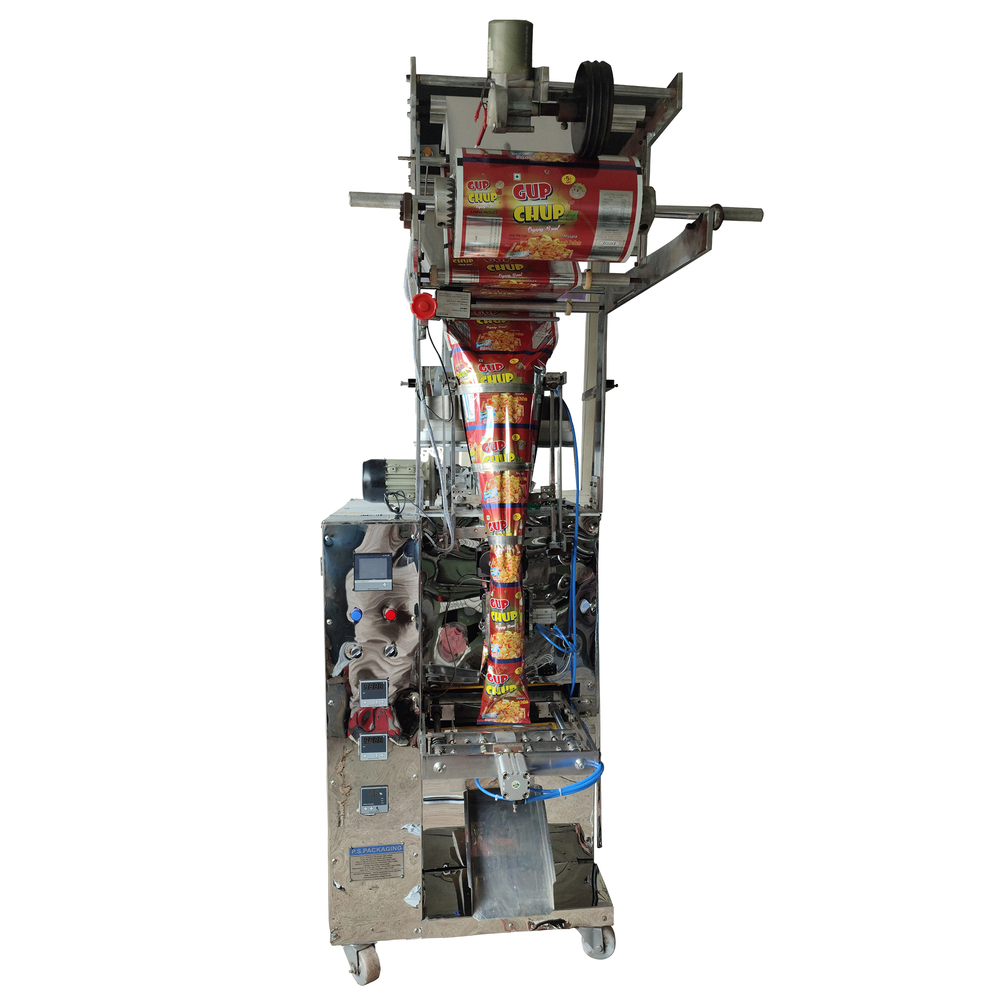 | Industrial Packaging Machine Pneumatic Cup Filler Packing Machine Manufacturer & Supplier in Indore | Patna | Nagpur -PS Packaging The Pnematic Cup Filler Packing Machine from PS Packaging, Indore, Madhya Pradesh is... View product → |
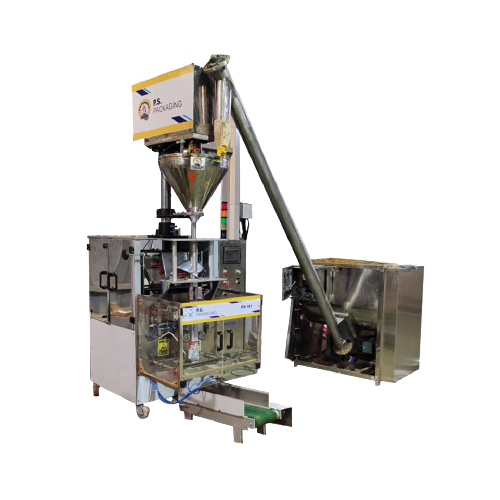 | Servo Auger Filler Packing Machine Collar Type Servo Auger Filler Packing Machine Collar Type Servo Auger Filler Packing Machine The Collar Type Servo Auger Filler Packing Machine is a high-performance packaging solution designed... View product → |
Frequently asked questions
Why does a cup setting not guarantee besan weight?
A cup filler doses a preset volume. Besan weight changes when bulk density, aeration, moisture, or particle size changes.
Which besan conditions make cup filling drift?
Drift increases when besan has inconsistent sieve size, moisture, aeration, settling, or poor flow into the cup.
What does pneumatic cup equipment need to control?
It needs controlled cup filling, reliable pneumatic timing, stable product flow, accurate cup volume, and clean release into each pouch.
When does auger filling improve besan weight control?
An auger controls the number of screw revolutions, making it better suited to repeatable powder dosing when calibrated to the product.
How should you compare a cup filler with an auger filler?
Test both with the same besan batch, target weight, pouch, speed, run duration, and sample-weighing method before choosing the machine.
Related products
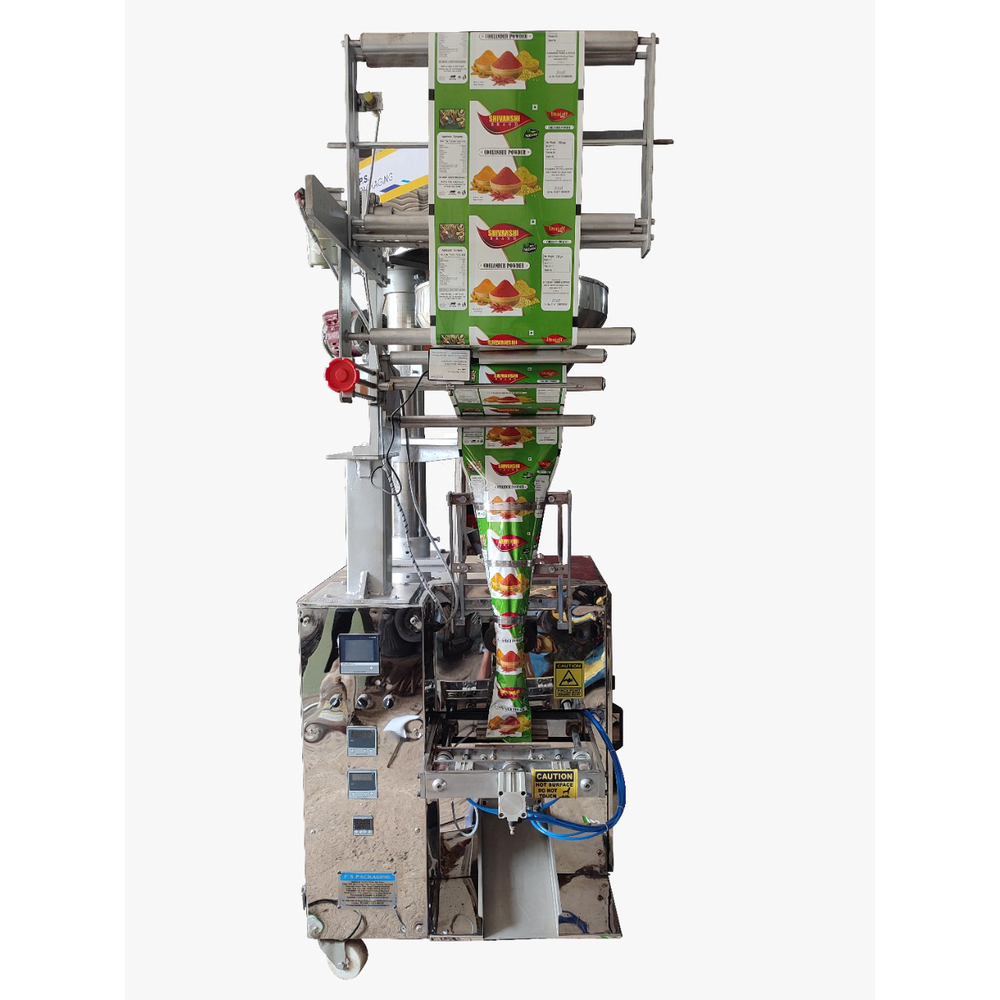 | Industrial Packaging Machine Pneumatic Auger Filler Packing Machine Manufacturer & Supplier in Indore | PS Packaging The Pneumatic Auger Filler Packing Machine from PS Packaging, Indore, Madhya Pradesh is a reliable... View product → |
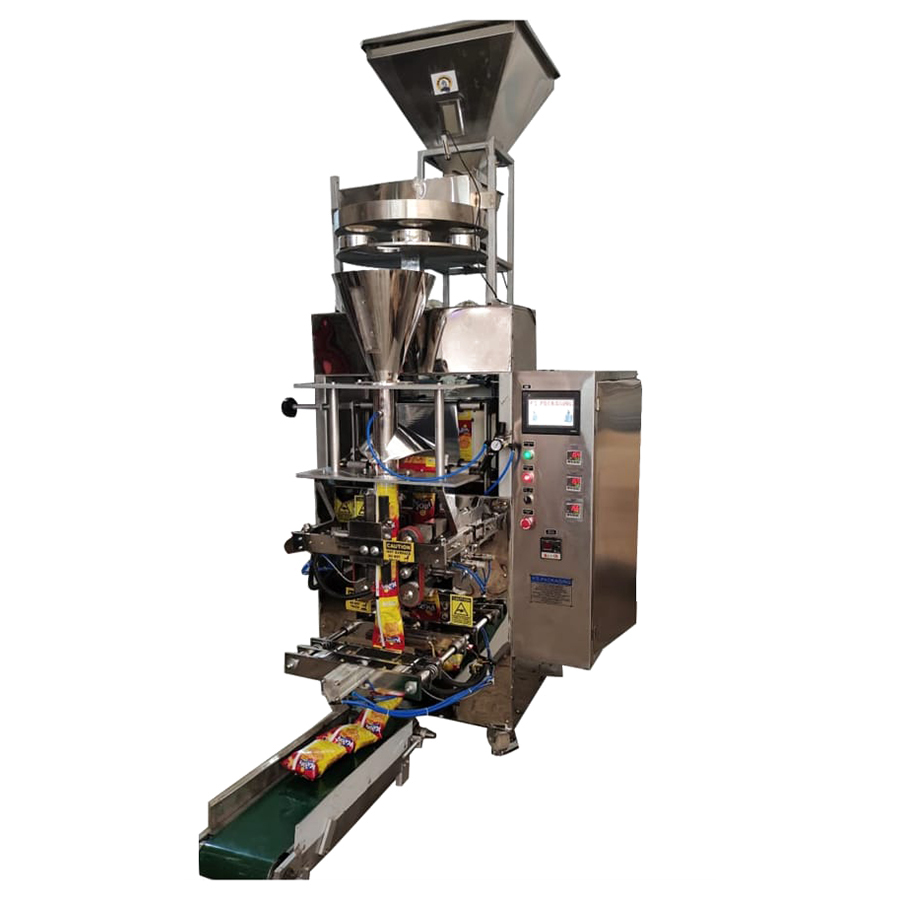 | Industrial Packaging Machine Collar Type Cup Filler Packing Machine The Collar Type Cup Filler Packing Machine is a robust and efficient packaging solution designed to deliver accurate filling and reliable sealing for... View product → |