


Reliable pulse packing depends on more than the machine’s advertised speed. You need to match the weighing system, hopper design, film, sealing method, pack sizes, and automation level to the exact pulse products you sell, then confirm performance through a production trial. By the end, you will have a practical basis for comparing single-head, 10-head, and 14-head systems and checking whether a machine will deliver consistent saleable packs.
Key takeaways
- Test each pulse SKU because grain shape changes accuracy and speed.
- Choose head count from required output, pack weight, and available floor space.
- Measure verified production output, not the machine’s advertised maximum speed.
- Run buyer-specific trials to check weight variation, seal quality, dust control, and changeover time.
Match the Machine to the Pulse, Not Just the Product Category
Check the actual SKU, not the word “pulses.” A pulses packing machine in Indore must suit the grain that will run through it. Whole chickpeas, split chickpeas, lentils, kidney beans, peas, black gram, green gram, and mixed pulses differ enough to change filling accuracy and speed.
Before choosing a packaging machine for food industry production, record:
- Grain size, shape, roundness, and split or broken-grain percentage; irregular pieces can bridge a hopper or jam a narrow chute.
- Bulk density and moisture; these determine the volume needed for a target weight and alter the dose as the product changes.
- Dust level and surface residue; dust can contaminate the seal area, foul sensors, and reduce seal strength.
- Flow behaviour; free-flowing beans suit one feed setting, while sticky, dusty, or uneven material needs different vibration and gate control.
- Product impact and drop height; excessive impact disturbs load-cell readings and creates overweight or underweight variation.
- The upstream elevator and surge hopper; starvation, surging, or bridging can look like a weighing fault.
| Pulse characteristic | Selection concern | Failure if ignored |
|---|---|---|
| Large, round grains | Wider chute and suitable hopper geometry | Jamming or slow discharge |
| Small or split grains | Controlled feed and accurate gate timing | Giveaway and inconsistent weights |
| Dusty or broken product | Seal-area cleaning and contamination trials | Leaking packs |
| Mixed-size pulses | Separate validated settings or uniform blending | Unstable flow and weight variation |
Test the actual product with the intended laminate. A clean-film trial cannot reveal seal contamination, unsuitable friction, or a narrow heat-seal window. Keep the checkweigher and metal detector as separately validated controls, not substitutes for accurate filling.
Single-Head, 10-Head, or 14-Head: Which System Fits Your Output?
A small dal mill usually needs a single head packing machine when it runs short batches, several pack sizes, or frequent product changes. It weighs one dose per cycle, so filling, load-cell stabilisation, discharge, bag forming, sealing, and cutting determine the real output.
| Option | Best fit | Advantages | Limitations |
|---|---|---|---|
| Single head | Small dal mill or regional brand | Lower capital cost, simpler operation, smaller footprint, quick SKU changeover | Lower bags per minute and more exposure to cycle-time variation |
| 10-head | Contract packer or growing regional brand | Combines multiple weighments for faster cycles and steadier accuracy | Higher investment, more controls, longer cleaning and changeover |
| 14-head | High-volume plant with stable SKUs | Highest potential throughput and better use of a continuous bagging line | Largest footprint, greater product-feed demands, and higher service complexity |
Choose 10 or 14 heads only when the elevator, surge hopper, and bagger can maintain a steady product flow. Starvation, bridging, excessive drop height, or dust at the seal can reduce output even when the weighing machine is working correctly.
A pulses packing machine in Indore should be judged on sustained bags per minute for your actual lentil, chickpea, bean, or mixed-pulse SKU—not its “up to” speed.
Ask for a product trial using your pack weights, film, target tolerance, and changeover routine, then confirm local support for load cells, sealing jaws, sensors, PLC faults, and spare parts.
Compare Weighing Methods, Pack Speeds, and Real Production Output
A 500 g pulse pack rewards multihead combination weighing, while a 5 kg or 10 kg pack usually suits a linear or single-head net weigher. Use these figures for initial capacity planning, not as guaranteed output.
| Pack size | Preferred weighing method | Indicative sustained output |
|---|---|---|
| 500 g | 10- or 14-head combination weigher | 25–50 packs/minute |
| 1 kg | 10- or 14-head combination weigher | 20–40 packs/minute |
| 2 kg | Multihead or linear net weigher | 12–25 packs/minute |
| 5 kg | Linear or single-head net weigher | 6–12 packs/minute |
| 10 kg | Single-head or heavy-duty linear weigher | 3–6 packs/minute |
A single-head packing machine weighs one dose per cycle, so filling, load-cell stabilisation, discharge, bag formation, sealing, and cutting determine the result. Expect roughly 8–15 packs per minute at 500 g, falling to 1–3 packs per minute at 10 kg, depending on pulse flow and tolerance.
A 10-head or 14-head system improves speed on smaller packs by combining hopper weights, but it costs more, occupies more space, and takes longer to clean and change over. Dust, broken grains, nitrogen flushing, narrow weight tolerances, and seal checks reduce sustained output.
A checkweigher verifies finished mass; it does not replace the filler’s weighing system.
For a packaging machine for food industry use, specify output with the exact lentil, chickpea, bean, or mixed-pulse SKU, film, target weight, and allowed giveaway. Run a timed trial before accepting the quoted capacity.
Use a Buyer-Specific Trial to Verify Accuracy and Seal Quality
Run a buyer-specific trial with your own pulse, laminate, pack sizes, and operator; a brochure cannot reveal giveaway, leaking seals, or slow changeovers. For a pulses packing machine in Indore, request a signed trial record covering:
1. Weigh at least 30 consecutive bags at each target weight, such as 500 g, 1 kg, and 5 kg. Compare every result with the target, calculate the average excess weight as product giveaway, and record the maximum deviation.
2. Test the filler and checkweigher separately. The filler controls the dose; the checkweigher verifies finished-pack mass. Confirm rejected bags are physically diverted, the reject alarm works, and test pieces trigger the separately installed metal detector under the agreed product-specific settings.
3. Run the actual film at production speed. Check the laminate’s sealant layer, thickness, stiffness, coefficient of friction, and heat-seal window, then inspect seals after pulses or dust reach the jaw area. Perform leak tests on sealed bags, not clean-film samples alone.
4. Time a changeover from one pulse SKU and pack size to another. Record cleaning, tooling adjustment, recipe selection, emptying, and the first acceptable bag. A quick cycle that produces ten inconsistent bags is not a quick changeover.
5. Run the complete packaging machine for food industry production for at least 60 minutes. Record sustained good bags per minute, rejected bags, giveaway, seal failures, unplanned stops, operator interventions, and nitrogen-flushing performance if specified.
Accept only results matching your tolerances and saleable output, not the machine’s “up to” speed.
Check Installation, Hygiene, and Local Service Before Ordering
Before ordering, confirm that your site can run, clean, and service the machine without improvisation. A packaging machine manufacturer in Madhya Pradesh should inspect the proposed location, not rely only on a floor plan.
1. Measure floor load capacity, machine footprint, access-door width, ceiling height, operator clearance, film-storage space, and room for the elevator, surge hopper, checkweigher, and reject system.
2. Record available electrical supply, phase, earthing quality, compressed-air pressure and filtration, and backup power requirements. Ask for the machine’s connected load and air consumption in writing.
3. Specify stainless-steel product-contact parts, tool-free access to weighing hoppers, cleanable guards, drain-free ledges, and the cleaning method allowed for sensors and load cells. Product buildup around a hopper can cause weight drift.
4. Confirm that the elevator feed, surge hopper, and discharge timing match your pulse flow. Starvation, bridging, excessive drop height, or uncontrolled vibration can look like a weighing fault.
5. Treat the checkweigher and metal detector as separate controls in your packaging machine for food industry line. Require product-specific sensitivity trials, reject confirmation, and documented test-piece checks.
6. Get a commissioning plan covering zero and span calibration, film setup, seal-jaw adjustment, operator training, and hygiene sign-off. Ask PS PACKAGING for recommended spare parts, response time for load-cell, PLC, sensor, and sealing-jaw faults, and local stock of wear parts.
Related products
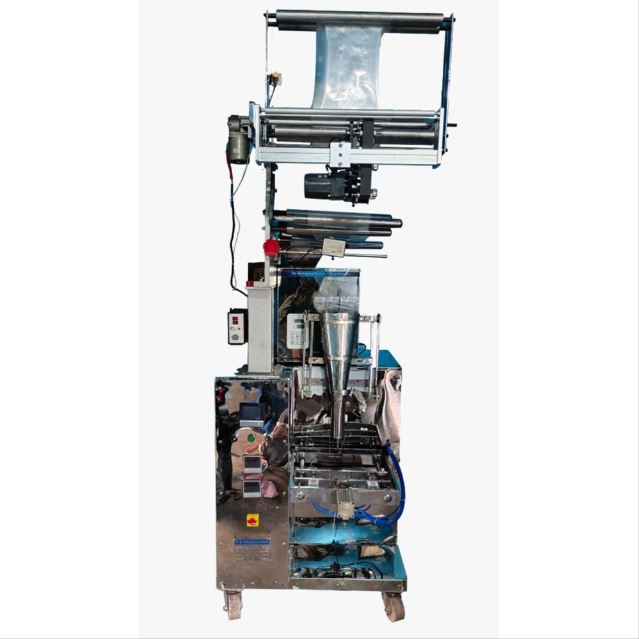 | Industrial Packaging Machine Manufacturer & Supplier in Indore | PS Packaging The Single Head Packing Machine from PS Packaging, Indore, Madhya Pradesh is a durable and efficient... View product → |
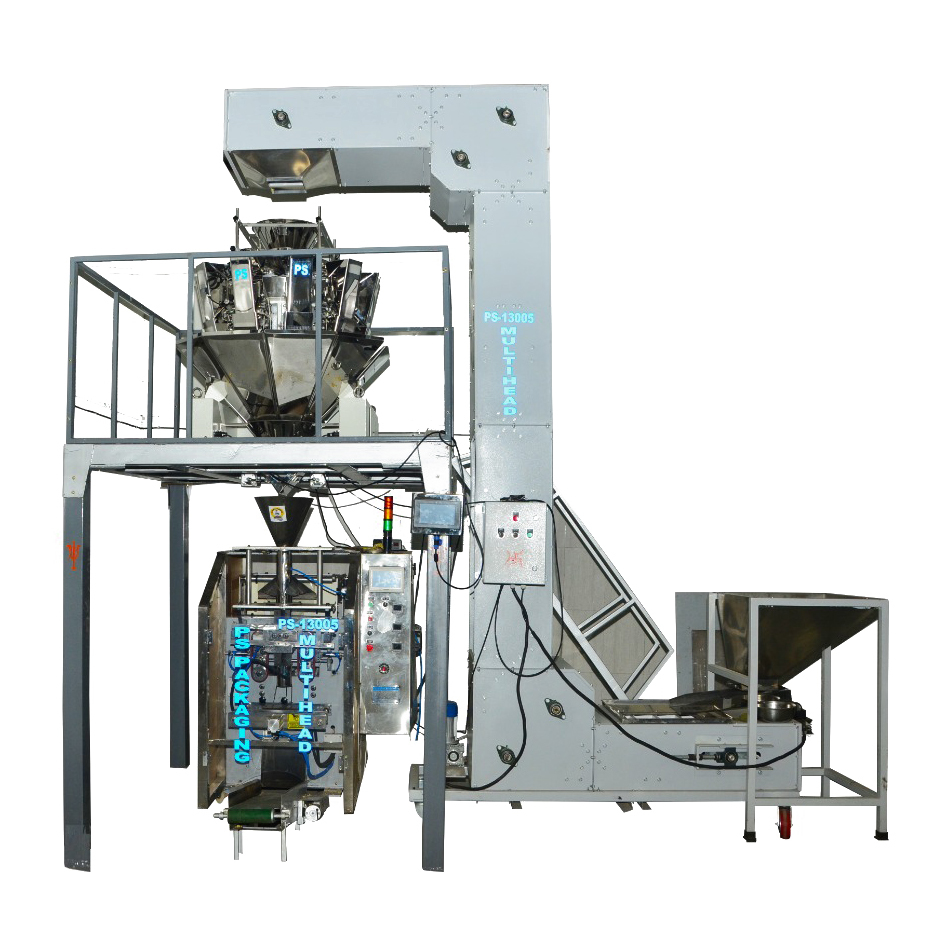 | Multihead Head Packing Machine Multihead Packing Machine The Multihead Packing Machine is a fully automatic, high-speed packaging solution designed for precise weighing, filling,... View product → |
Frequently asked questions
How do you match a pulses packing machine to the product?
Test the exact SKU, including whole chickpeas, split chickpeas, lentils, kidney beans, peas, black gram, green gram, or a blend. Grain size, shape, surface texture, and flow behaviour affect weighing accuracy, filling speed, hopper settings, and sealing performance.
What is the difference between single-head, 10-head, and 14-head weighing systems?
A single-head packing machine weighs one portion at a time and suits lower or variable output. A 10-head or 14-head combination weigher uses multiple weigh hoppers to build portions quickly. Select the head count using required packs per minute, pack weight range, product characteristics, and the space available for the machine.
How can you verify a machine’s real production output?
Ask the supplier to run your product at your required pack weight and record filled packs per minute, weight variation, rejected packs, product loss, changeover time, and stoppages. Compare the trial results with your target rather than relying on the stated maximum speed.
What should you check before ordering a packaging machine for the food industry?
Check the product-contact materials, access for cleaning, dust-control provisions, guarding, electrical requirements, installation scope, operator training, spare-parts availability, response times, and local service coverage. Request a buyer-specific trial that includes weighing accuracy and finished seal quality.
Related products
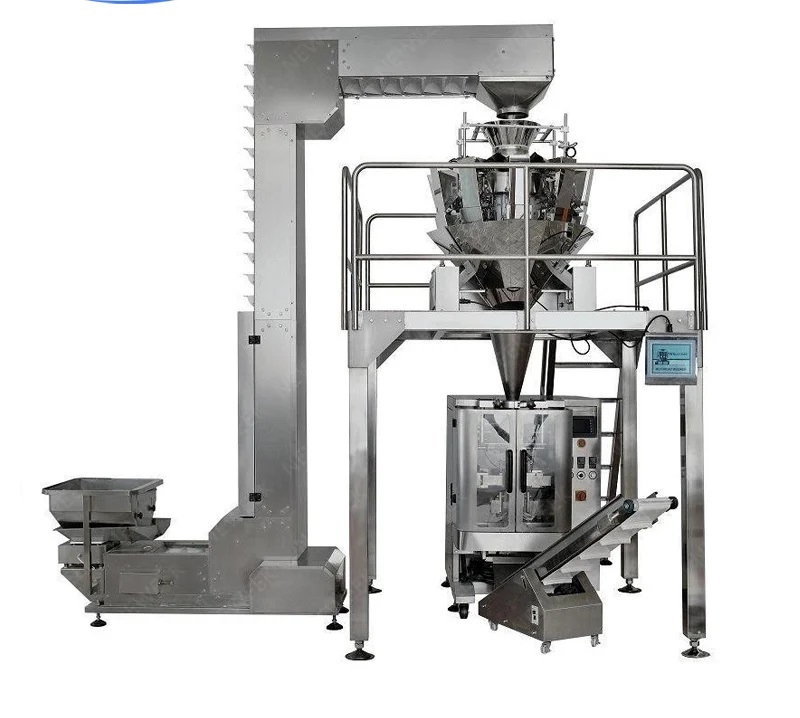 | Multihead Head Packing Machine Multi Head 10 Head Packing Machine Manufacturer & Supplier in Indore | PS Packaging Price: Get Best Price / Request a Quote MOQ: 1 Unit The Multi Head 10 Head Packing Machine from PS... View product → |
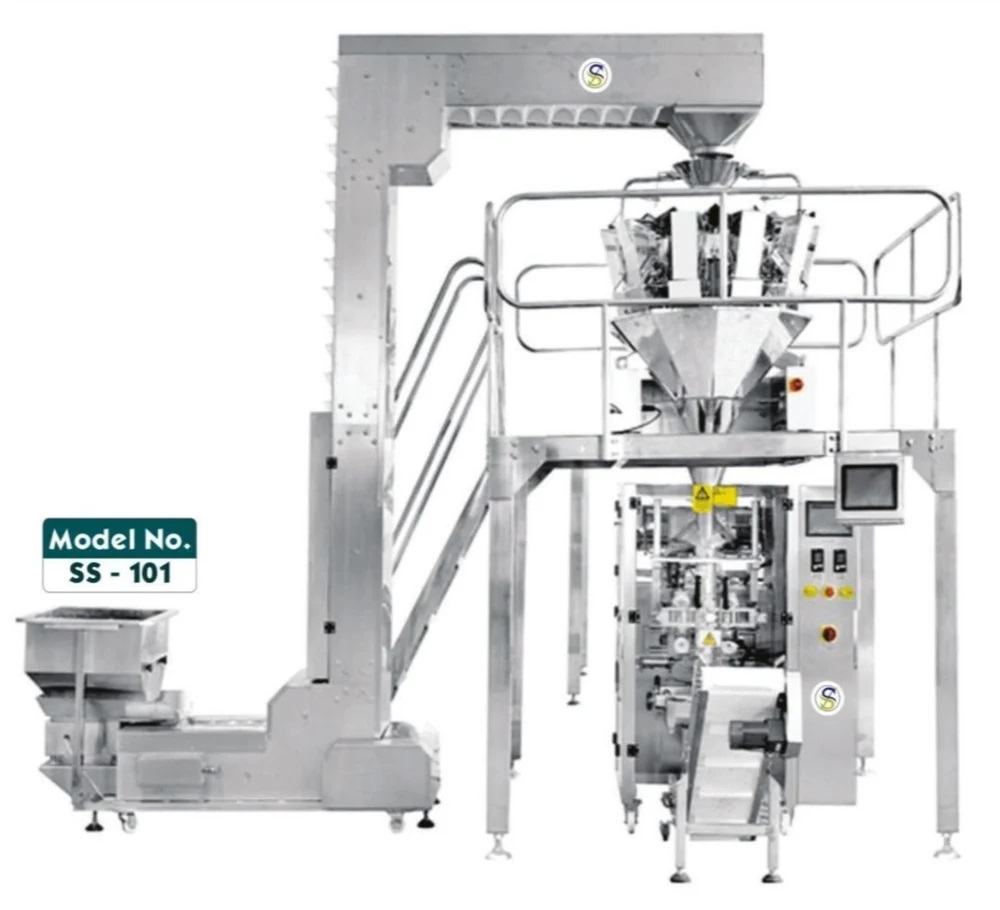 | Multihead Head Packing Machine Multi Head 14 Head Packing Machine Manufacturer & Supplier in Indore | PS Packaging Price: Get Best Price / Request a Quote MOQ: 1 Unit The Multi Head 14 Head Packing Machine from PS... View product → |