
Whole pulses do not behave like powders inside a dosing system: chickpeas, lentils, beans and split dals can bridge, break, settle unevenly and change weight as bulk density shifts. You will be able to decide whether servo auger filling fits your products, specify the machine around real production conditions, and compare it fairly with weigh-based alternatives and supplier quotations.
Key takeaways
- Run whole pulses and split dals through a product trial before purchase.
- Control fill volume, then verify pack weight across changing bulk densities.
- Test every target pack size at the supplier’s stated production speed.
- Compare cleaning access, food-contact construction, service response and total ownership cost.
Can a servo auger filler handle whole pulses and split dals?
Yes, but a servo auger filler is suitable for whole lentils, chickpeas, kidney beans, pigeon peas and split dals only after a product trial. A pulses packing machine using an auger is normally volumetric: programmed screw rotation controls volume, while delivered mass changes with bulk density, moisture, variety, size distribution and surface friction.
| Option | Dosing basis | Declared-weight suitability |
|---|---|---|
| Servo auger | Measured screw volume | Repeatable dosing, but density changes alter mass |
| Linear weigher | Targeted weight in weigh buckets | Strong basis for accurate packs |
| Net weigher | Product weighed before discharge | Strong control of declared net weight |
| Multihead weigher | Combined weighed portions | High accuracy and speed for suitable free-flowing pulses |
Servo motion improves rotation repeatability, recipe control and adjustment of speed, acceleration and cutoff timing. It does not turn the filler into a gravimetric system. A powder auger can crush or chip pulses, generate dust and bridge when large particles interlock across the screw.
Before selecting a pulses packing machine, require a witnessed trial with your actual lots, not a clean demonstration sample. Record:
- Mean weight and weight variation
- Breakage or chipping
- Dust generation
- Bridging and stoppages
- Sustained packs per minute
Choose the auger when its product contact design protects the pulses and its weight variation meets your tolerance. Choose a weigh-based system when declared-weight control matters more than the lower cost or simpler setup of volumetric filling.
How the servo auger meters pulses without treating them like powder
The dose begins in a product hopper shaped to prevent dead corners, with a controlled feed gate or gentle agitator keeping pulses moving toward the auger tube. Too much agitation increases breakage and dust, so the setting must reduce bridging without tumbling the product aggressively.
A servo motor turns the auger through programmed rotations or position steps. Its flights carry pulses forward, while a discharge shutoff or cutoff limits dribble after the target dose. The controller stores separate recipes for target weight, speed, acceleration and cutoff timing.
Flight pitch, tube diameter and auger geometry must match the product. Whole chickpeas and kidney beans need generous clearances and a design that limits crushing; smaller split dals may use a different pitch and tube. A powder auger can chip whole pulses or jam when particles interlock.
A servo auger is normally volumetric, not gravimetric. The same rotation or cup volume delivers a different mass after moisture, variety, size distribution or bulk density changes.
| Product type | Auger requirement | Main risk |
|---|---|---|
| Whole chickpeas or kidney beans | Large clearances, gentle feed, low crushing | Chipping, bridging and dust |
| Split dals | Finer pitch and matched tube | Compacting or overfeeding |
- Ask whether the servo auger filler packing machine feeds pre-made pouches or forms bags on an integrated vertical form-fill-seal line.
- Confirm whether the quotation includes the bag former, film-registration sensor, sealing jaws, date coder, checkweigher, metal detector and discharge conveyor.
A net-weigh filler measures the dose before release; a volumetric auger estimates mass from volume. Choose the former when declared-weight control outweighs the auger’s simpler recipe-based operation.
Which pack sizes, speeds and tests should you require before buying?
Turn the quotation into pass-or-fail figures before choosing a pulses packaging machine. Specify every SKU, target pack weight, pouch width and length, film type, seal format and required packs per minute; do not accept one headline speed. Require the supplier to state attainable ranges for each item, including permitted weight tolerance.
| Dosing option | Weight-control basis | Trade-off |
|---|---|---|
| Servo auger | Programmed volume; mass changes with bulk density | Lower cost, but needs calibration |
| Weigh-based filler | Measures the dose before release | Higher cost, stronger declared-weight control |
Require a witnessed trial using every intended SKU across several production lots, not one clean sample. Run and record results during:
- Start-up, hopper refill and low-hopper operation
- Film or pre-made pouch changes
- Sustained running at each required pack size
Record mean pack weight, standard deviation, percentage outside the target tolerance, damaged or chipped pulses, stoppages and actual packs per minute at each size. A servo auger may need calibration when moisture, variety or bulk density changes; a weigh-based system costs more but better controls net weight.
Ask whether the quotation includes the bag former, registration sensor, sealing jaws, date coder, conveyor, checkweigher, metal detector and discharge conveyor. “Machine speed” means little if downstream equipment runs slower, so confirm whether the servo auger filler feeds pre-made pouches or forms bags on an integrated vertical line.
What construction, cleaning and compliance details protect the product?
Specify the material grade of every product-contact part, including the hopper, auger, tube, chute, gates, seals and fasteners. Do not accept “stainless steel” as proof of SS 304 or SS 316L, or as proof of hygienic design.
Request smooth, cleanable surfaces, hygienic welds, tool-light access to the hopper and dosing parts, and removable augers or tubes where practical. Require a documented cleaning procedure that names tools, inspection points and release records.
- Empty the hopper and stop the filler safely.
- Remove retained pulses from the hopper, auger tube, chute and discharge area.
- Vacuum or brush residue away without driving debris into bearings, seals or other protected parts.
- Inspect seals and chutes for trapped product, damage or wear.
- Record the cleared product before loading the next pulse variety.
Use dedicated contact parts for allergen-containing products, or fully clean and verify shared parts before changeover. A traceable clearance record prevents leftover pulses from becoming a mislabelled or allergen-containing pack.
Keep machine hygiene separate from packaging compliance. Indian retail packs need applicable Legal Metrology declarations, including net quantity and packer or manufacturer details. Film, laminate, ink and coatings need supplier documentation against applicable Food Safety and Standards packaging requirements.
Request guarding around the auger and sealing jaws, emergency stops, electrical protection and access interlocks where required. Require a documented risk assessment and risk-reduction process following ISO 12100 principles, plus safe cleaning and changeover instructions.
How should a local processor compare suppliers, service and price?
A “pulses packing machine price in India” is meaningful only after you fix the machine scope. Demand a line-item quotation, not one bundled figure, and compare cost per accurately filled pack rather than the lowest capital price.
| Item | Require a separate price for |
|---|---|
| Servo filler | Servo auger, motor and controller |
| Weighing equipment | Linear or multihead weigher, load cells and controls |
| Product parts | Augers, tubes, hoppers and change parts |
| Bagging system | Pouch former, film handling and sealing hardware |
| Inspection | Coding, checkweigher and metal detector |
| Project services | Installation, taxes, training and commissioning |
Ask the pulses packaging machine manufacturer for witnessed results using every intended pulse variety and pack size. Record weight variation, damaged grains, stoppages, changeover time and sustained packs per minute. A catalogue demonstration proves far less than a trial with your actual lots.
Check Indian availability and lead times for servo drives, load cells, sensors, sealing heaters, augers and control components. Get named responsibility for remote diagnosis, site visits, operator training, spare parts and warranty response.
For someone searching for a pulses packing machine servo auger in Indore, a local trial with lentils, chickpeas, kidney beans or dals is more useful than a clean sample demonstration.
PS PACKAGING belongs in the comparison when it documents the trial, identifies food-contact materials and machine scope, and commits to measurable performance and service duties. Choose on support access, product damage and changeover effort—not servo branding alone.
Related product
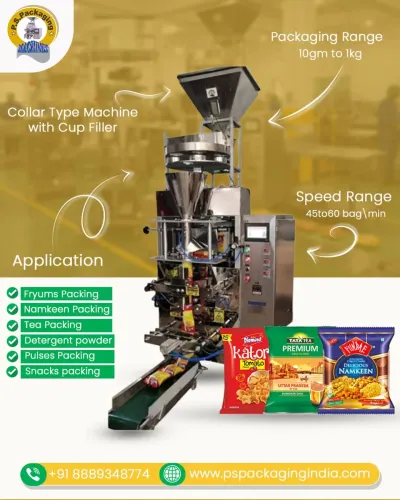
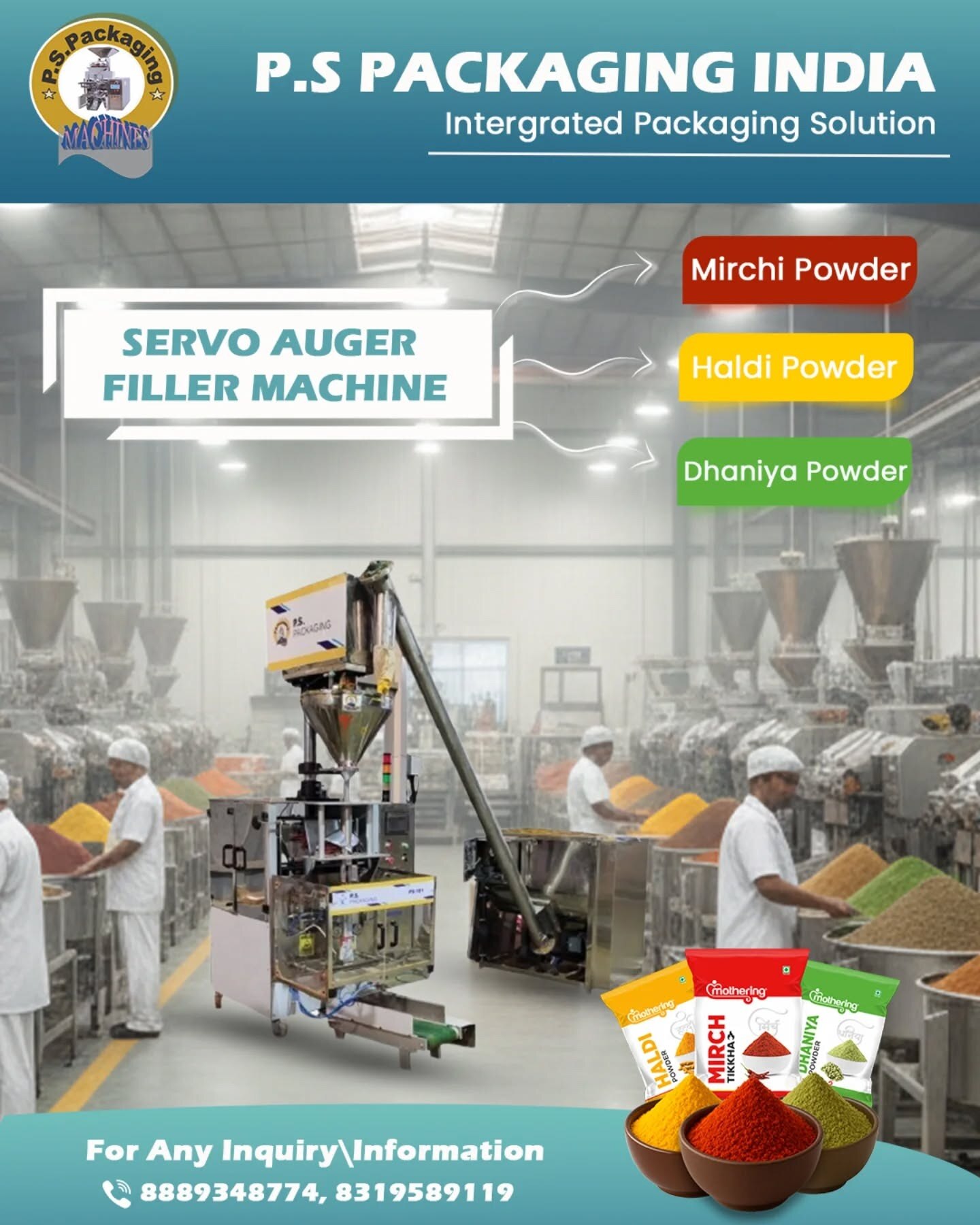
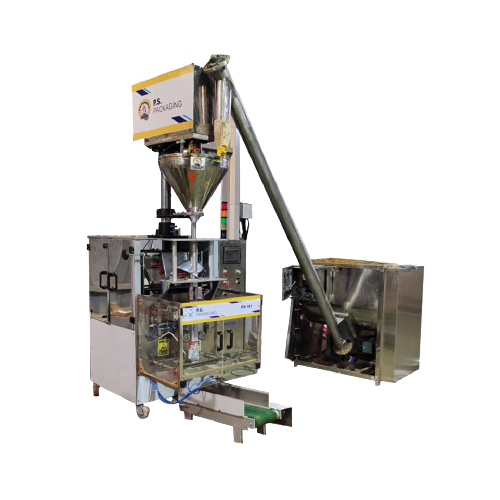 | Servo Auger Filler Packing Machine Collar Type Servo Auger Filler Packing Machine Collar Type Servo Auger Filler Packing Machine The Collar Type Servo Auger Filler Packing Machine is a high-performance packaging solution designed... View product → |
Frequently asked questions
Can a servo auger filler handle whole pulses and split dals?
Yes, but confirm suitability with a product trial using your actual lentils, chickpeas, beans or dals. Bulk density, moisture, size distribution and surface friction affect delivered weight.
How does a servo auger meter pulses without treating them like powder?
The servo motor controls auger rotation and therefore the measured volume. Because pulses are granular rather than uniform powder, verify the resulting mass with repeated test fills and adjust the recipe.
Which pack sizes, speeds and tests should you require before buying?
Test every required pack size with your actual product. Record fill-weight variation, output speed, rejects, seal quality, changeover time and performance after the hopper is refilled.
What construction, cleaning and compliance details protect the product?
Check the product-contact surfaces, welds, seals, access doors and auger removal process. Request food-contact material details, cleaning instructions, electrical documentation and the compliance records required for your operation.
How should a local processor compare suppliers, service and price?
Compare the complete installed cost, product-trial results, warranty, spare-parts availability, technician response time, operator training and maintenance requirements rather than comparing machine prices alone.