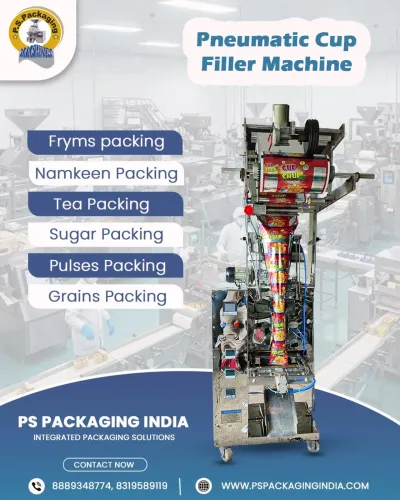

Whole peppercorns, cracked pepper, and ground pepper do not fill the same way, so a machine that performs well with one form can produce weight variation, dust, or poor seals with another. You will be able to match the pepper grade to the dosing method, specify the required utilities, and judge an Indore supplier through a meaningful production trial.
Key takeaways
- Use pneumatic cups for free-flowing whole peppercorns and uniform granules.
- Verify cup volume, trial-weight results, compressed-air quality, and seal performance.
- Choose an auger for powder, a multihead weigher for variable premium weights.
- Test your pepper, pouch film, target weights, and production speed before ordering.
Which black pepper forms suit a pneumatic cup filler?
Whole black peppercorns usually suit a pneumatic cup filler best because their rounded particles flow into a defined volume with less resistance. The filler is volumetric: product enters a cup, the cup fills, excess is levelled, and the measured charge drops into the pouch.
| Form | Suitability for volumetric cup dosing | Main risk |
|---|---|---|
| Whole peppercorns | Usually suitable after trials | Berry-size and density variation can change pack weight |
| Cracked pepper | Possible after trials | Bridging, segregation, compaction and uneven discharge |
| Fine ground pepper | Often unsuitable for a standard cup | Dust, bridging, compaction and inconsistent discharge |
Before selecting a black pepper packaging machine, state the pepper form, berry size, fines percentage, moisture condition, target fill weight and pack size. Codex sets a maximum moisture level of 13% for covered black, white and green pepper products, but incoming lots can still differ in moisture, cleanliness, particle distribution and bulk density.
Those differences affect flow and repeatability.
Do not choose the cup from a density calculation alone. Run the actual grade through trials covering each planned pack size, hopper level, speed and restart condition, then weigh individual packs.
Set the cup volume from those results; a nominal density can produce underweight or overweight packs when settling or vibration changes how the cup fills. A high-fines grade that repeatedly bridges or leaves dust at the discharge is a signal to compare an auger or another powder-oriented doser.
How does pneumatic cup filling control the pack weight?
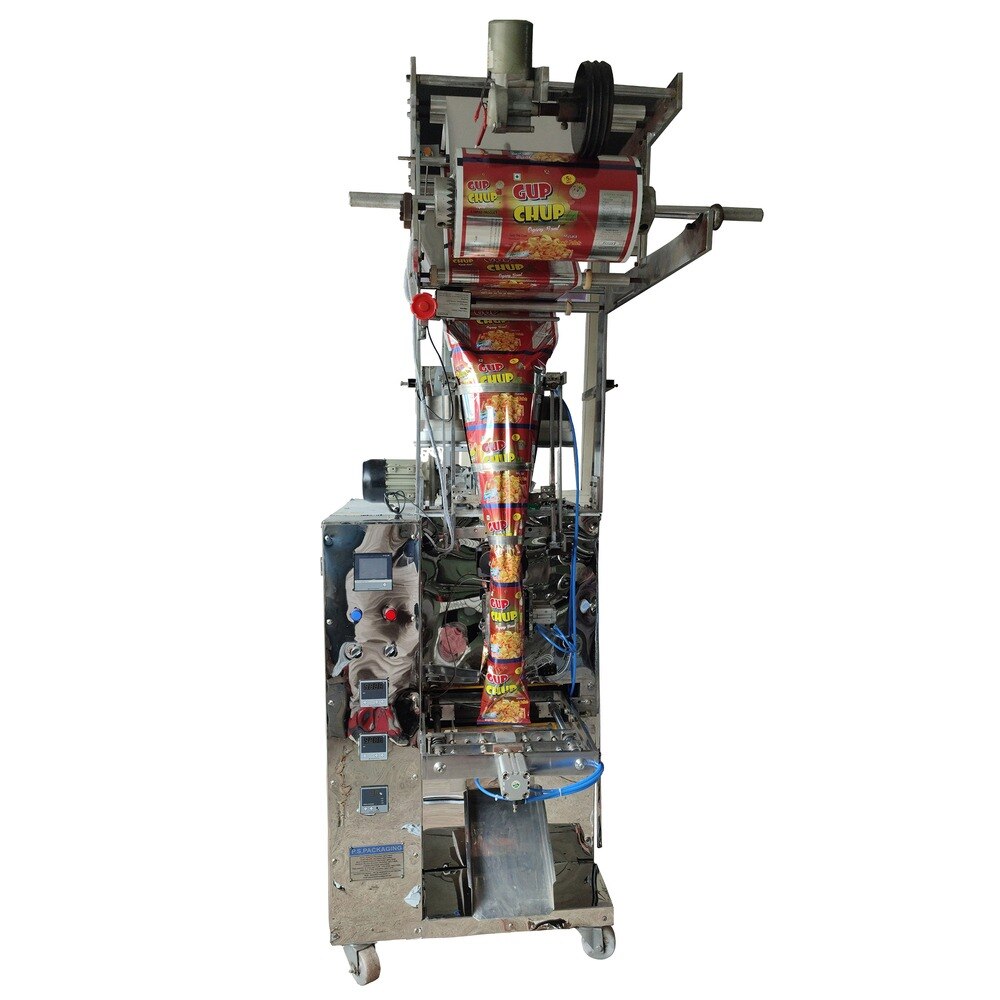
A pneumatic cup filler packing machine controls quantity by volume, not by weighing every charge. Pepper enters a measuring cup, the cup fills to its set volume, excess product is leveled or adjusted, and the measured charge drops into the pouch or container.
1. Set the cup volume using the actual black pepper grade and target pack size. Do not rely on a density calculation alone.
2. Let the machine fill the cup from the hopper. A leveler, scraper, or adjustment mechanism removes excess pepper so each cup presents the same volume.
3. Open the discharge gate and release the charge into the pouch or container. Pneumatic refers to cylinders operating gates, cup movement, or indexing; it does not mean automatic weighing or pneumatic conveying of pepper.
4. Check the mass because fixed volume does not guarantee fixed weight. Berry size, moisture, fines, settling, hopper level, vibration, and stop-start conditions alter bulk density. A cup filler packing machine can therefore produce different weights at the same setting.
Calibrate during trials and record individual pack weights, average error, maximum individual error, sample size, pepper grade, hopper level, speed, and restart condition. Test startup, steady running, hopper refill, and low-level operation.
An average result alone is weak: ten packs averaging 100 g can still include an unacceptable 94 g pack. Set both an allowed average error and a maximum error for any individual pack, then accept the machine only when the defined sample meets both limits.
What machine, air, sealing, and hygiene specifications matter?
Specify the machine against the actual pepper grade and pack, not the phrase spice packaging machine in Indore. Record the target fill-weight range, cup capacity, packs per minute at that weight, pouch or container dimensions, and allowable density range.
- Product-contact material, such as SS 304 or SS 316; sealing method; electrical supply, phase, voltage, and connected load.
- Compressed-air pressure, flow in litres per minute, and total consumption, plus filtration, dryer or moisture control, oil carryover limit, and ISO 8573-1 purity class. “Compressor connection” is not a specification.
- Changeover time for cup, pouch, and recipe changes, including cleaning and adjustment.
- Noise level in dB(A), measured at the operator position.
2. Inspect the product path before purchase. Look for dry-cleaning access, inspection points, smooth hopper walls, minimal ledges and dead spaces, removable gaskets, no exposed threads, and no dust-trapping recesses. Pepper residue left behind creates cross-contact and sanitation problems during the next product run.
3. Treat the seal zone as a process, not a temperature setting. Pepper fines can settle on the film and create channel leaks; require seal-jaw geometry, controlled temperature, reliable film tracking, product settling before sealing, and a method to remove fines. Raising temperature alone will not fix contamination.
4. Commission the filler, checkweigher, reject system, and printer as one line. Verify net quantity, packer or manufacturer name and address, and required declarations under current Indian Legal Metrology rules on the finished label, not only on the machine screen.
When should you choose an auger, multihead weigher, or FFS machine?
Ground pepper is the clearest case for questioning a cup filler. A pneumatic cup filler packing machine measures volume, while an auger filler controls powder movement through a screw. Fine pepper can bridge, compact, create dust, and discharge unevenly; an auger is usually the stronger starting point.
| Option | Best fit | Main trade-off |
|---|---|---|
| Auger filler | Ground pepper and powder-rich blends | Better controlled powder movement, but screw cleaning and changeovers take time |
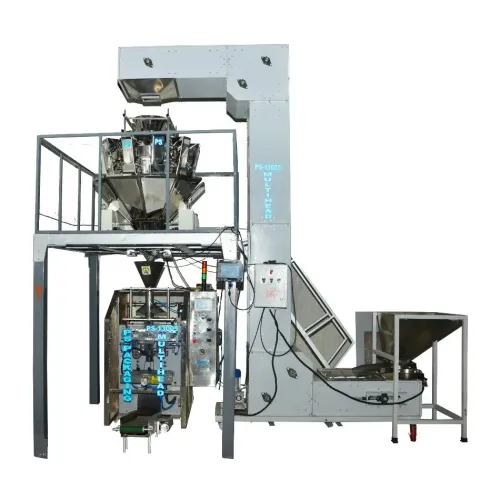
| Multihead weigher | Whole peppercorns with density variation | Better mass accuracy, but adds cost, footprint, and control complexity |
| Cup filler | Free-flowing whole peppercorns and proven grades | Fast, simple dosing, but bulk-density changes alter pack weight |
Whole peppercorns generally suit cups because they flow more freely. Choose a multihead weigher when individual weighing must absorb berry-size or density variation and the added equipment cost is justified. Cracked pepper deserves a product trial: particle-size distribution changes flow, while smaller particles can segregate from larger pieces during hopper filling and vibration.
Do not confuse premade-pouch equipment with FFS. Premade-pouch machines receive manufactured bags, then fill and seal them; FFS forms each pouch from rollstock, adding film specification, forming, tracking, and sealing controls. FFS can suit high-volume standard packs, while premade pouches can simplify pack changes and presentation.
Make the decision against target accuracy, speed, pack range, changeover time, dry-cleaning access, and maintenance—not the word pneumatic. A cup filler is the wrong choice if trials cannot hold weight or keep pepper dust out of the seal.
How should you test an Indore supplier before placing the order?
Before ordering a black pepper packaging machine pneumatic cup filler in Indore, make the supplier pass a witnessed trial using your product, film, and acceptance limits.
1. Define acceptance before testing. State whether the product is whole, cracked, or ground; every planned pouch size and fill weight; permitted average error; maximum individual error; sample size; and test conditions.
Ask for the agreed fill-weight range, cup sizes, speed at the target weight, pouch dimensions, contact materials, sealing method, electrical load, air pressure, and air consumption in writing.
2. Run the cup filler packing machine with your own pepper in the intended pouch material and every planned pack size. Record individual weights during startup, steady running, hopper refill, low hopper level, speed changes, stop-start cycles, and restart after a pause. Do not accept an average alone: it can hide underweight packs.
3. Inspect the failures that an empty-machine video will not show. Measure dust near the seal, leaking seals, bridging, missed discharges, film tracking, and cleaning time. Request machine drawings, a spare-parts list, and service-response terms. PS PACKAGING is one Indore supplier you can question against this checklist, but choose from witnessed results, not catalogue speed.
Reject the order if the agreed criteria are missed or the supplier will not document them.
Related products
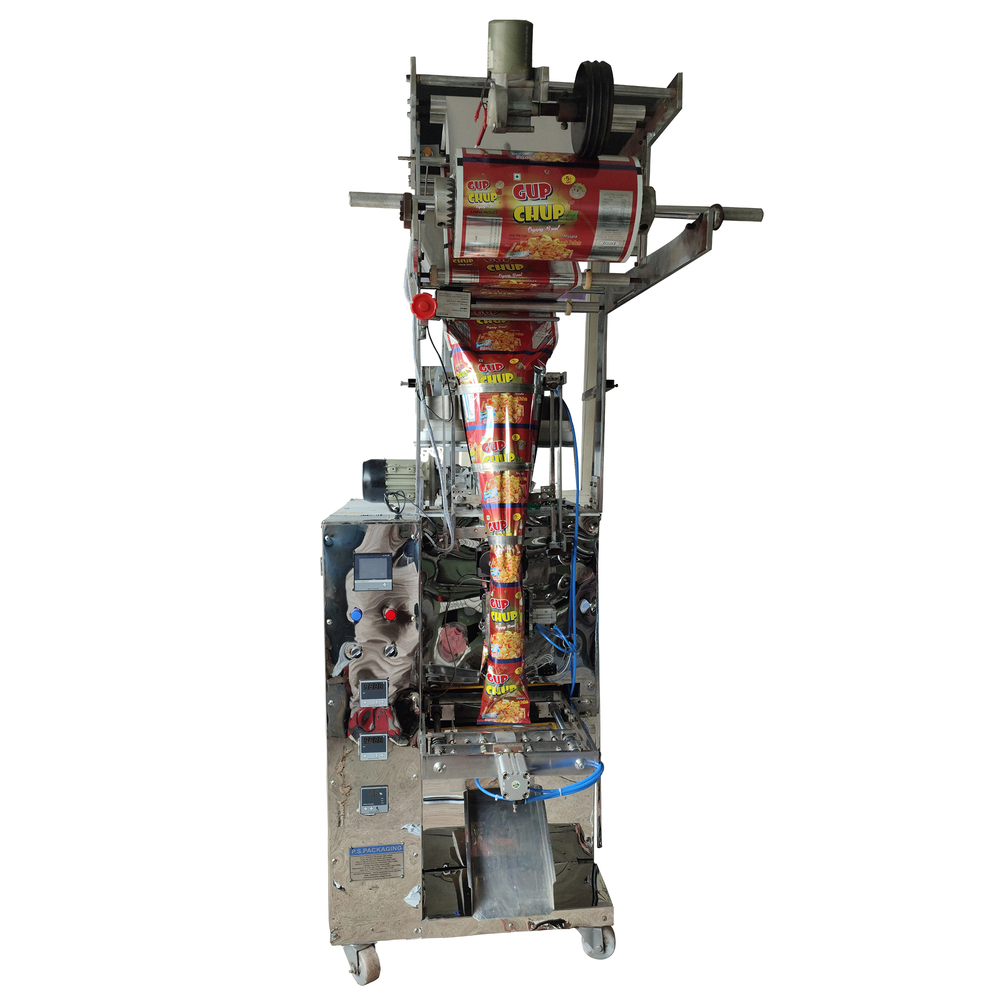 | Industrial Packaging Machine Pneumatic Cup Filler Packing Machine Manufacturer & Supplier in Indore | Patna | Nagpur -PS Packaging The Pnematic Cup Filler Packing Machine from PS Packaging, Indore, Madhya Pradesh is... View product → |
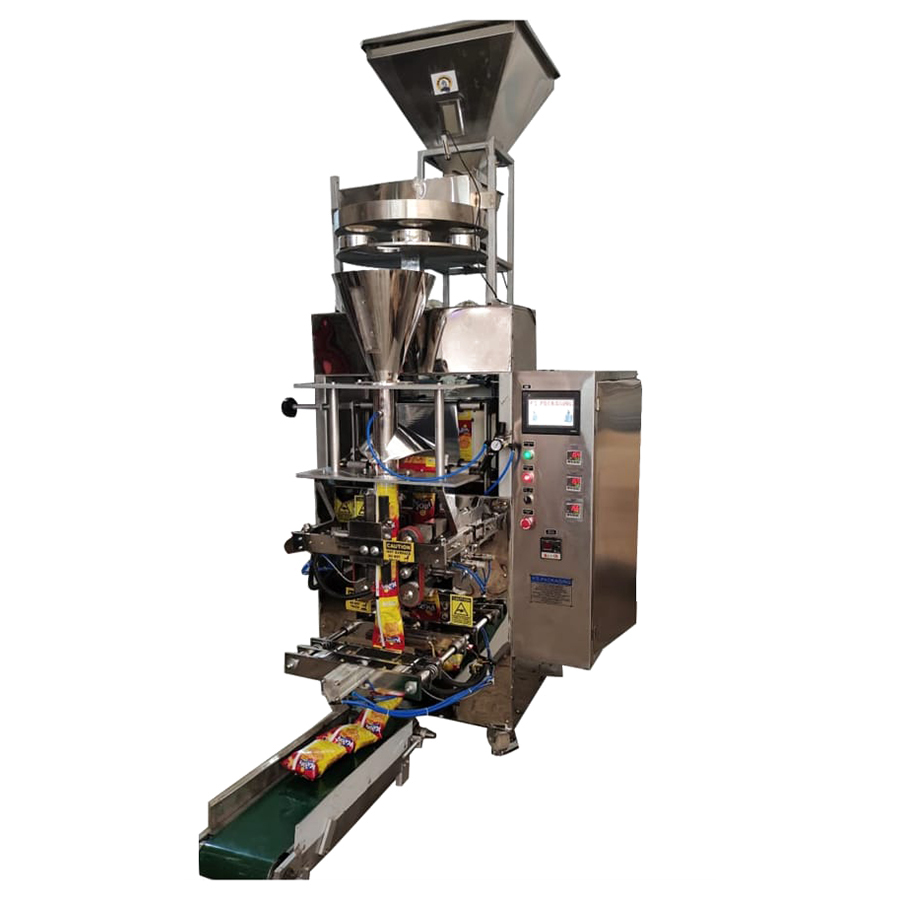 | Industrial Packaging Machine Collar Type Cup Filler Packing Machine The Collar Type Cup Filler Packing Machine is a robust and efficient packaging solution designed to deliver accurate filling and reliable sealing for... View product → |
Frequently asked questions
Which black pepper forms suit a pneumatic cup filler?
Whole peppercorns and free-flowing, uniform granules suit volumetric cups. Fine powder, oily blends, and irregular particles need flow testing before selection.
How does pneumatic cup filling control pack weight?
The cup measures a fixed volume, then discharges the product into the pouch. Check actual weights across repeated fills because bulk density changes the result.
What specifications matter in a pneumatic cup filler packing machine?
Check the machine speed, cup range, filling accuracy, compressed-air pressure and filtration, sealing temperature control, stainless-steel product contact parts, and cleanability.
When should you choose an auger, multihead weigher, or FFS machine?
Choose an auger for powders, a multihead weigher for variable or high-value products, and an FFS machine when you need integrated film forming, filling, and sealing.
How should you test an Indore spice packaging machine supplier?
Run your own pepper and pouch film at target weights and speed. Review weight samples, seal strength, changeover time, air requirements, cleaning access, spares, and service response.