
Kurkure packing involves more than dropping an extruded snack into a pouch: the line must control product flow, weight, film tracking, sealing and breakage at the same time. By the end, you can trace each machine stage, compare weighing with cup filling, specify suitable film and define a trial that measures usable output rather than a headline speed.
Key takeaways
- Use a multihead weigher for variable Kurkure weights and gentle product handling.
- Choose a collar type cup filler for consistent piece size and simpler dosing.
- Control film tension, seal temperature, gas flow and jaw timing before increasing speed.
- Accept the line against measured output, seal quality, coding, breakage and changeover tests.
What happens inside a Kurkure packing machine from product loading to discharge?
An operator or upstream conveyor loads Kurkure into the product hopper. An elevator or feeder lifts the snack to the weighing or dosing unit, where controlled movement prevents bridging and limits breakage.
- Vibratory feeders spread Kurkure into weigh buckets on a multihead weigher or into fixed-volume cups in a volumetric filler. The selected portion waits above the forming tube.
- Film unwinds from its roll and passes a registration sensor. Film-pulling belts control tension and length while the film wraps around the forming collar and vertical forming tube.
- The forming tube creates the pouch web. A longitudinal fin seal or lap seal closes the film around the tube, and the filler releases the portion through the tube into the open pouch.
- Sealing jaws create the bottom and top transverse seals. If nitrogen flushing is fitted, gas enters before the final seal to displace air.
- A date coder marks the film or finished pouch, and the cutter separates one sealed pack from the next. A finished-pack conveyor carries it to collection or secondary packing.
The filler, registration sensor, film-pulling belts, sealing jaws and cutter must stay synchronized. If the sensor loses the eye mark, the artwork and cut shift; if film length falls short, the pouch becomes undersized; if the filler opens late, the pouch can leave empty or underfilled.
A mistimed jaw can seal across Kurkure, while a cutter fault produces joined or incorrectly cut packs.
That linked sequence is what a Kurkure packing machine—and any snacks packaging machine using vertical form-fill-seal equipment—must control continuously. Consistent timing protects weight accuracy, seal integrity and usable output.
Should you use a multihead weigher or a collar type cup filler for Kurkure?
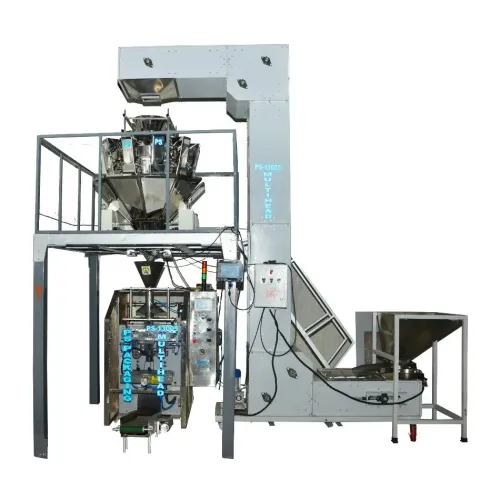
Choose a multihead weigher when Kurkure’s irregular shape and changing density make net-weight control the priority. Several load-cell-equipped weigh buckets receive product, and the controls select a combination whose total approaches the target weight.
That suits 20 g, 50 g, 100 g and larger packs, but adds load cells, controls, cleaning points, capital cost and possible handling stress.
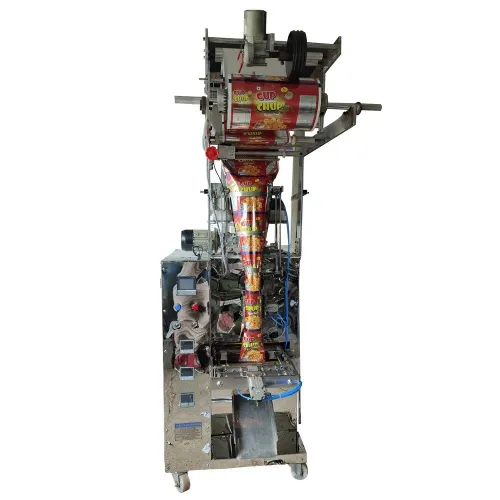
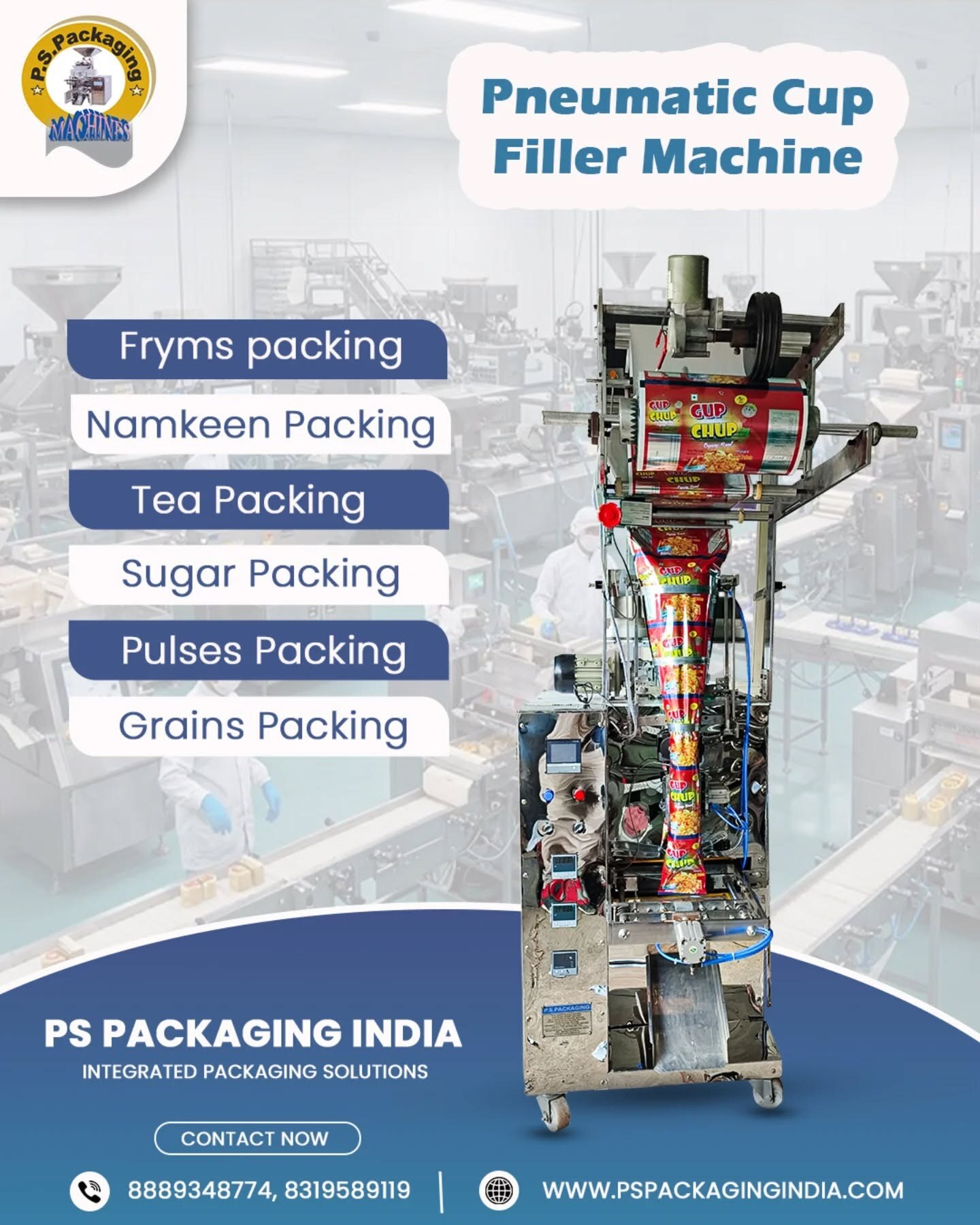
A collar type cup filler packing machine measures volume, not mass. Adjustable cups suit free-flowing Kurkure in simpler, high-volume formats, but the same cup delivers a different weight when bulk density, breakage, seasoning load or settling changes. The result is giveaway when the cup is heavy, or underweight packs when it is light.
Use the filling method that passes these checks:
- Compare mean weight, weight variation and giveaway across each target size.
- Inspect breakage and fines after the elevator, feeder and discharge point.
- Keep drop heights low and avoid sharp product transitions.
- Use controlled vibration; excessive amplitude increases breakage and seal contamination.
- Test bridging in the hopper, feeder and cups before accepting the food packaging machine.
- Check whether the multihead’s accuracy justifies slower handling and extra cleaning.
- Confirm that seasoning dust stays away from the heat-seal area.
For fragile Kurkure, gentle transfer can matter more than headline speed. A cup filler is practical when density stays stable and the allowed weight variation is broad; select combination weighing when product variation makes fixed volume unreliable.
How does the film become a sealed, coded and gas-flushed Kurkure pouch?
A kurkure packing machine starts with the laminate unwinding from its roll. The film passes a registration sensor, then wraps around a forming collar, which turns the flat roll into a vertical pouch web. Film-pulling belts control length and tension while heated sealing elements create the longitudinal fin seal or lap seal.
Kurkure falls through the vertical forming tube into the open pouch. Transverse sealing jaws close the bottom of the next pouch, seal the filled pouch at the top, and cut between packs.
This collar-forming vertical form-fill-seal arrangement differs from machines that form, fill or seal bags in separate horizontal stages: the collar shapes the pouch continuously around the product path.
Check the laminate before a trial:
- Moisture and oxygen barrier for the intended shelf life
- Sealant layer compatibility with the machine’s sealing temperature and the seasoning
- Stiffness, film width, roll diameter, core size and coefficient of friction
- Centre-seal or three-side-seal format
- Printed eye marks with enough contrast for reliable registration
Printed film uses eye marks to align artwork and cutting. Plain film uses encoder-based length control. Poor contrast, drifting tension or tracking errors produce off-centre seals and uneven pouch lengths.
Nitrogen flushing reduces oxygen around oxidation-sensitive snack oils, but it cannot repair a leaking seal or poor barrier. Measure residual oxygen with an analyser against the product’s shelf-life specification.
The food packaging machine applies the date code after registration, while seasoning dust at the seal area can create leaks; keep the jaws and seal interface clean.
Which operating settings determine good packs per minute?
A snacks packaging machine earns its speed through good packs per minute, not the headline cycle rate. Usable output falls when pouch length, fill volume, film tracking, rejected packs, changeovers, bridging stoppages or cooling time slow the line.
Operators tune the kurkure packing machine to the formulation and laminate. Adjust feeder amplitude and feed pulses for stable dosing, set the target weight, and keep the product drop point low. Excessive vibration or a long drop breaks fragile Kurkure into fines; fines and seasoning dust on the seal interface create weak seals and leaks.
| Setting | What it controls | What goes wrong when misadjusted |
|---|---|---|
| Feeder amplitude and pulses | Product flow and weight stability | Bridging, overfeed, breakage or underweight packs |
| Film tension and registration timing | Pouch length, tracking and artwork position | Drift, off-centre seals and inconsistent cuts |
| Temperature, jaw pressure and dwell time | Heat-seal formation | Burnt, weak or leaking seals |
| Cooling interval and machine speed | Seal strength before discharge | Open seals, deformation and rejected packs |
Do not copy temperature, amplitude or speed settings from another line. Establish them through trials with the selected Kurkure formulation, laminate and pouch size.
After start-up, and again once the machine reaches operating temperature, inspect:
- Weight variation, pouch length and film consumption
- Seal appearance, jaw cleanliness and leak results
- Breakage, fines and rejected packs
- Film tracking, seal cooling and stoppages from bridging
Increase speed only when these checks remain acceptable. Otherwise, the faster cycle produces more waste, not more saleable packs.
How should an Indore snack manufacturer specify and accept the line?
Set acceptance around your actual Kurkure, not a supplier’s demonstration snack. Provide the sample, seasoning, target weights, pouch dimensions, laminate rolls and intended production mix, including 20 g, 50 g, 100 g and larger formats.
Ask the supplier to run both a multihead or linear weigher and a collar type cup filler packing machine against the same product, film and pouch sizes.
| Option | Strength | Main risk | Best comparison point |
|---|---|---|---|
| Multihead or linear weigher | Combination weighing controls net weight across changing product density | Higher cost, more cleaning points and possible breakage from handling | Weight variation, giveaway and breakage |
| Collar type cup filler packing machine | Fixed-volume dosing offers simpler operation for free-flowing snacks | Seasoning, settling, breakage and bulk-density changes alter delivered mass | Giveaway, underweight packs and output stability |
Record each trial’s mean and variation in net weight, giveaway, good-pack rate, seal strength, leak rate, breakage, film waste and changeover time. If nitrogen flushing is used, measure residual oxygen in finished pouches.
Confirm these acceptance points before signing:
- Performance after the machine reaches operating temperature
- Cleaning access around hoppers, cups, weigh buckets, sealing jaws and dust-collection points
- Dust control, operator tasks and spare-parts availability
- Good packs per minute, not headline speed
- Whether a semi-automatic line leaves loading, weighing or carton packing to staff
PS PACKAGING can help an Indore manufacturer review filling, weighing, sealing and FFS integration. The manufacturer remains responsible for FSSAI and Legal Metrology declarations, food-contact packaging suitability and finished-pack validation.
Related products
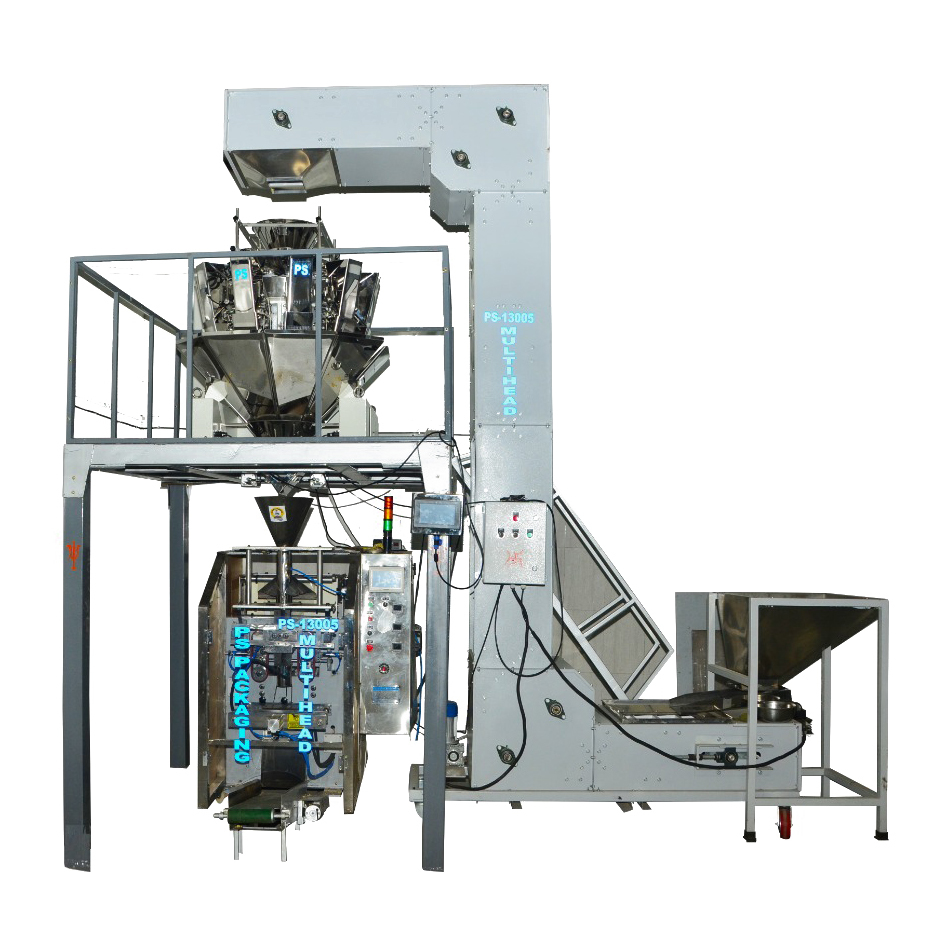 | Multihead Head Packing Machine Multihead Packing Machine The Multihead Packing Machine is a fully automatic, high-speed packaging solution designed for precise weighing, filling,... View product → |
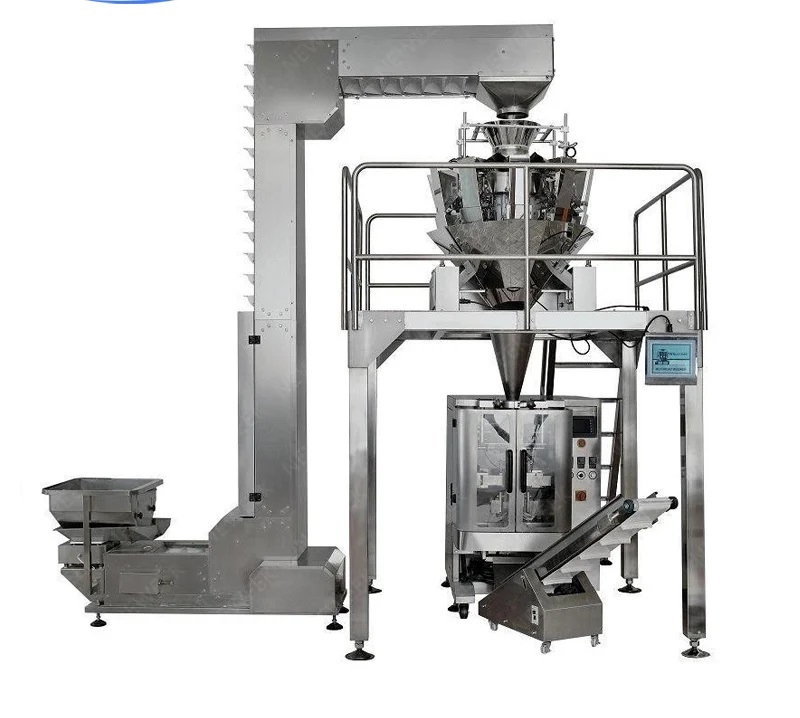 | Multihead Head Packing Machine Multi Head 10 Head Packing Machine Manufacturer & Supplier in Indore | PS Packaging Price: Get Best Price / Request a Quote MOQ: 1 Unit The Multi Head 10 Head Packing Machine from PS... View product → |
Frequently asked questions
What happens inside a Kurkure packing machine from product loading to discharge?
Kurkure moves from the hopper through an elevator or feeder to a weighing or dosing unit, then drops into formed pouches for sealing and discharge.
Should you use a multihead weigher or a collar type cup filler for Kurkure?
Use a multihead weigher when product weight varies and accuracy matters; choose a collar type cup filler when pieces have consistent size and bulk density.
How does the film become a sealed, coded and gas-flushed Kurkure pouch?
The machine forms film around a forming collar, makes a longitudinal seal, fills the pouch, applies gas flushing when specified, and completes the cross-seal and date coding.
Which operating settings determine good packs per minute?
Film tension, forming-collar alignment, feeder timing, weigher discharge timing, seal temperature, jaw dwell and gas flow affect speed and pack quality.
How should an Indore snack manufacturer specify and accept the line?
Specify product, target pack weights, film structure, seal requirements, coding format, gas-flush needs and output; accept the line through witnessed tests for speed, accuracy, breakage, seals and changeover time.
Related products
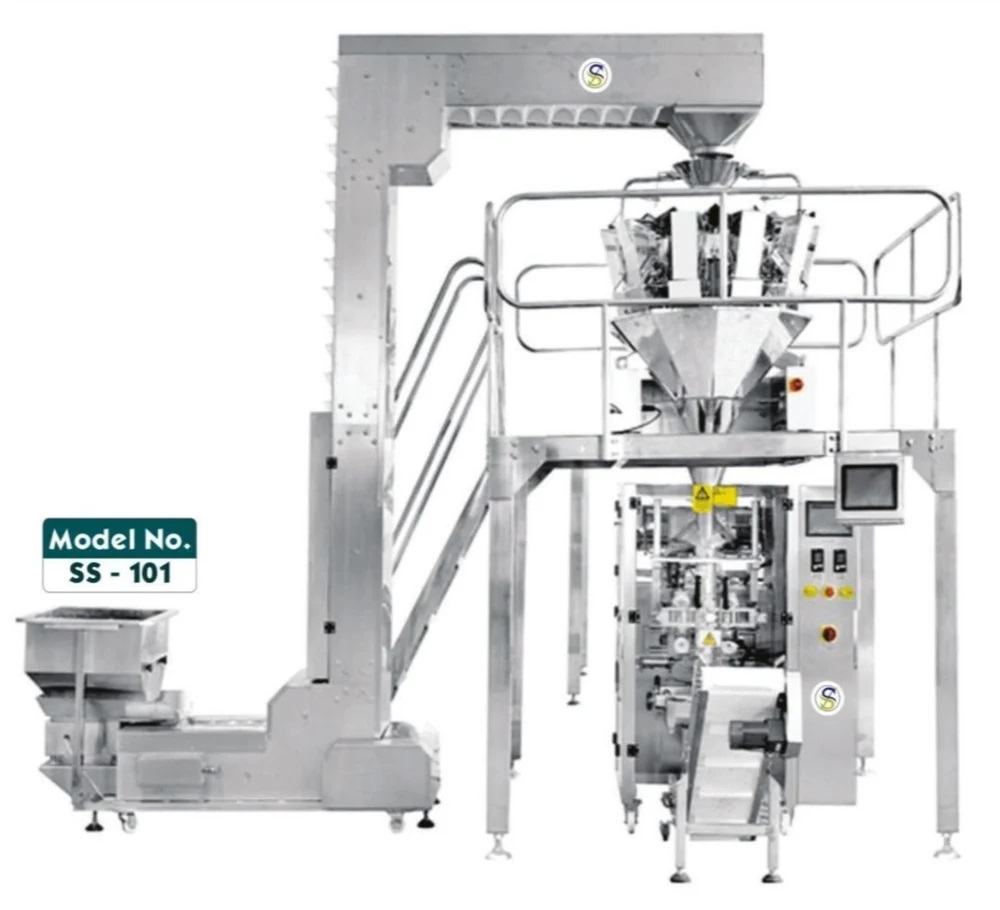 | Multihead Head Packing Machine Multi Head 14 Head Packing Machine Manufacturer & Supplier in Indore | PS Packaging Price: Get Best Price / Request a Quote MOQ: 1 Unit The Multi Head 14 Head Packing Machine from PS... View product → |
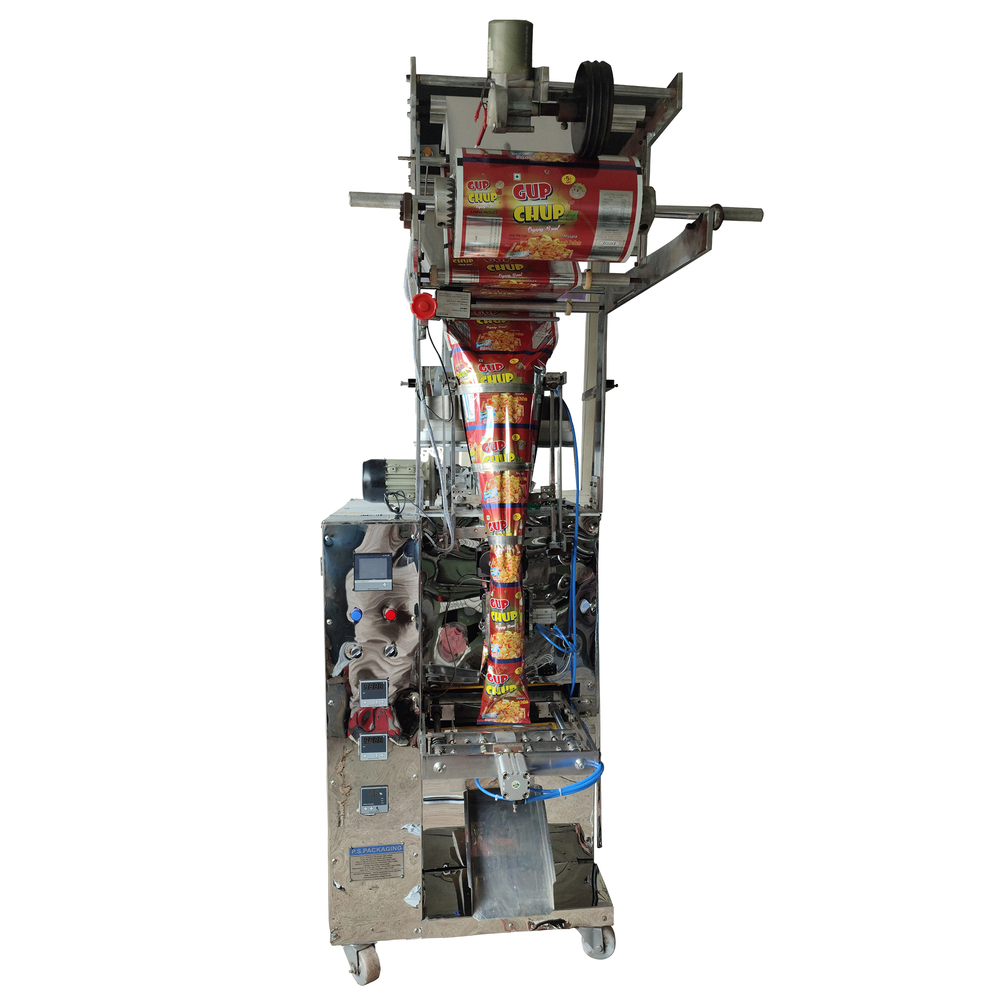 | Industrial Packaging Machine Pneumatic Cup Filler Packing Machine Manufacturer & Supplier in Indore | Patna | Nagpur -PS Packaging The Pnematic Cup Filler Packing Machine from PS Packaging, Indore, Madhya Pradesh is... View product → |