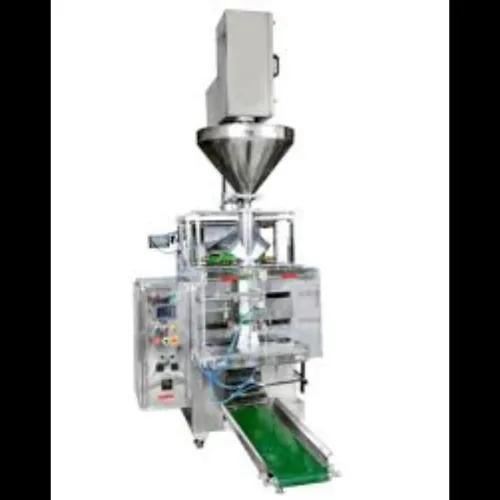


Salt does not feed the same way in every form: fine, humid powder can bridge above an auger, while coarse crystals can flow freely but vary in bulk density. By the end, you will understand how the hopper, dosing system, pouch former, sealer, and controls work together, and how to match the machine to your salt, pack size, and output target.
Key takeaways
- Match the filler to salt particle size, moisture, and flow behavior.
- Use augers for powder and weighers or cups for free-flowing granules.
- Test actual salt at target speeds, weights, and pouch dimensions.
- Servo control improves repeatability but cannot remove product variation.
Why salt form determines the packaging machine
Particle size and flow behavior determine the salt packaging machine; the product name alone is not enough.
| Form | Machine behavior | Main risk |
|---|---|---|
| Powder | Needs an auger with controlled agitation, level sensing, or anti-bridging equipment | Bridging, rat-holing, dust, and changing bulk density |
| Fine crystal | Can flow through cups, but humidity can make it compact or cling | Inconsistent volume and blocked product paths |
| Coarse crystal | Usually flows freely and suits volumetric cups or a weigher | Crystals can damage film seals or fall unevenly |
| Mixed granule | Needs gentle handling and weight-based dosing when sizes differ | Segregation changes the blend ratio and fill weight |
A salt packaging machine for powder and granule products must control the hopper as well as the dosing device. Fine salt can bridge above an auger or stick to the hopper wall; regulated agitation breaks the bridge, while excessive agitation aerates the product and makes its apparent density unstable.
Mixed granules can separate during vibration or transfer, so check the blend at the pouch rather than assuming the hopper remains uniform.
Coarse crystals need a controlled drop, settling time, and protection for the seal area. A single trapped crystal can create a channel, pinhole, or weak heat seal. Product-catching sections, dust removal, clean seal jaws, and verified temperature, pressure, and dwell time protect pouch integrity.
At low sachet weights, residue in the chute or auger represents a larger percentage error, making cut-off control and fine dosing critical.
What happens during a complete pouch-packing cycle
Bulk salt sits in a hopper above the forming tube, while rollstock feeds from a film reel into the machine. The cycle coordinates product measurement, film movement, sealing, coding, and discharge; a granule packaging machine uses the same sequence, with extra control to keep crystals away from the seals.
1. The film unwinds through guide rollers. A forming collar bends the flat web around the tube, creating the pouch shape, while registration marks position each bag.
2. The dosing system releases a measured salt charge. An auger rotates for powder, while cups or a weigher release free-flowing crystals.
3. The charge drops through the forming tube into the pouch. A controlled drop and short settling period reduce bounce, dust, and salt left near the seal area.
4. The longitudinal seal closes the film around the tube. The cross-seal jaws create the pouch bottom and, on the next cycle, its top.
5. The machine checks that the seal zone is clear before applying heat, pressure, and dwell time. A trapped crystal can create a channel, pinhole, or weak seal despite a correct temperature setting.
6. A cutter separates the completed pouch from the film web. The coder prints a batch number, date, or lot code either on the web before forming or on the pouch after sealing.
7. The finished pouch drops onto a discharge conveyor. Reject controls remove bags with a missing code, incorrect fill, or failed seal.
Intermittent-motion machines stop the film for dosing and sealing; continuous-motion models keep it moving and require tighter synchronization. Output claims only matter when tied to bag length, salt type, film, and seal mode.
How augers, cups, and weighers measure salt
Choose the measuring method from salt’s flow and density, not its name. Free-flowing crystals with stable bulk density suit volumetric cups; fine or moisture-affected salt needs controlled auger dosing, while variable-density products benefit from weighing.
| Option | How it measures salt | When to use it |
|---|---|---|
| Auger filler | Screw revolutions deliver a set volume or mass | Fine powder, humidified salt, or products that bridge |
| Volumetric cup | An adjustable cup fills and empties a fixed volume | Free-flowing, uniform crystals with stable bulk density |
| Linear weigher | Separate hopper doses combine until the target weight is reached | Medium and large pouches where weight control matters |
| Multihead weigher | Multiple weigh hoppers calculate a fast combination near the target | High-speed retail packs and variable-density granules |
| Manual filling | An operator portions and checks each dose | Trials, very small runs, or unusual pack sizes |
A collar type servo auger filler packing machine suits powder when repeatable screw rotation matters. Its auger must receive a consistent product supply; bridging above the screw causes underfills, while excessive agitation can aerate salt and change its apparent density. A powder filling machine therefore needs level control and anti-bridging support, not just a motor.
Use a granule packaging machine with a weigher when legal net content is critical or crystal density shifts between batches. Choose cups for simpler, faster dosing when density stays controlled. Manual filling saves setup time at low volume but becomes slow and operator-dependent as output rises.
How servo control improves dosing without eliminating variation
Servo control makes each auger cycle repeatable, not every pouch identical. In a collar type servo auger filler packing machine, the controller sets speed, revolutions, acceleration, deceleration, and a final slow “dribble” phase. Bulk density, moisture, aeration, and hopper pressure still change the mass delivered per revolution.
A powder filling machine needs stable product flow above the auger. Bridging over the flight causes short fills; rat-holing causes sudden surges. Agitators, flexible hopper walls, level sensors, and anti-bridging devices help, but excessive agitation aerates fine salt and changes its apparent density. Control agitation instead of running it continuously at maximum speed.
Use this checklist when tuning a salt packaging machine:
- Set the auger recipe for the target pack size. A fixed residue in the flight, nozzle, or chute creates a larger percentage error in a 10-gram sachet than in a 1-kilogram pouch.
- Use shorter drop paths, controlled vibration, and a fine-dosing phase for small packs. Large bags tolerate the same absolute variation better.
- Match sealing-jaw temperature, pressure, dwell time, and jaw alignment to the laminate. Salt dust in the seal area creates channels, leaks, and weak seals even when the fill weight is correct.
- Check-weigh samples at set intervals and adjust the recipe for drift. A cup or auger measures volume, while a linear or multihead weigher measures mass directly, making weighing stronger when bulk density changes.
A sound dose can still produce a poor pouch if overfilled product reaches the seal, so coordinate cutoff timing with the forming tube and sealing jaws.
How to specify and test the right salt packaging machine
A machine that performs well on 1-gram sachets may be the wrong choice for 25-kilogram bags. Compare the product, target weight, film, speed, and sealing risk under actual production conditions—not from the machine name or an empty-run demonstration.
| Format | Dosing and machine priority | Main test point |
|---|---|---|
| Small sachet | Auger or fine-dosing control, short drop path, stable cut-off | Accuracy in grams and percentage at the smallest target weight |
| Retail pouch | Cup filler for uniform free-flowing crystals; auger or weigher for powder or variable density | Weight consistency across a full hopper and changing product levels |
| Institutional bag | Net-weight or linear weighing, strong film handling, dust control | Throughput, bag-mouth cleanliness, seal strength, and weighing repeatability |
Request a trial using your own salt, film, and pack sizes. A salt packaging machine for powder and granule products must be tested with the actual particle-size distribution, moisture, bulk density, and flowability. Ask for results at the intended speed, not only the maximum bags-per-minute figure.
- Check filled weight over at least several consecutive runs, recording average, minimum, maximum, and rejected packs.
- Inspect seals for trapped crystals, channels, pinholes, and weak corners after cooling.
- Verify film tracking, date-code position, drop height, settling time, and cut-off control.
- Examine product-contact parts, welds, fasteners, and crevices for cleanability and chloride-related corrosion risk.
For a granule packaging machine, compare intermittent motion for easier inspection with continuous motion for higher output. PS PACKAGING can help structure a trial around these measurable conditions rather than a catalogue specification.
Related products
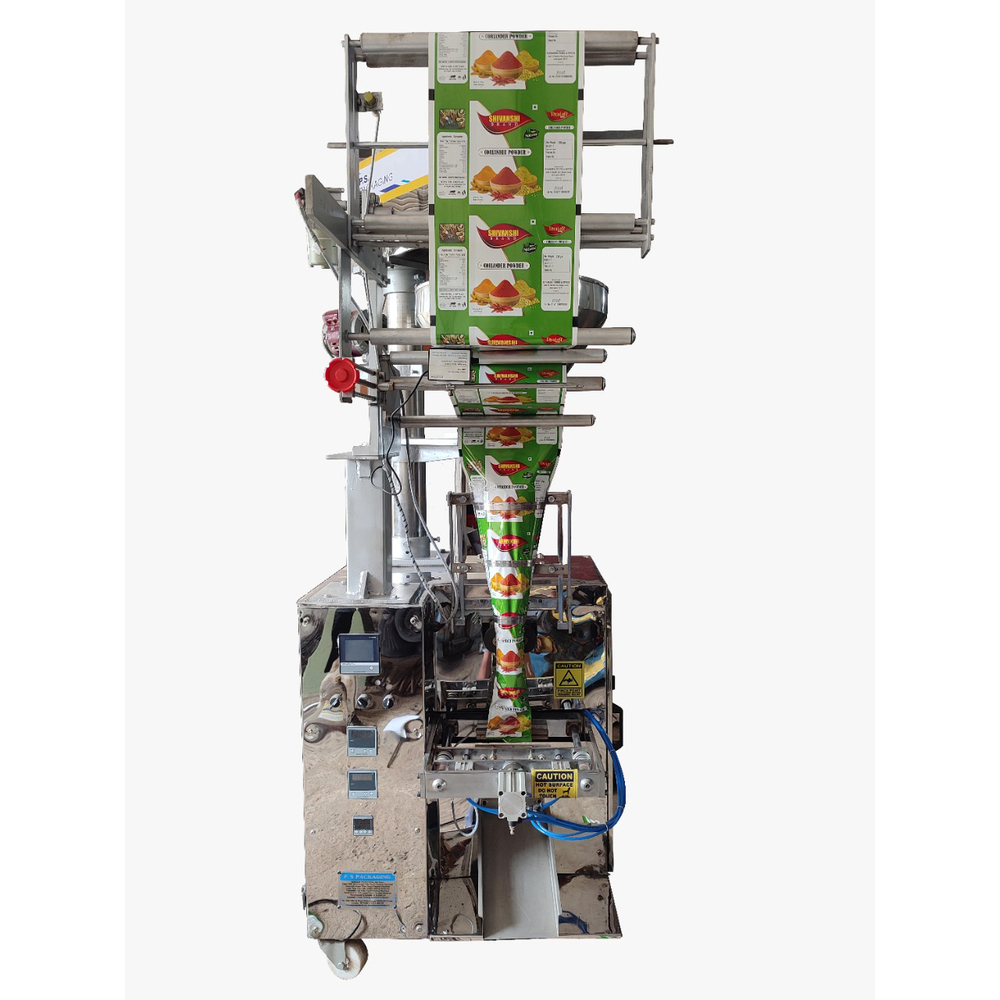 | Industrial Packaging Machine Pneumatic Auger Filler Packing Machine Manufacturer & Supplier in Indore | PS Packaging The Pneumatic Auger Filler Packing Machine from PS Packaging, Indore, Madhya Pradesh is a reliable... View product → |
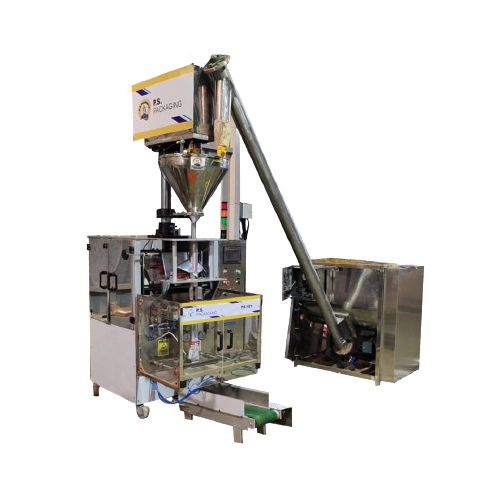 | Servo Auger Filler Packing Machine Collar Type Servo Auger Filler Packing Machine Collar Type Servo Auger Filler Packing Machine The Collar Type Servo Auger Filler Packing Machine is a high-performance packaging solution designed... View product → |
Frequently asked questions
Why does salt form determine the packaging machine?
Fine, cohesive salt powder needs controlled auger feeding, while free-flowing granules suit volumetric cups or net weighers. Particle size, moisture, bulk density, and flow behavior determine the choice.
What happens during a complete salt pouch-packing cycle?
The machine forms a film tube, doses salt into the pouch, seals the filled pack, cuts it from the film, and discharges it for inspection or secondary packing.
How do augers, cups, and weighers measure salt?
An auger meters powder by controlled screw rotation, cups measure a fixed volume of granules, and weighers adjust the fill until the target mass is reached.
Does servo control eliminate salt dosing variation?
No. Servo drives improve auger positioning, speed control, and repeatability, but moisture, particle size, bulk density, and bridging still affect the delivered weight.
How should you test and specify a salt packaging machine?
Provide the salt form, particle-size range, moisture level, bulk density, target weight, pouch dimensions, speed, and film type, then test production samples at the required settings.
Related products
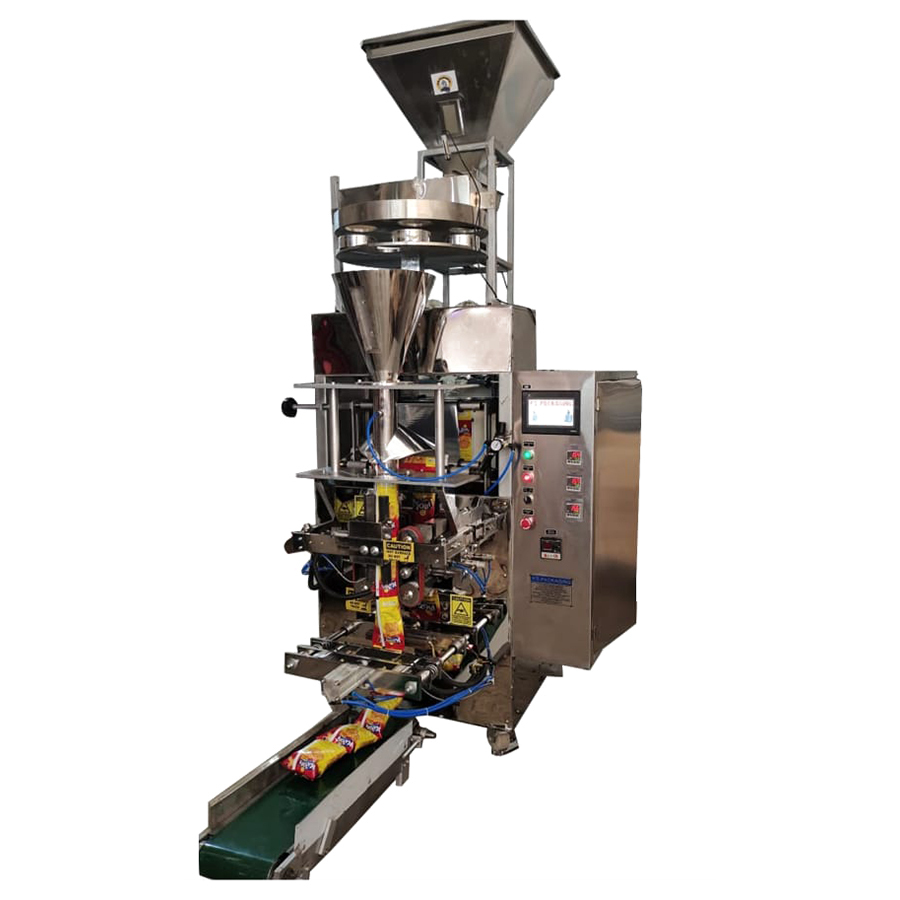 | Industrial Packaging Machine Collar Type Cup Filler Packing Machine The Collar Type Cup Filler Packing Machine is a robust and efficient packaging solution designed to deliver accurate filling and reliable sealing for... View product → |
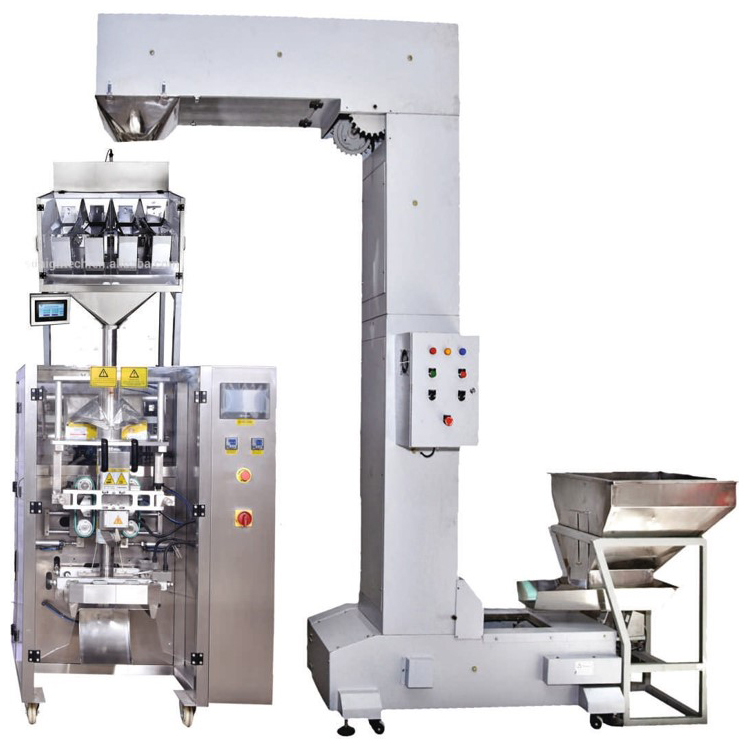 | 4 Head Packing Machine 4 Head Collar Type Packing Machine Manufacturer in Indore, India High-Speed Automatic 4 Head Collar Type Packing Machine by P.S. View product → |
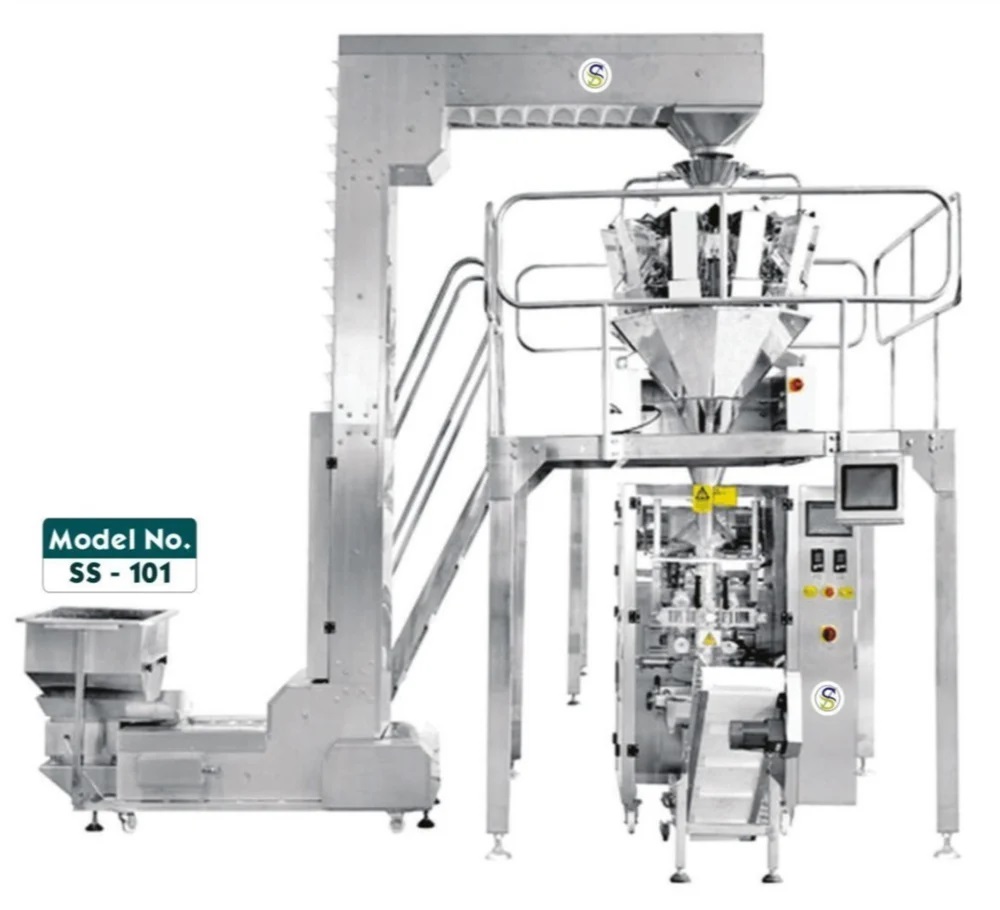 | Multihead Head Packing Machine Multi Head 14 Head Packing Machine Manufacturer & Supplier in Indore | PS Packaging Price: Get Best Price / Request a Quote MOQ: 1 Unit The Multi Head 14 Head Packing Machine from PS... View product → |
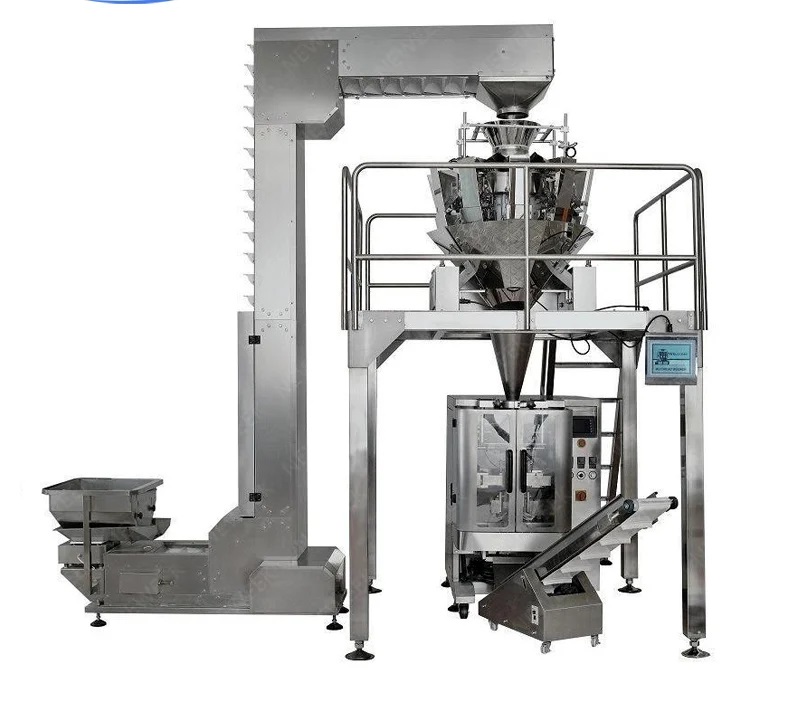 | Multihead Head Packing Machine Multi Head 10 Head Packing Machine Manufacturer & Supplier in Indore | PS Packaging Price: Get Best Price / Request a Quote MOQ: 1 Unit The Multi Head 10 Head Packing Machine from PS... View product → |