
Underweight packs, broken slices, leaking seals and sudden stoppages usually come from a chain of small process failures rather than one faulty component. You will be able to trace each symptom to its likely source, adjust the weighing and sealing stages, and compare equipment using accepted-pack cost instead of headline speed.
Key takeaways
- Check product flow before changing the target weight.
- Use gentle drops and controlled feed to reduce broken chips.
- Inspect seals, film alignment and sensors before repeated machine resets.
- Validate speed, accuracy and service support with your actual chips and film.
Trace the Failure Before Adjusting the Weigher
Separate an unstable product stream from a potato chips packing machine fault before changing target weights. A fluctuating feed can create underweight packs, excessive giveaway and crumb-heavy portions even when the weigher is accurate.
1. Collect timed samples from the product entering the machine. Weigh each sample and record whole slices, broken pieces, crumbs, seasoning and oiliness. Large changes in bulk density or flow between samples identify an upstream problem.
2. Watch the feed hopper during the run. Bridging, surging, empty pockets and late refilling point to the elevator, surge hopper or refill timing. Excessive vibration can worsen breakage while making flow appear more consistent.
3. Run a controlled trial with steady product and record every head’s weight, feeder amplitude, gate opening and load-cell zero. If individual heads drift, fail to discharge or show repeated overloads, inspect the weigher, wiring, gates and calibration.
4. Compare the same product before and after the machine. Stable input with unstable final weights indicates the potato chips packing machine; unstable input at the hopper does not. Check drop height, sharp transfer points and repeated re-feeding before increasing vibration.
Keep a fault log covering accepted weight, giveaway, breakage, film waste, nitrogen use, cleaning time, compressed air, spares and inspection labour. For potato chips packing for machine problems in Indore, total cost per accepted pack matters more than the displayed packs-per-minute figure.
How a Multihead Machine Builds a Potato Chips Pouch
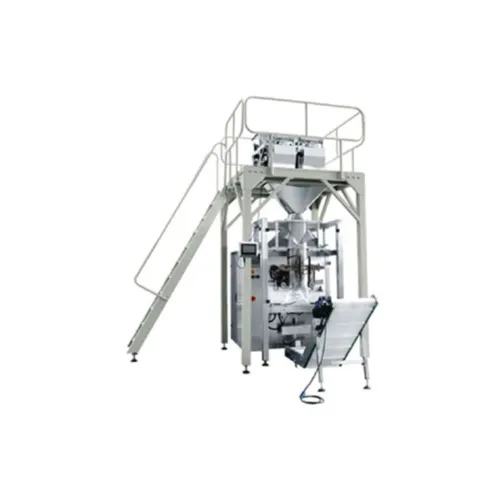
Chips travel from the infeed hopper to a distribution cone, which spreads them across several radial feeders. Each feeder directs product into an individual weigh hopper, so a multihead packing machine evaluates multiple partial portions instead of weighing one batch in a single bucket.
The control system checks the weights and selects the combination closest to the target fill. This sequence matters:
- The selected weigh hoppers open into a timing hopper or discharge chute.
- The combined portion drops through the forming tube into the waiting pouch.
- Film unwinds over a forming collar, wraps around the tube, and receives a longitudinal seal.
- Horizontal jaws create the bottom seal before filling, then close above the chips to make the top seal.
- The cutter separates the finished pouch from the continuous film web.
A nitrogen flush can replace air before the top seal, but excessive gas flow can disturb chips or weaken the seal area. Keep the product path short and smooth: a high drop, sharp transfer point, or repeated re-feed breaks slices after accurate weighing has already been achieved.
Test the machine with production chips, including large slices, crumbs, seasoning, oil and the actual bulk density. Changes in flowability alter head filling and combination selection, while bridging can create underweight pouches. Controlled vibration, level-controlled refill and adjustable discharge timing help maintain steady feeding without grinding chips into crumbs.
Reduce Breakage Without Creating Underweight Packs
Protect chips by reducing mechanical handling before you reduce the target weight. Set the multihead packing machine for a steady, shallow product flow, because surges cause both broken slices and unstable combinations.
- Product flow: Keep the surge hopper level stable and use conservative refill timing. Set each feeder’s amplitude separately so a fast head does not flood while another bridges. Watch for crumbs collecting under high-flow heads.
- Drop height: Shorten every free fall, especially from the weigh heads into the forming tube. Fit smooth, cushioned chutes and remove sharp transfer edges. During commissioning, lower the discharge point until chips land rather than strike the pouch or collar.
- Vibration: Use the lowest amplitude that clears the feeder consistently. Excessive vibration accelerates breakage, separates crumbs from full slices and can produce inconsistent bulk density, which disturbs combination weighing.
- Discharge timing: Open only the selected weigh heads, then close them cleanly before the next combination is released. Synchronise discharge with pouch position and allow the previous portion to clear; premature opening can cause double feeding, while excessive delay increases residence time and re-handling.
Check finished packs by weight and condition, not by the displayed average alone. Record underweight percentage, giveaway, broken-chip rate and throughput using the actual slice sizes, seasoning, oil level and bulk density.
A chips packing machine is correctly set only when the full weight distribution stays within your legal and commercial limits without turning the pouch into a crumb-heavy pack.
Diagnose Seals, Film Tracking and Repeated Stoppages
A leaking seal is confirmed by a squeeze test plus a dye or burst test on retained pouches, not by appearance alone. Clean oil, seasoning and crumbs from the jaws, check jaw parallelism and pressure, then validate temperature and dwell time with the actual laminate. Raising heat alone can warp film or cause burn-through.
Keep the laminate and ink specification traceable against FSSAI requirements for permitted materials, printing inks, overall migration and specific migration.
| Failure | Check | What the result means |
|---|---|---|
| Leaking seal | Inspect jaws and run a dye or burst test | Contamination or uneven contact creates a channel leak |
| Wrinkled film | Watch the unwind, forming collar and pull belts; check dancer tension | Wandering film or excess tension indicates tracking trouble |
| Double feeding | Observe the feeder and discharge photoeye during empty and loaded cycles | A second pulse, sticky chips or delayed detection identifies the source |
| Sensor fault | Clean photoeyes; block the beam by hand and check the HMI state | No state change indicates sensor, alignment or wiring failure |
| Bridging | Watch the surge hopper outlet and compare level with feeder amplitude | Chips hanging above the outlet confirm a flow bridge |
| Intermittent stoppage | Record alarms, cycle count, air pressure and motor temperature | Repeating counts suggest timing; random stops suggest wiring, air or overload |
- Run ten empty cycles to isolate film and sensor faults.
- Use conservative vibration and refill timing to expose bridging.
- Check compressed air, guarding switches, encoder coupling and loose terminals before changing software settings.
Choose and Validate the Right Machine for Indore Production
Compare on cost per accepted pouch, not the advertised packs per minute. A potato chips packing machine that runs fast but gives away product, breaks slices, wastes laminate or demands constant rework is not cheaper. Include nitrogen, compressed air, cleaning time, spare parts, inspection labour, changeover film waste and rejected packs.
| Option | Strength | Main cost or risk |
|---|---|---|
| Multihead packing machine | Combination-weighs several hoppers for accurate, high-output filling | Higher capital cost, footprint, cleaning points and distribution-control demands |
| Single-head filling | Simpler setup and lower entry cost | Slower output and less protection against variation in chip size |
| Volumetric cups | Straightforward dosing for consistent bulk density | Weight drifts when crumbs, large slices, oil or density changes |
| Manual weighing | Flexible for small batches or frequent product changes | Labour-heavy, slower and prone to inconsistent weights |
Require a witnessed trial using your actual chip size distribution, seasoning, oil content, crumbs and bulk density. Ask for the full weight distribution, standard deviation, underweight percentage, giveaway, accepted packs per minute, breakage rate and nitrogen use at the target weight.
- Require settings and results at reduced drop height, smooth transfer points and different feed speeds.
- Check film tracking, seal integrity, changeover waste and cleaning time.
- Request calibration and test conditions aligned with OIML R 61, plus laminate and ink records supporting FSSAI requirements for food-contact packaging.
- Have PS PACKAGING record the trial data at your Indore site conditions before you approve the machine.
Related products
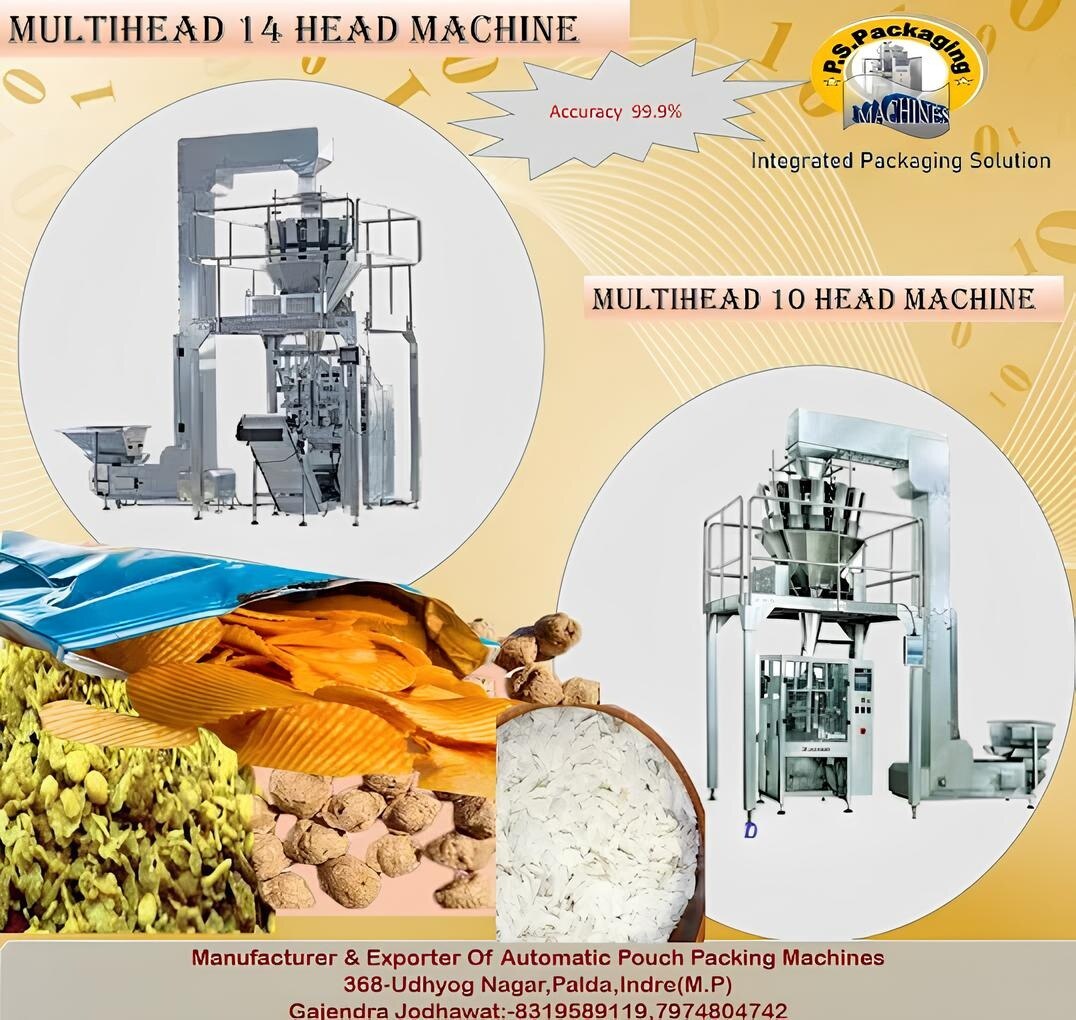
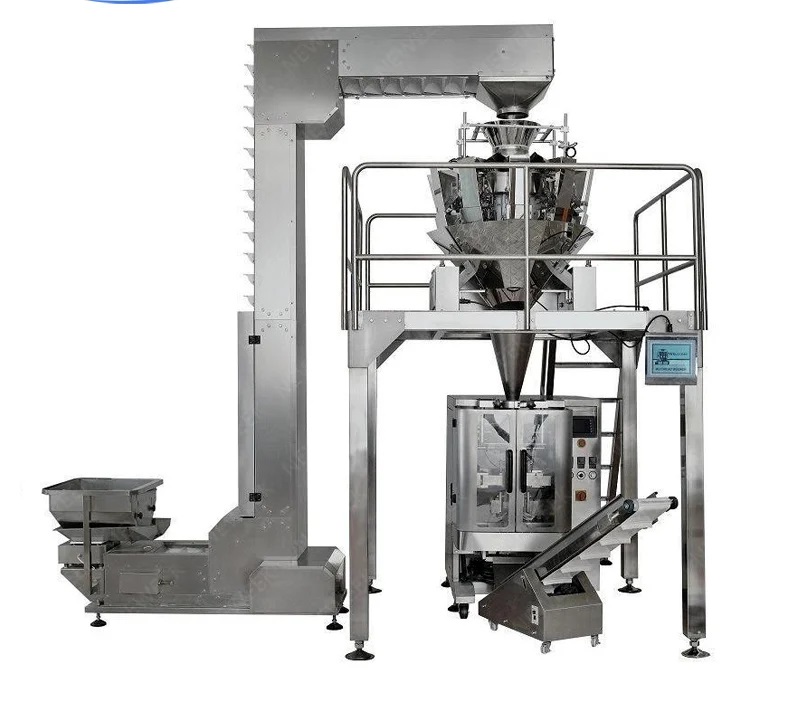 | Multihead Head Packing Machine Multi Head 10 Head Packing Machine Manufacturer & Supplier in Indore | PS Packaging Price: Get Best Price / Request a Quote MOQ: 1 Unit The Multi Head 10 Head Packing Machine from PS... View product → |
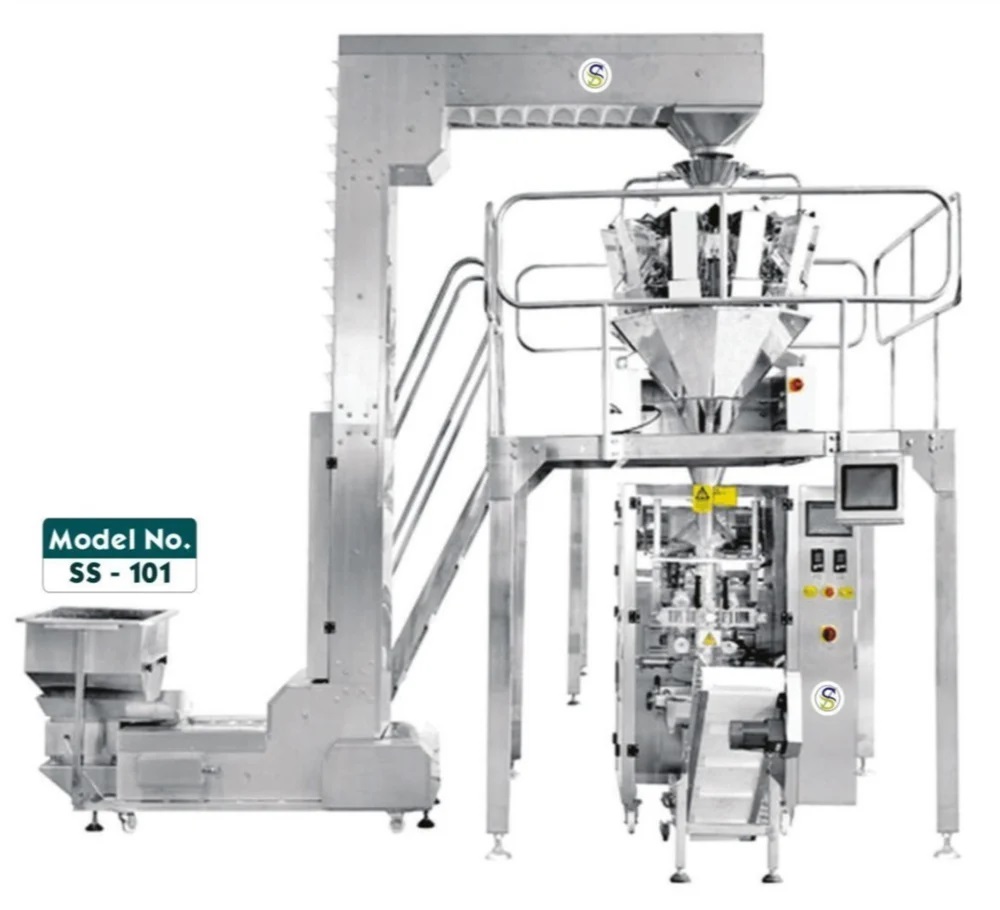 | Multihead Head Packing Machine Multi Head 14 Head Packing Machine Manufacturer & Supplier in Indore | PS Packaging Price: Get Best Price / Request a Quote MOQ: 1 Unit The Multi Head 14 Head Packing Machine from PS... View product → |
Frequently asked questions
How do you trace potato chips packing problems before adjusting the weigher?
Check product flow, hopper loading, bridging, feed timing and sample weights before changing the target weight. An unstable chip stream can cause both giveaway and underweight packs.
How does a multihead packing machine build a potato chips pouch?
The machine weighs chips across multiple hoppers, combines selected weights, drops the portion through a forming tube and seals the film into a finished pouch.
How can you reduce potato chip breakage without producing underweight packs?
Reduce unnecessary drop height, use suitable feed settings and control product speed while checking actual pack weights. Slowing the line alone does not correct poor weighing.
What causes sealing, film-tracking and repeated-stoppage problems?
Check film alignment, forming-collar setup, sealing temperature, pressure, sensor operation and trapped product. Record the fault pattern instead of repeatedly resetting the machine.
How do you validate a chips packing machine for production in Indore?
Test the machine with your potato chips, pouch film, target weight and planned speed. Compare weight variation, breakage, seal quality, changeover time and local service response.
Related products
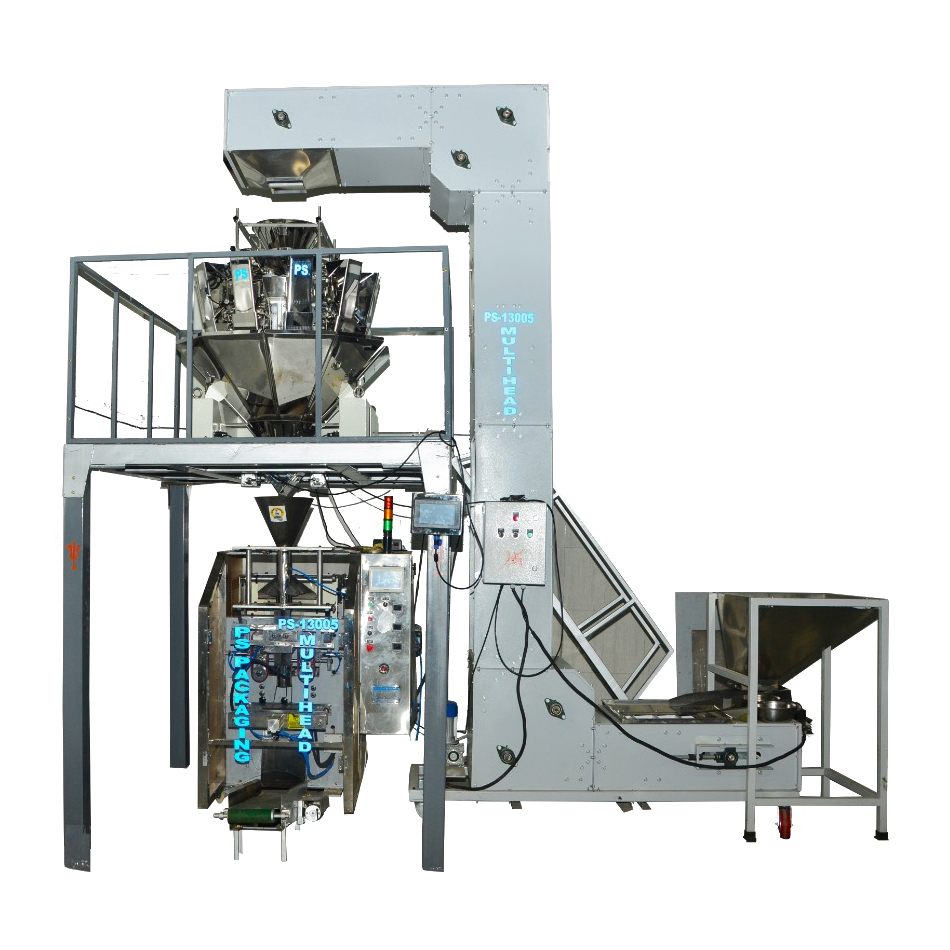 | Multihead Head Packing Machine Multihead Packing Machine The Multihead Packing Machine is a fully automatic, high-speed packaging solution designed for precise weighing, filling,... View product → |
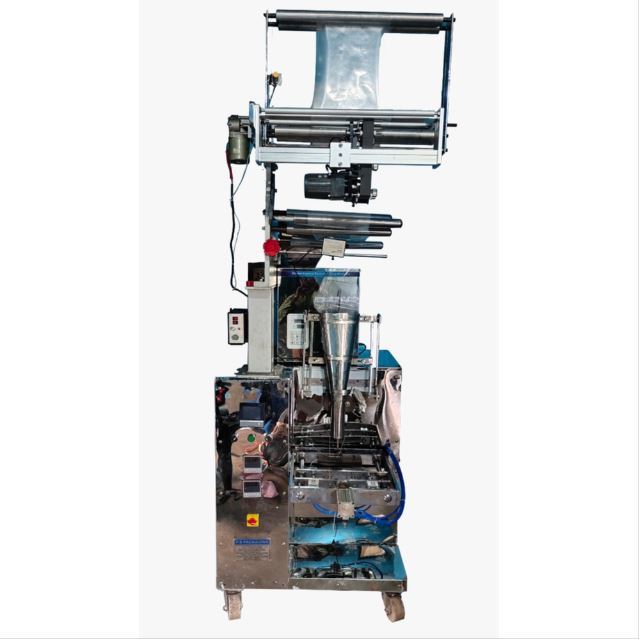 | Industrial Packaging Machine Manufacturer & Supplier in Indore | PS Packaging The Single Head Packing Machine from PS Packaging, Indore, Madhya Pradesh is a durable and efficient... View product → |
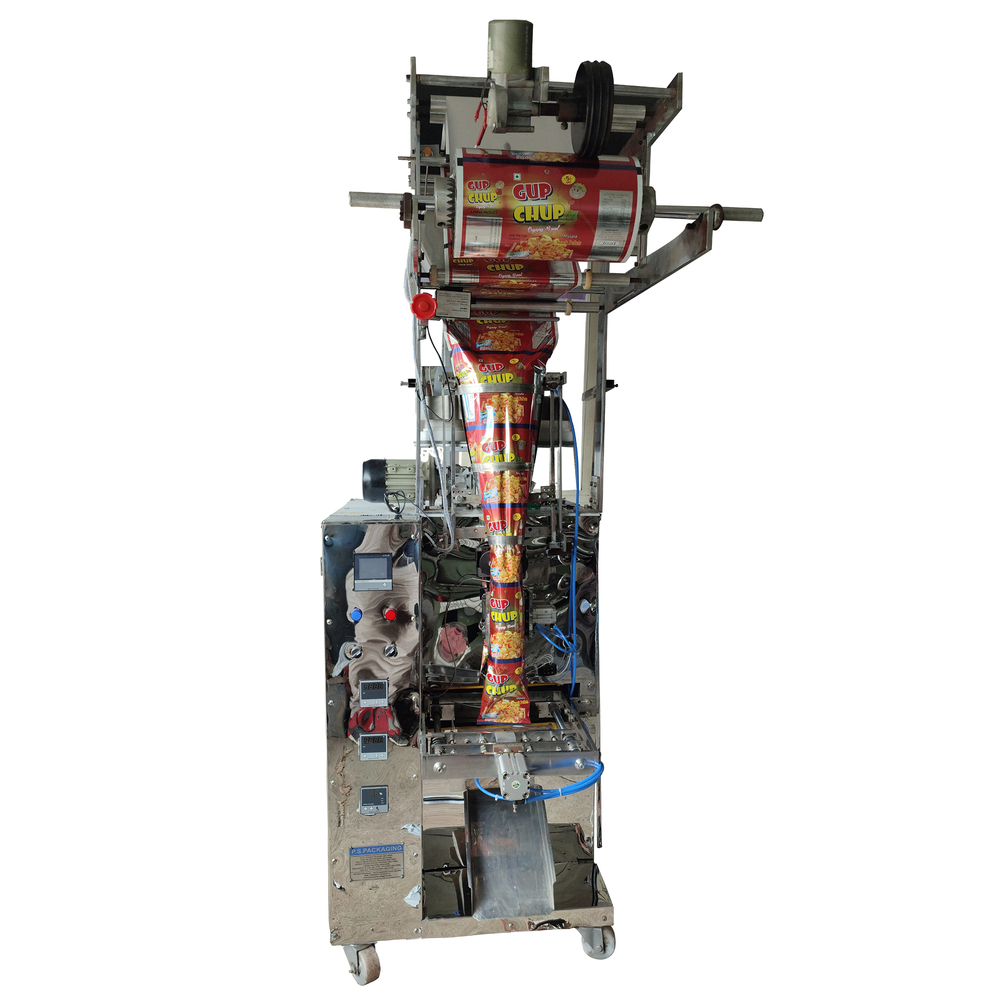 | Industrial Packaging Machine Pneumatic Cup Filler Packing Machine Manufacturer & Supplier in Indore | Patna | Nagpur -PS Packaging The Pnematic Cup Filler Packing Machine from PS Packaging, Indore, Madhya Pradesh is... View product → |
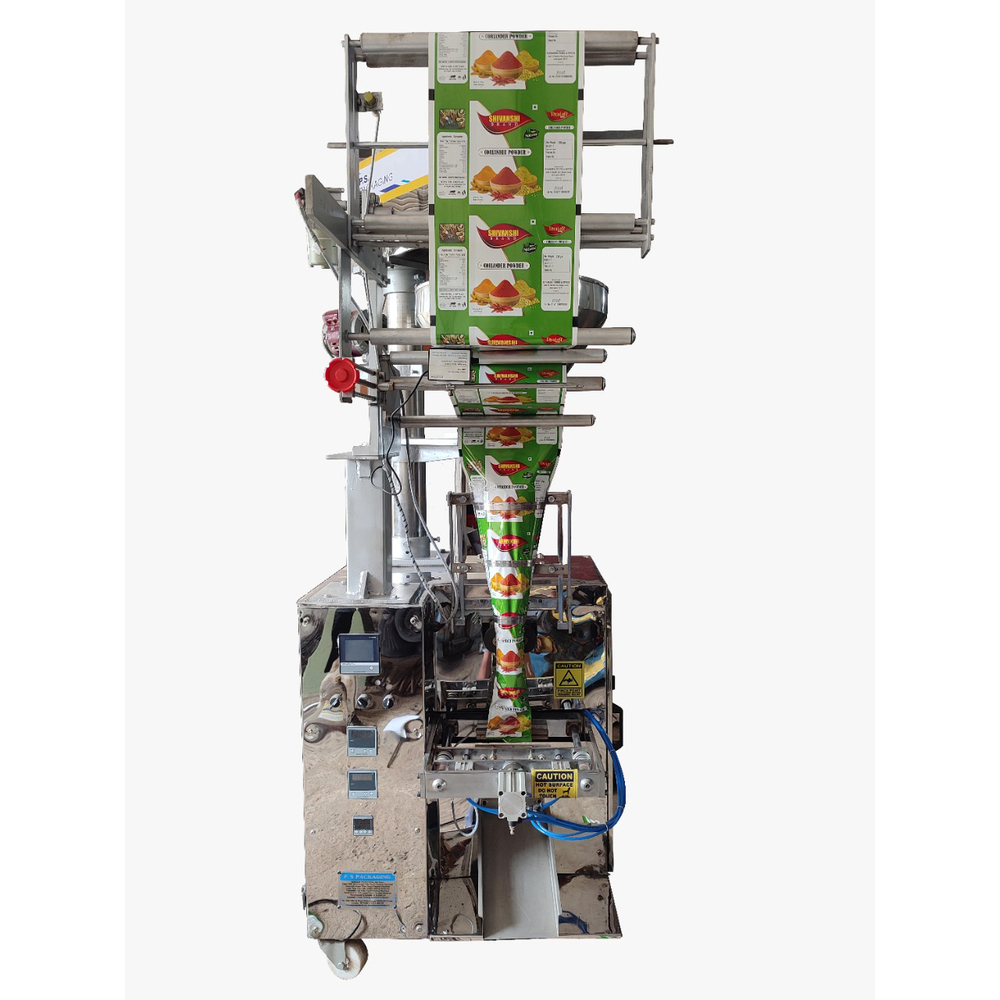 | Industrial Packaging Machine Pneumatic Auger Filler Packing Machine Manufacturer & Supplier in Indore | PS Packaging The Pneumatic Auger Filler Packing Machine from PS Packaging, Indore, Madhya Pradesh is a reliable... View product → |