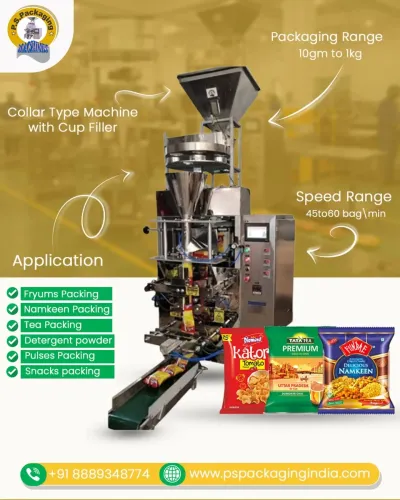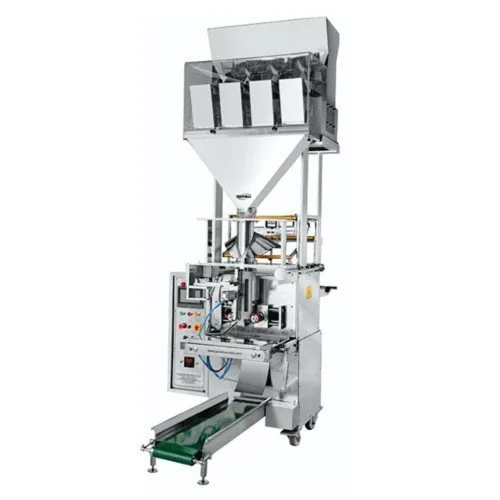

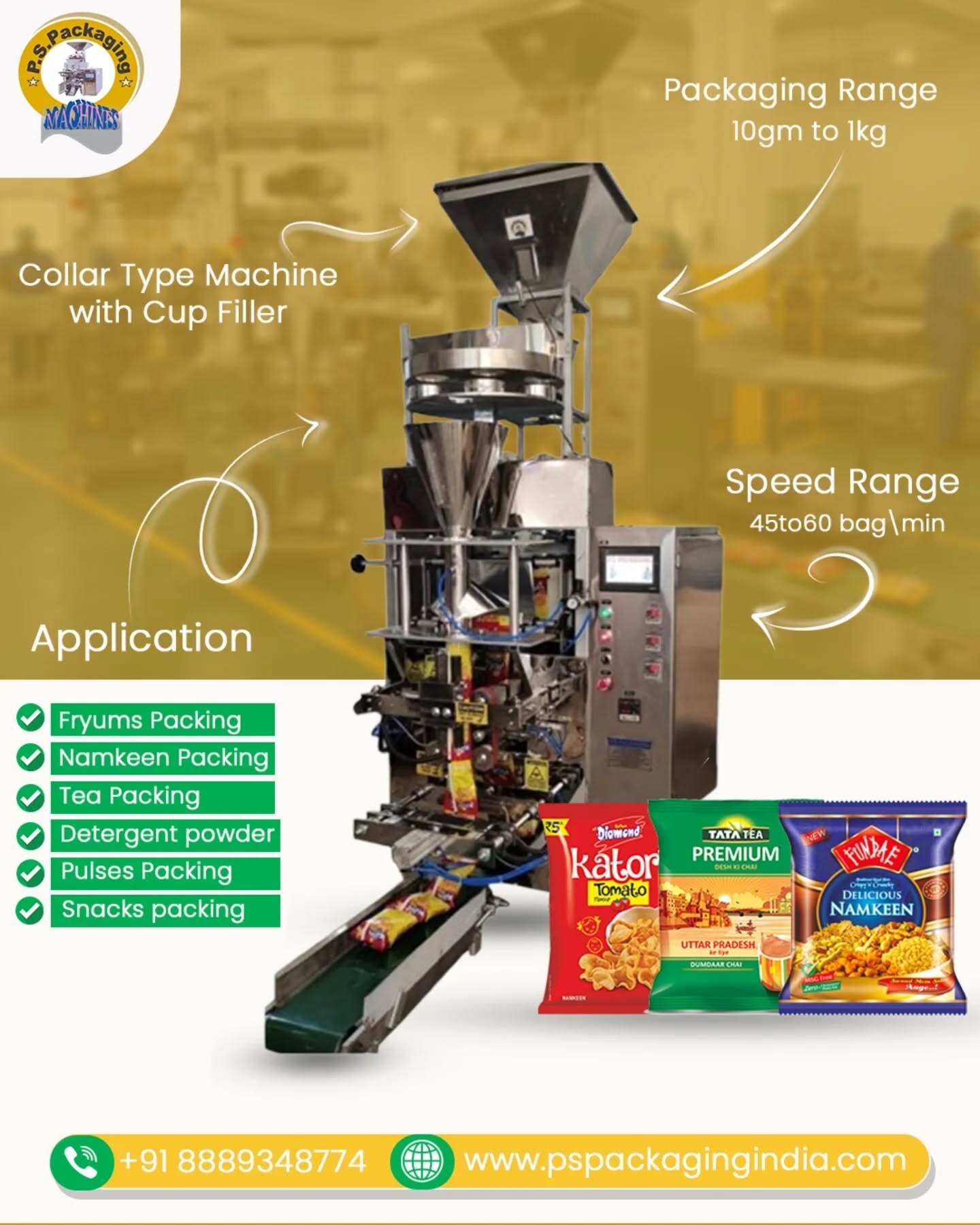
Choosing an auger filler for spices requires more than comparing advertised pouch-per-minute figures. By matching the screw, agitator, dosing method, pouch format, film, and testing process to your actual product, you can identify a machine that delivers repeatable weights without creating dust, seal leaks, or excessive giveaway.
Key takeaways
- Choose screw diameter and agitator style from the spice’s flow and particle size.
- Specify dose, pouch dimensions, target speed and seal temperature before comparing machines.
- Use servo control for precise recipe changes; choose pneumatic control for simpler operation.
- Run a product-specific trial to check fill accuracy, dust, seal quality and output.
How an auger filler measures and seals spice powder
An auger filler measures spice by the volume displaced by a rotating screw, not by weight alone. As the screw turns a set number of revolutions, its flights carry powder from the hopper to the pouch.
Delivered grams change when bulk density, moisture, particle size, aeration, or settling changes, so calibrate the machine with the actual spice and target dose.
The filling cycle follows four stages:
- The hopper holds the spice, while an agitator keeps powder moving and limits bridging above the screw.
- The auger draws powder into its flights and releases a measured volume through the dosing outlet. A load cell or checkweighing feedback loop is needed when the machine must correct for density changes.
- The forming tube guides the powder into the open pouch or into film shaped around the tube. Controlled discharge and settling reduce powder trapped in the seal area.
- Pneumatic cylinders close the pouch clamps, operate gates and cutters, and drive or close the sealing jaws. Heat, dwell time, and pressure must match the film structure to produce a continuous hermetic seal.
Clarify the phrase pneumatic auger filler packing machine before comparing suppliers. In most powder lines, an electric servo or geared motor turns the auger; compressed air operates the clamps, jaws, gates, and cutoff devices. If the auger itself uses air, ask how its speed and dose repeatability are controlled.
A powder filling machine also needs extraction, grounding, bonding, and ignition-source controls because spice dust can become airborne during charging and discharge. Nitrogen flushing reduces headspace oxygen, but it does not replace moisture-barrier film or seal-integrity testing.
Match the screw and agitator to the spice
A single auger is a sound starting point for dry, free-flowing turmeric or coriander, but it is not a universal spice setting. Bulk density, oil content, particle size and aeration change the delivered mass, so select the screw and agitator with the actual powder and pack size.
| Spice | Starting auger, hopper and agitator arrangement | Main consideration |
|---|---|---|
| Turmeric | Single auger, conical hopper and slow sweep agitator | Control dust and check compaction after hopper refilling. |
| Chilli | Single auger with fine-pitch flights, agitator and local extraction | Fine particles bridge easily and create airborne dust. |
| Coriander | Larger-pitch single auger with a gentle agitator | Coarser particles can segregate; avoid aggressive mixing. |
| Pepper | Robust single or twin auger, steep hopper and positive agitation | Coarse, oily or abrasive powder may need stronger feeding action. |
| Garam masala | Twin auger, steep hopper and controlled agitator | Oil-rich, cohesive powder needs help against bridging and rat-holing. |
| Blended powders | Twin auger with gentle, intermittent agitation | Excessive agitation can separate heavy and light ingredients. |
Use hopper vibration only after testing: it can break a bridge, but excessive vibration aerates the powder and changes the dose. A powder filling machine using volumetric auger dosing must be calibrated by weighing repeated fills, not by screw diameter alone.
During a spice pouch packing machine trial, record fill variation after refilling, settling and a production-length run. Add extraction, bonding and grounding controls where charging or discharge creates combustible dust.
Specify the dose, pouch format, speed, and sealing conditions
Compare each target weight on the same evidence, not against a headline bags-per-minute figure. A spice pouch packing machine must be rated at the intended pouch width, film, spice, dose, and accuracy target.
| Pack size | Dose and auger figures | Pouch and speed | Sealing conditions |
|---|---|---|---|
| 50 g | Confirm screw size, rpm range, average weight, individual-weight spread, and giveaway | Record pouch width, length, format, and sustained packs/minute | Record jaw temperature, dwell time, pressure, and seal width |
| 100 g | Repeat the weight and giveaway test after changeover | Use the actual laminate and pouch dimensions; test rated speed | Check seal integrity after filling, not on empty film |
| 200 g | Check density-related drift and settling before accepting accuracy | Confirm whether speed falls as auger cycles and settling time increase | Validate seals with the filled pouch and dusty product |
| 500 g | Ask for the larger-dose auger range and mass repeatability | Include longer pouch length or gusset dimensions and sustained output | Verify temperature stability across continuous production |
| 1 kg | Confirm maximum dose, load-cell or checkweighing feedback, and giveaway | Test the largest pouch, longest cycle, and realistic packs/minute | Measure seal strength, leakage, and jaw recovery between cycles |
Ask for the actual spice, film structure, and five pack sizes in the trial. Also confirm whether “pneumatic” drives the auger itself or only the clamps and sealing cylinders. Calibration must follow changes in bulk density, moisture, particle size, or aeration.
Pneumatic versus servo auger control in daily production
Ask what “pneumatic” drives before comparing quotations. In many lines, a pneumatic auger filler packing machine uses a servo or geared electric motor for the auger, while compressed air only operates clamps, gates, cutting devices, and sealing jaws. An air-driven auger is a different machine.
| Dimension | Pneumatic auger drive | Servo auger drive |
|---|---|---|
| Dosing control | Air pressure and timing give less direct control; bulk-density changes increase variation. | Programmable revolutions and speed improve repeatability; closed-loop gravimetric control can correct the process itself. A checkweigher only rejects or signals an underweight pouch. |
| Changeover | Adjustments take longer when pressure, timing, and mechanical stops must be reset. | Store recipes for screw speed, revolutions, acceleration, and fill profiles; verify the actual weight after loading the recipe. |
| Maintenance | Inspect valves, regulators, cylinders, tubing, leaks, filters, drains, and lubricator settings. | Inspect the motor, drive, encoder, couplings, bearings, and screw; there are fewer air leaks to chase. |
| Air and electricity | The auger consumes compressed air if air-driven; the compressor also consumes electricity. Poor pressure stability causes inconsistent motion. | Uses electrical power at the drive; pneumatic sealing and clamping still consume air. |
| Dust | Air exhaust near turmeric or chilli can disturb settled dust. Extraction, bonding, grounding, housekeeping, and ignition control remain necessary. | Creates less exhaust at the auger, but charging, refilling, and discharge still require dust controls. |
| Seal quality | Stable jaw pressure and timing depend on clean, dry, correctly regulated air. | Servo dosing does not guarantee seals; jaw temperature, pressure, dwell time, and film alignment still decide seal integrity. |
Specify filtration, drainage, and pressure stability for any air near the product path. Compare sustained trials using your spice, film, weight, and pouch width—not a short empty-machine speed run.
Use a product-specific trial before choosing an Indore manufacturer
Run the trial with your actual spice, film roll, pouch dimensions, and target weight—not the supplier’s easier demo powder. A spice pouch packing machine pneumatic auger in Indore should prove repeatable filling and sealing under the conditions you will pay to operate.
Record these results during a sustained run, not only the first ten pouches:
- Average weight, every individual weight, and giveaway against the 50 g, 100 g, 200 g, 500 g, or 1 kg target
- Sealing integrity after checking leaks, wrinkles, powder trapped in the seal, and seal-jaw temperature stability
- Coding accuracy for batch number, date, MRP, and other required declarations
- Dust at auger charging, hopper refilling, and discharge points, plus extraction, grounding, housekeeping, and ignition-source controls
- Changeover and cleaning time, including access to the hopper, auger, forming tube, and contact surfaces
- Throughput at the specified pouch width, fill weight, product, and accuracy target
Compare suppliers against evidence, not bags-per-minute claims.
| Supplier evidence | What to verify | Warning sign |
|---|---|---|
| Recorded product trial | Signed weight, seal, dust, and output results | Only catalogue speed |
| Drive description | Whether air moves the auger or only clamps and jaws | “Pneumatic” remains undefined |
| Food-contact documentation | Material grades, elastomers, lubricants, and cleanability | No contact-path records |
| After-sales support | Installation, training, spares, and acceptance procedure | Verbal promises only |
PS PACKAGING should define these trial records before quoting, so the spice packaging machine manufacturer in Indore is judged against your production standard rather than a showroom sample. Keep machinery acceptance separate from label compliance and confirm your coding and inspection equipment handles the finished-pack declarations.
Related products
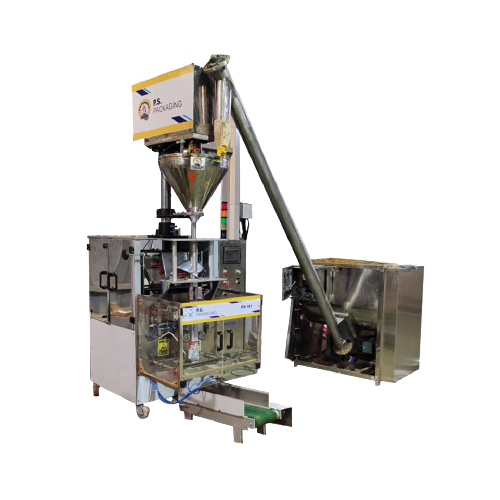
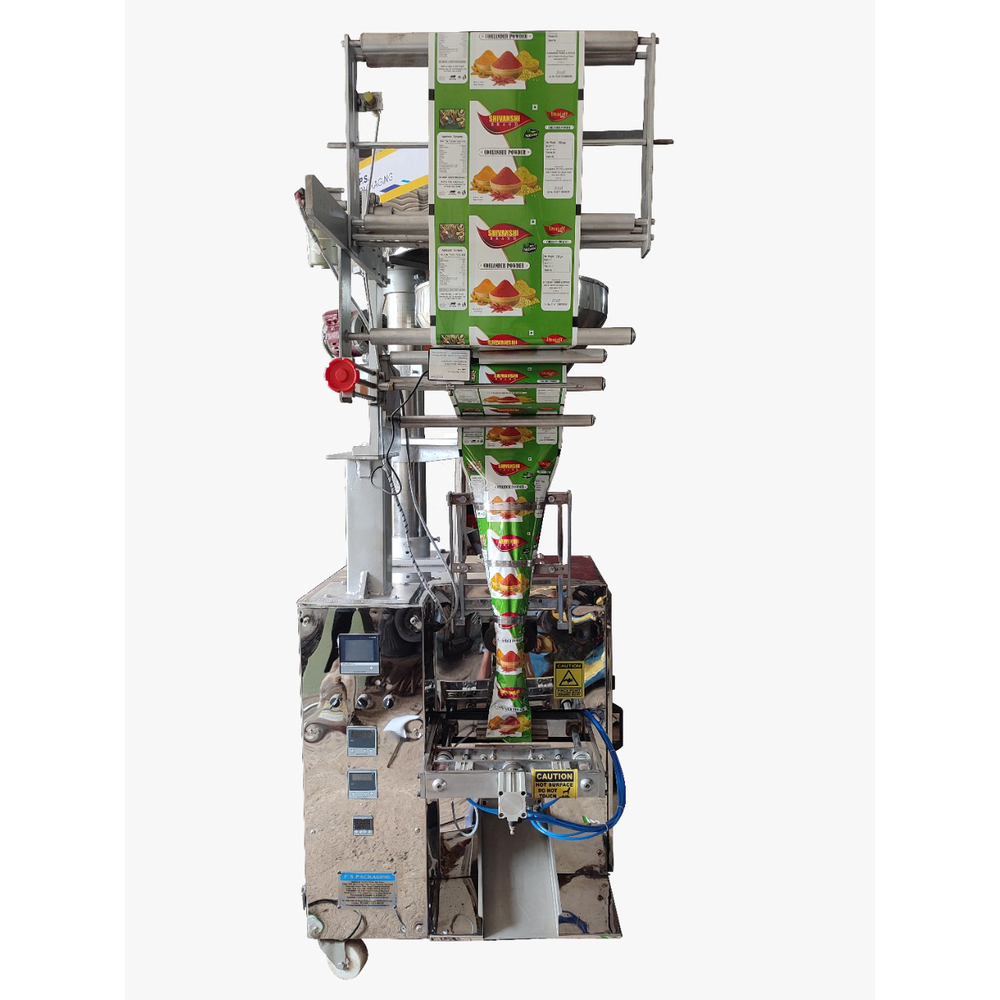 | Industrial Packaging Machine Pneumatic Auger Filler Packing Machine Manufacturer & Supplier in Indore | PS Packaging The Pneumatic Auger Filler Packing Machine from PS Packaging, Indore, Madhya Pradesh is a reliable... View product → |
 | Servo Auger Filler Packing Machine Collar Type Servo Auger Filler Packing Machine Collar Type Servo Auger Filler Packing Machine The Collar Type Servo Auger Filler Packing Machine is a high-performance packaging solution designed... View product → |
Frequently asked questions
How does an auger filler measure spice powder?
A rotating screw displaces a measured volume of powder. The controller sets screw revolutions, while fill weight depends on powder density, flow and consistency.
How do you match an auger screw and agitator to a spice?
Check particle size, moisture, oil content, flowability and tendency to bridge or compact. Select the screw geometry and agitator that feed the powder without pulsing or clogging.
What specifications should you give an Indore packaging machine manufacturer?
Provide the target dose, pouch width and length, pouch material, sealing method, required speed, powder characteristics and acceptable fill-weight variation.
When is servo auger control better than pneumatic control?
Servo control suits recipes requiring repeatable screw positioning, fast changeovers and fine dose adjustments. Pneumatic control suits simpler applications where lower control complexity matters more than precise electronic adjustment.
Why run a product-specific trial before buying a spice pouch packing machine?
A trial reveals actual fill accuracy, dust generation, bridging, auger behaviour, pouch presentation, seal strength and achievable speed with your spice and packaging film.