
A ten-head or fourteen-head label tells you how many weighing channels a machine has, not how many bags it will produce. To choose the right system for potato chips in Nagpur, you need to compare target weights, combinations, product handling, film compatibility, utilities, and verified production results.
Key takeaways
- Ten or fourteen heads describes weigh hoppers, not bags produced per cycle.
- Compare target weight, accuracy, cycle rate, film width, bag size, and actual snack output.
- Run fragile chips through a witnessed acceptance test before approving the machine.
- Check power, compressed air, floor space, access, and service support at your Nagpur site.
What ten heads and fourteen heads mean in a chips packing machine
Ten heads means the weigher has ten independent weigh hoppers, each served by its own load-cell channel. Fourteen heads means fourteen such hoppers. Neither figure means ten or fourteen bags per cycle, and neither specifies the number of VFFS lanes below the weigher.
During a cycle, product enters the hoppers and each filled hopper records its portion weight. The controller selects a combination whose total is closest to the target, then opens those hoppers into the discharge chute.
A ten-head system has fewer possible combinations; a fourteen-head system has more, increasing the chance of building the target weight from smaller portions instead of adding excess product.
Head count alone does not set output or accuracy. The result depends on target pack weight, hopper volume, product bulk density, refill time, chip shape, and the number of successful combinations per minute.
| System | What the head count changes | What it does not prove |
|---|---|---|
| Ten-head | Lower initial machine complexity and fewer available combinations | A fixed bag speed, accuracy, or lower purchase cost |
| Fourteen-head | More combinations, which can reduce giveaway when chip portions vary | Automatically higher speed, better accuracy, or more bags per minute |
Compare both systems using your actual chips and target pack size. Large curved chips, heavy packs, seasoning, fines, and frequent failed combinations reduce real output below an empty-machine headline rate.
For fragile product, also check low-drop transfers, short discharge paths, hopper geometry, anti-fragmentation settings, and adjustable timing; accurate weighing is not enough if the chips arrive broken.
Specification table: the figures to compare before choosing a system
Head count is only the starting point: a ten-head or fourteen-head multi head packing machine uses ten or fourteen independent weigh hoppers and load-cell channels. It does not mean ten or fourteen bags per cycle or VFFS lanes. Compare the complete operating envelope for a chips packing machine ten head or fourteen head in Nagpur.
| Specification | Ten-head system | Fourteen-head system |
|---|---|---|
| Target pack range | State tested minimum and maximum weights | State tested minimum and maximum weights |
| Product and density | Record chip type, bulk density, length, thickness, oil and fines limits | Record the same limits; extra heads do not correct unsuitable product |
| Hopper volume | Give each weigh-hopper capacity and refill time | Give each weigh-hopper capacity and refill time |
| Combination rate | State combinations per minute at the quoted pack weight | State combinations per minute at the quoted pack weight |
| Achieved output | Bags per minute for named chip, weight and bag size | Same test conditions; reject empty-machine headline speeds |
| Weight performance | Mean weight, standard deviation and maximum giveaway | Same figures, measured over a defined production run |
| Fragile-product design | Low-drop transfer, short discharge path and adjustable timing | Confirm these features; more heads alone do not prevent breakage |
| Bag and sealing range | Film width, bag length, jaw size and seal temperature range | Record identical limits |
| Machine and utilities | Footprint, connected load, air pressure, dew point and weight | Record identical limits, then verify 415 V, three-phase, 50 Hz and about 6 bar against site supply |
Require a witnessed trial using your actual chips. Approve the system only after checking saleable bags per minute, giveaway, broken-chip percentage and rejected seals, not the displayed combination speed.
Product handling, weighing accuracy, and real snack output
A ten-head or fourteen-head potato chips packing machine is suitable only after a trial with your actual chips, target weight, and film. An advertised bags-per-minute figure does not predict output for large, curved, heavily seasoned, or high-weight packs.
Check the product path for:
- Low-drop transfer points, short discharge paths, and hopper geometry that limits impact and breakage.
- Adjustable combination timing and anti-fragmentation settings for fragile chips.
- Stainless-steel contact surfaces, removable parts, and access for dry cleaning when oil, seasoning, and fines build up.
- Load-cell and electrical protection from oil and dust; confirm the permitted washdown method before using water.
The extra heads help only when the complete operating envelope suits the product.
| Measure | Ten-head system | Fourteen-head system |
|---|---|---|
| Combination choice | Fewer available portions; performance depends more on each hopper fill | More combinations can improve target selection and reduce giveaway |
| Best comparison | Record target weight, density, hopper volume, refill time, and actual bags per minute | Record the same figures; head count alone proves nothing |
| Output expectation | Establish rate using the buyer’s chips, pack size, and seasoning level | Establish rate under identical conditions, not from an empty-machine claim |
During acceptance testing, run a defined production batch and record mean error, standard deviation, maximum underweight, overfill giveaway, broken-chip percentage, seal quality, and bags per minute. Test irregular snacks, oily namkeen, and seasoned products separately if they will share the packaging machine for snacks.
Verify finished-pack weight and date or lot coding; the internal set point does not replace legal quantity controls.
Bag formats, film, and the complete packing sequence
Roll stock decides the finished bag. A packaging machine for snacks can form pillow bags from laminated film such as PET/PE, BOPP/PE, or metallised PET/PE; a gusseted or quad-seal format requires the matching forming set and sealing arrangement. Confirm film width, thickness, sealant layer, bag length, core size, and print-mark position before ordering.
1. The elevator feeds loose chips into the ten-head or fourteen-head weigher. Load-cell hoppers hold separate portions, and the controller selects a combination closest to the target weight rather than treating each head as one bag.
2. The film unwinds through guide rollers and a registration sensor. The former folds it around a forming tube, creating a back or centre seal and an open tube below.
3. The forming collar and sealing jaws set the bag width and length. A timing hopper releases the selected chip portion only after the previous bag has cleared the sealing area.
4. The product drops through the tube. A vertical seal closes the rear seam, while horizontal jaws create the top seal of one bag and the bottom seal of the next.
5. A thermal-transfer or inkjet coder prints the batch number, date, and other required information on the film or finished pack. Nitrogen flushing can replace air before sealing when the product and film specification support it.
6. The cutter separates bags, then an optional checkweigher and metal detector reject packs outside the programmed limits.
A potato chips packing machine must be tested with the actual film and chips: oily surfaces, fines, sharp edges, and curved pieces can weaken seals or slow discharge. A semi-automatic line leaves an operator to place bags, feed product, or remove packs; automatic FFS performs these steps from roll stock.
Nagpur installation checks and a practical supplier acceptance test
A signed utility sheet prevents the most expensive installation mistake. For a chips packing machine, ten head or fourteen head in Nagpur, record the available voltage and phase, earthing, compressed-air pressure and dew point, room temperature, dust control, floor loading, and maintenance clearance.
Treat 415 V, three-phase, 50 Hz and 6 bar air as figures to verify, not assumptions.
1. Ask the supplier to mark every included item on the quotation: elevator or infeed, multihead weigher, discharge or timing hopper, VFFS machine, forming collar, heat sealer, date coder, checkweigher, metal detector, conveyors, guarding, and electrical panel. Exclude nothing by vague wording such as “complete line.”
2. Run your actual potato chips, banana chips, namkeen, or mixed snack at the agreed pack weight and film. Record bags per minute, average weight, maximum giveaway, underweight rejects, seal integrity, chip breakage, seasoning residue, and coding accuracy. A headline speed without product, pack size, and film specification proves little.
3. Obtain GA and foundation drawings, connected-load and air-consumption figures, manuals, wiring diagrams, spare-parts list, calibration procedure, PLC backup, and FAT/SAT forms. Confirm who installs, trains operators, responds to breakdowns, and supplies wearing parts in Nagpur.
4. Sign acceptance only after repeated production runs meet the written limits. Separate machine filling performance from prepackage compliance: OIML R 61 concerns automatic gravimetric filling instruments, while OIML R 87 concerns product quantity in finished packs.
PS PACKAGING belongs on your comparison list only after it provides these measurable commitments for the selected ten-head or fourteen-head machine.
Related products
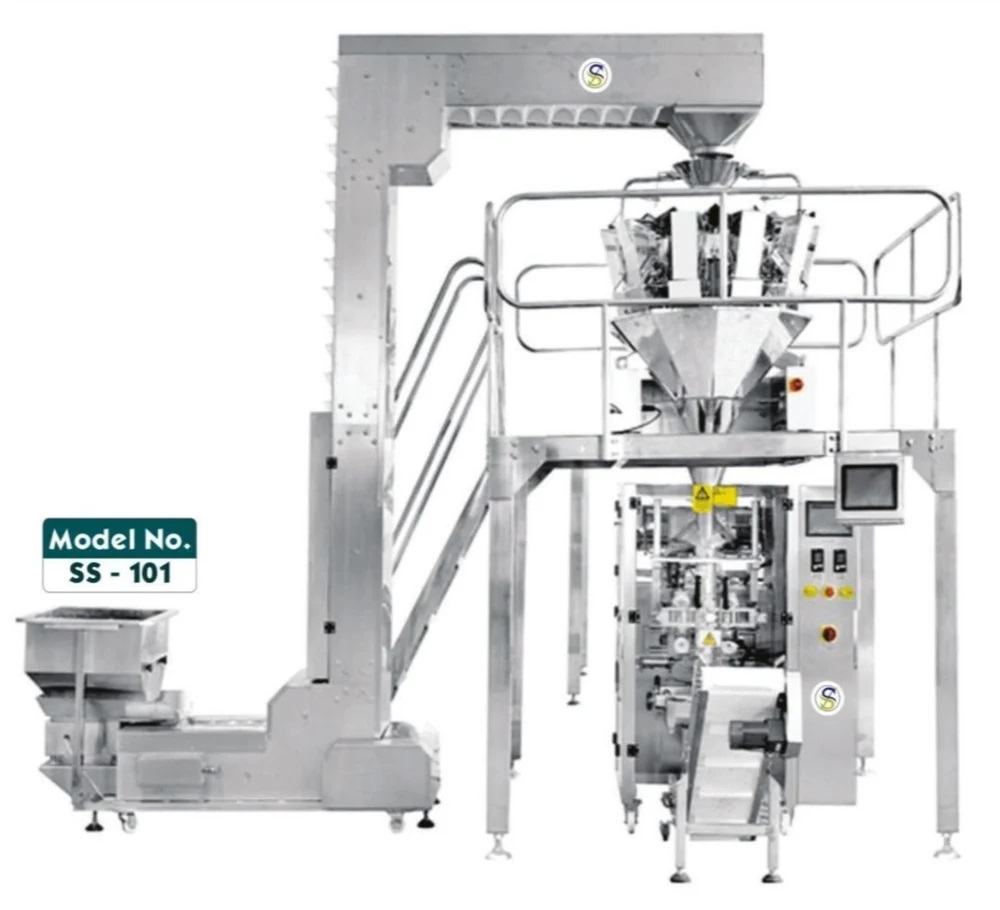 | Multihead Head Packing Machine Multi Head 14 Head Packing Machine Manufacturer & Supplier in Indore | PS Packaging Price: Get Best Price / Request a Quote MOQ: 1 Unit The Multi Head 14 Head Packing Machine from PS... View product → |
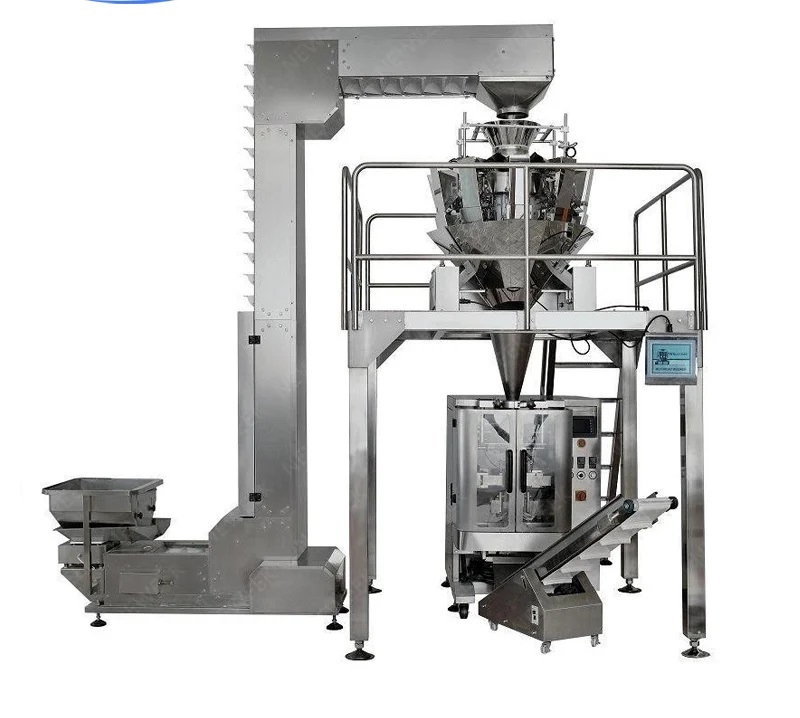 | Multihead Head Packing Machine Multi Head 10 Head Packing Machine Manufacturer & Supplier in Indore | PS Packaging Price: Get Best Price / Request a Quote MOQ: 1 Unit The Multi Head 10 Head Packing Machine from PS... View product → |
Frequently asked questions
What do ten heads and fourteen heads mean in a chips packing machine?
They indicate the number of independent weigh hoppers and load-cell channels. They do not specify bags per cycle or the number of VFFS lanes.
Which specifications should you compare before choosing a multi-head packing machine?
Compare target pack weights, weighing accuracy, cycle rate, usable output, bag dimensions, film width, sealing method, power, compressed-air demand, and machine footprint.
How do potato chips affect weighing accuracy and real snack output?
Chips are fragile and irregular, so product breakage, bridging, seasoning dust, hopper settings, and target weight affect accuracy and saleable output. Test your actual product rather than relying on an empty-machine cycle claim.
What should a Nagpur supplier acceptance test include?
Run your chips and film at the agreed pack weight and speed, then check giveaway, broken pieces, seal integrity, bag dimensions, coding, reject operation, changeover time, and continuous performance.
Related product
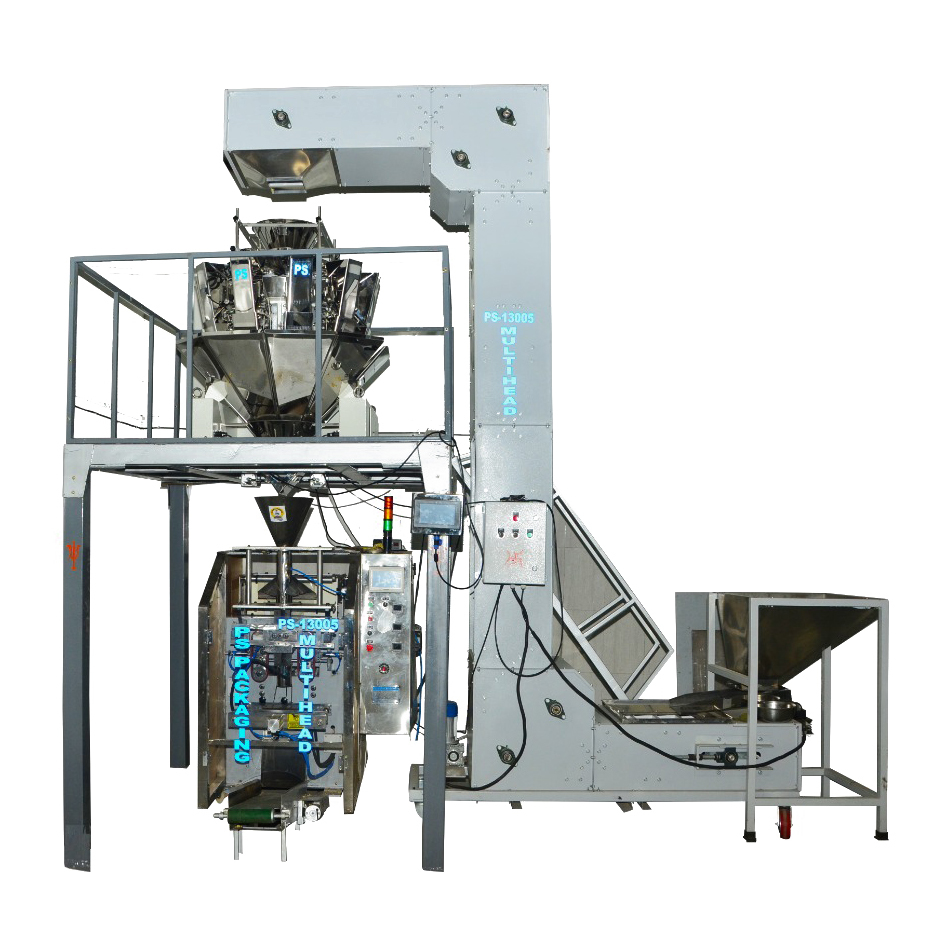 | Multihead Head Packing Machine Multihead Packing Machine The Multihead Packing Machine is a fully automatic, high-speed packaging solution designed for precise weighing, filling,... View product → |