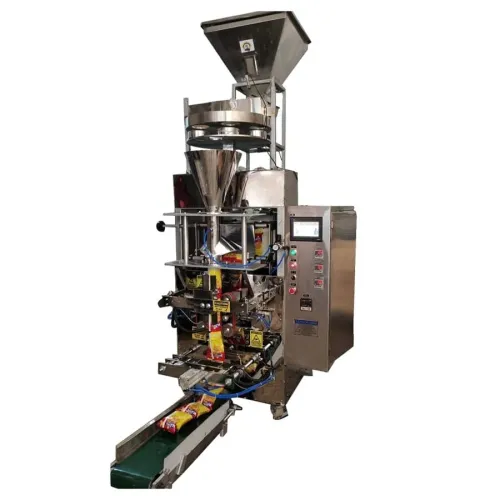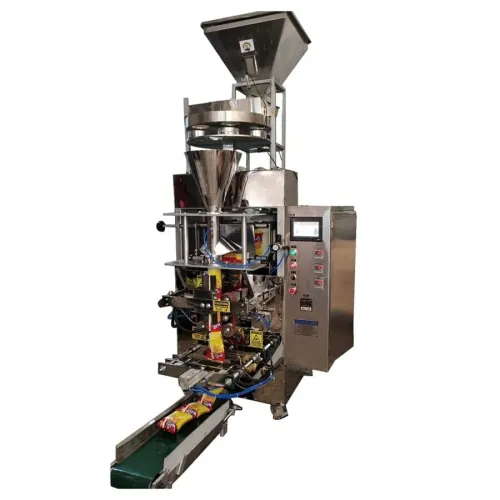

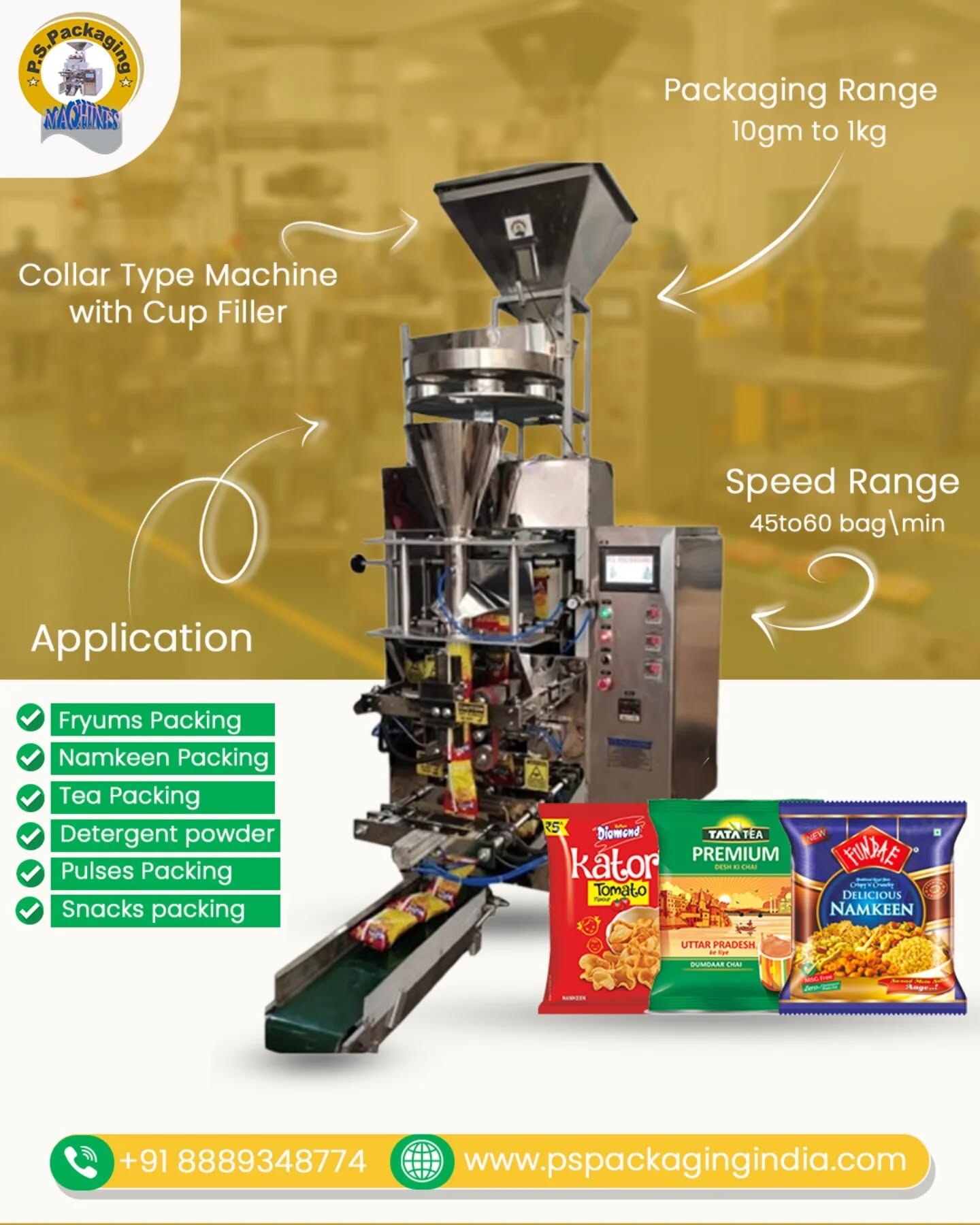
Patna besan mills need to balance pack-size changes, powder-flow problems, weighing control and production speed before choosing a packing system. By the end, you will know when a single-head machine suits your output, how to test its weight and sealing performance, and which operating and service details to demand from a supplier.
Key takeaways
- Choose single-head packing for 100 g to 5 kg intermittent besan batches.
- Verify net weight with calibrated test weights before approving production.
- Specify dust extraction, seal-jaw access and food-contact construction.
- Demand changeover instructions for besan, spices and other powdered products.
Why a Single Head Machine Fits Mills with Multiple Besan Pack Sizes
A single-head system suits a mill packing 100 g, 500 g, 1 kg and 5 kg besan when moderate or intermittent batches matter more than continuous high-volume output. You can change the recipe, target weight and film roll between runs without dedicating several weighing heads to one product.
| Option | Best fit | Main trade-off |
|---|---|---|
| Manual weighing and sealing | Very small or irregular batches | Highest labour demand and slower, less consistent output |
| Single-head weighing | Multiple pack sizes and changing recipes | One weighing point limits throughput |
| Auger filler | Continuous powder production with stable settings | Density changes can shift weight unless recalibrated |
| Multihead machine | High-volume, long runs of one or few sizes | Higher cost and more complex changeovers |
A single-head besan packing machine in Patna can replace repetitive weighing and sealing while still requiring an operator to load besan, inspect packs, pack cartons and separate rejects. An FFS setup reduces pouch handling, but film alignment, roll changes and cleaning remain part of the work.
Choose a single head besan packing machine in Patna only after calculating complete cycles: weighing, filling, pouch formation, sealing, cutting, discharge and operator intervention. Request planned packs per minute at every size, not the filler’s headline speed.
The single weighing point becomes a bottleneck for continuous output, and stopping it removes the system’s only weighing path.
How Besan Is Weighed, Filled and Checked for Legal Quantity
A gravimetric weigh hopper is usually the best choice for besan because it measures mass rather than assuming a fixed volume. A single-head besan packing machine in Patna still needs stable density, repeatable feeding, load-cell calibration and vibration isolation; the weighing head alone does not guarantee accuracy.
| Method | How it works | Besan-related risk |
|---|---|---|
| Weigh hopper | Fills a hopper to the target mass, then discharges it | Variable density changes volume, while retained air, bridging or a touching chute can interrupt feeding |
| Volumetric cup | Releases a fixed volume | Compacted flour, retained air and density changes create underweight or overweight packs |
| Auger or screw filler | Meters flour by screw rotation | Bridging and rat-holing cause irregular flow; density changes alter mass per revolution |
Use this gravimetric sequence:
- Zero the load cell.
- Feed rapidly for most of the target weight.
- Switch to slow dribble feed.
- Stop at the target and discharge into the pouch.
Verify the result with traceable test weights, a shift-start zero check, and another zero check after cleaning. Weigh filled-pouch samples on an independent calibrated scale; investigate buildup, vibration or an unstable platform before adjusting settings. Record mean weight, standard deviation, underweight percentage and overweight percentage in the trial report.
For a 1 kg declaration, the commonly cited maximum permissible error is 15 g under the Legal Metrology (Packaged Commodities) Rules. Verify the current rule and set tighter internal limits.
What the Operator Does in Each Cycle and What Output to Expect
Each cycle starts with loading screened besan into the hopper and checking that the agitator or feed screw moves flour evenly. The operator confirms the target weight, then places a premade pouch or allows the FFS machine to form one before filling, sealing and cutting the pack.
- Load screened besan and watch for bridging, rat-holing or an empty hopper.
- Confirm the programmed target weight and check the displayed weighing result.
- Place the pouch, or check film tracking and pouch formation on an FFS machine.
- Fill the pouch, seal it, cut it and remove the finished pack.
- Inspect the seal, shape, print position and visible powder contamination.
- Weigh sample packs independently and segregate underweight, overweight, damaged or leaking packs.
FFS reduces manual pouch handling, but it does not remove the operator. Someone must replenish besan and film, align the roll, adjust settings, inspect packs, clear rejected units and clean product-contact areas. One operator can run the cycle when material handling and case packing are close by.
A second person helps when loading must remain continuous, quality checks need to happen during production or cartons must be packed at the same time.
Do not accept a headline speed for a besan packing machine in Patna. Require verified packs per minute at 100 g, 500 g, 1 kg and 5 kg using the actual laminate. Hopper refill time, flour flow, pouch formation, seal dwell, cutting and operator intervention determine useful output.
A single head becomes the bottleneck when any one of those steps slows.
How to Control Besan Dust, Seals, Hygiene and Spice Changeovers
Powder control determines whether automation delivers clean, saleable pouches or simply produces dust faster. Besan can bridge above an outlet, rat-hole in the hopper, retain air and contaminate the film path, so verify enclosed filling, hopper geometry, agitator design, controlled auger feeding, dust extraction and anti-static measures rather than trusting the machine name.
1. Inspect the filling zone for separation between the powder outlet and sealing jaws. Besan on the film or jaws creates weak, leaking seals. Validate jaw temperature, dwell time, pressure and film compatibility using filled pouches, not empty film alone.
2. Check cleaning access before purchase. A packaging machine for food industry use needs accessible product-contact parts, cleanable welds, removable seals, no dead pockets and a documented dry-cleaning procedure. Record dismantling time and confirm that brushes, vacuum equipment and inspection points can reach the hopper, auger and discharge area.
3. Treat a packaging machine for spices as a cross-contamination risk. Require tool-less dismantling, cleanable augers and hoppers, film-collar access, odour and colour checks, allergen controls and line-clearance records before the next product enters the line.
4. Run trials with the exact laminate structure, sealant layer, coefficient of friction, roll width and print registration. Record dust deposits, tracking, seal strength, leakage and rejected packs after each changeover; a clean-looking empty-film test cannot prove filled-pouch performance.
What to Put in the Purchase Specification for a Patna Mill
Specify the complete operating envelope, not just the machine’s maximum speed. Require 100 g, 500 g, 1 kg and 5 kg capability, verified packs per minute at each weight, load-cell resolution, calibration method, and allowable routine variation.
Record hopper capacity, agitator, auger diameter and material, plus the dust-control arrangement that keeps besan away from the film path and sealing jaws.
List the exact laminate structure, sealant layer, coefficient of friction, roll width, roll-winding tolerance and print-registration requirement. State pneumatic pressure, air consumption, filtration and moisture limits; low pressure must be linked to the stated consequence, such as incomplete sealing, failed cutting or stopped gates.
A packaging machine for food industry use also needs accessible product-contact parts, removable seals, cleanable welds, no dead pockets and a documented dry-cleaning procedure.
Require acceptance testing with your own besan and laminate:
- Record mean weight, standard deviation, underweight and overweight percentages at every target weight.
- Measure seal strength, leakage, dust contamination, changeover time and rejected-pack rate.
- Test complete cycles: filling, pouch formation, sealing, cutting, discharge and operator intervention.
- Identify local sources and replacement intervals for the auger, seals, heater cartridges, thermocouples, sensors, knife, belts and forming-collar components.
| Supplier comparison | Require documented evidence | Reject or review if |
|---|---|---|
| Serviceability | Response time, remote diagnostics, operator training and preventive-maintenance schedule | Support depends on distant, undefined service |
| Trial performance | Site or factory results using planned sizes and materials | Results use empty film or different flour |
| Supplier shortlist | PS PACKAGING documents limits and demonstrates the planned packs | Claims rely only on headline speed |
Related product
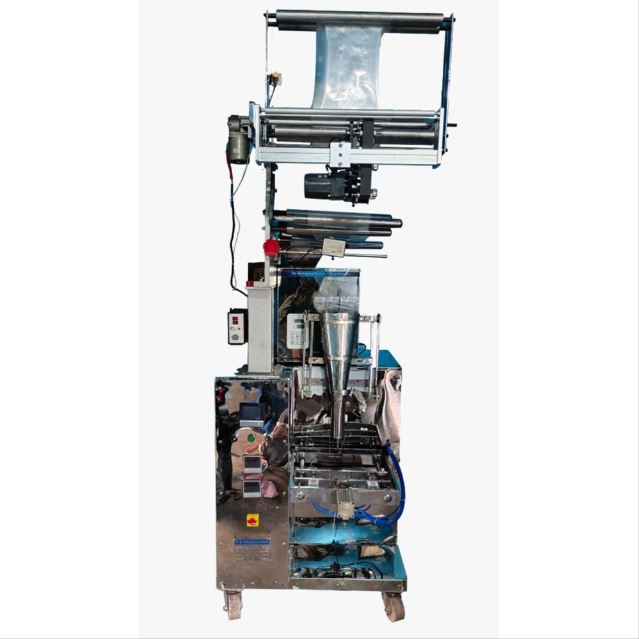 | Industrial Packaging Machine Manufacturer & Supplier in Indore | PS Packaging The Single Head Packing Machine from PS Packaging, Indore, Madhya Pradesh is a durable and efficient... View product → |
Frequently asked questions
Why does a single-head machine suit mills packing several besan sizes?
It lets you change the target weight, recipe settings and film roll between runs, making it practical for 100 g, 500 g, 1 kg and 5 kg batches with moderate or intermittent output.
How is besan weighed and checked for legal quantity?
The machine doses besan to a programmed target, drops it into the pouch and seals it. Check performance with calibrated test weights, record actual net weights and investigate underweight packs before release.
What does the operator do during each packing cycle?
The operator loads film and besan, selects the pack recipe, checks the first pouches, monitors the hopper and seals, removes finished packs, and records any stoppage or weight adjustment.
How can a mill control besan dust and protect seal quality?
Use enclosed product paths, dust extraction where needed, accessible cleaning points and a seal area kept free of powder. Inspect seal temperature, pressure, dwell time and jaw surfaces during production.
What should a Patna mill include in its purchase specification?
State each pack size, target speed, powder characteristics, film dimensions, required weighing accuracy, electrical supply, contact-part material, dust-control provisions, cleaning access, changeover time and operator training.