
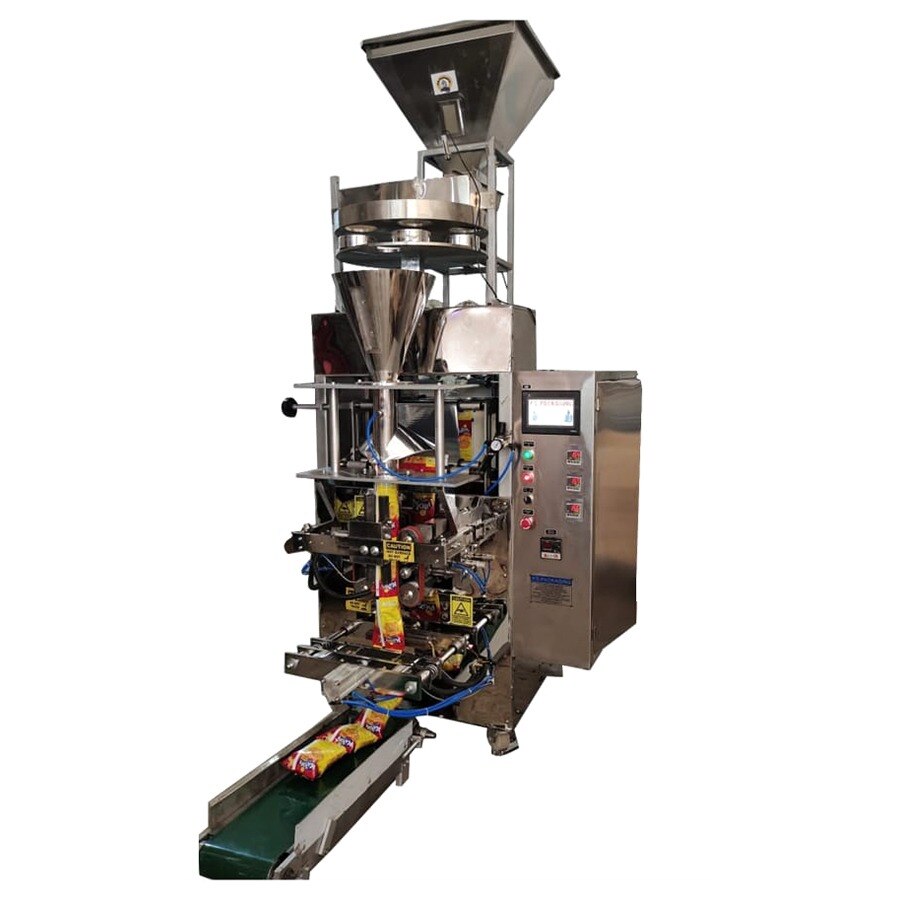
A useful specification must connect the popcorn, the dosing cup, the film and the finished bag; a headline such as “maximum speed” cannot do that. By the end, you will have the measurements, trial conditions and acceptance checks needed to compare a popcorn packing machine collar type cup filler and reject an unsuitable configuration.
Key takeaways
- Compare speeds using identical popcorn, pack weights, film and test duration.
- Specify cup volume, target weight, tolerance and adjustment method before ordering.
- Check popcorn moisture, oil, particle size and fines to prevent bridging.
- Make sealing, cutting, safety, utilities and acceptance tests part of the contract.
Which capacity specifications should you require?
A generic maximum speed does not define a popcorn packing machine collar type cup filler. Require numerical data for the product, pack, film, machine and utilities, then compare suppliers using the same test conditions.
| Operating mode | What the speed figure means | What to require |
|---|---|---|
| Intermittent | The machine pauses for dosing, sealing and cutting | Bags per minute at each target bag size, with dosing time and sealing dwell |
| Continuous | Film and product move through overlapping cycles | Bags per minute at each target bag size, with product flow and seal timing |
| Either mode | A headline rate may exclude losses | State whether operator loading, rejected bags and film changes are included |
Ask the supplier to state:
- Cup volume range, included cup set or cup-change range, target fill-weight range, dosing accuracy and permitted popcorn size, including large pieces and fines.
- Finished bag width and length, film construction, film roll width and maximum diameter, plus the tested product and actual bag dimensions.
- Bags per minute for every target size, tested with your popcorn, bag length, film, dosing time, sealing dwell and reject rate—not only the machine’s maximum rate.
- Machine footprint, net weight, electrical supply, compressed-air requirement, changeover method and parts supplied for each size.
- For a semi-automatic cup filler packing machine, identify whether the operator loads the hopper, starts each cycle, removes finished bags or checks rejects.
- For an automatic line, identify interfaces for the product feeder, film unwinder, date coder, reject device, discharge conveyor and case-packing equipment.
A popcorn packing machine specification is incomplete when it gives maximum cup volume but omits the tested product and bag dimensions.
How should you size and verify the dosing cups?
Size the cup from measured bulk density: required cup volume equals target mass divided by bulk density. A collar type cup filler packing machine measures volume, not mass, so the same cup delivers different grams as variety, expansion, moisture, seasoning, fines and compaction change.
| Cup arrangement | What it means | When it applies |
|---|---|---|
| Fixed-volume cups | One set volume with no routine adjustment | Stable product and one regular pack weight |
| Adjustable telescopic cups | Operator changes the cup volume | Several weights from similar popcorn |
| Interchangeable cups or cup sets | Swap defined volumes between runs | Frequent product or pack-size changes |
Confirm the estimate in a production trial after popcorn has passed through the hopper, feeder and discharge chute. Check for lodging, incomplete filling from large pieces, fines changing volume and compression inside the cup. Recalibrate after changing coating, seasoning, density or cup compression.
Calibrate the cup filler packing machine at normal speed, not by slowly hand-filling it. Run repeated samples, weigh each package, record every result, then calculate the average and range. Ask the supplier to state an allowable weight distribution rather than promising a gram result from nominal cup volume.
Compare individual packages and the sample average with your jurisdiction’s legal net-quantity rule, including average-quantity and deficiency limits and the required sampling method. OIML R 87 provides a useful international reference; local prepacked-food law controls release. A popcorn packing machine that passes a bench test but fails after conveying is not calibrated.
How does the collar form, seal and cut the popcorn bag?
A collar type cup filler packing machine unwinds film over the forming shoulder and wraps it around a forming tube.
The collar creates the pouch shape; the longitudinal sealing unit closes the back or fin seam; the dosing cup releases popcorn through the tube; transverse jaws make the bottom and top seals; a cutter separates each pillow bag; and the discharge conveyor removes the finished pack.
Confirm these dimensions before ordering film:
- Finished bag width
- Finished bag length
- Longitudinal and transverse seal width
- Required gusset or bag depth
- Forming-collar, forming-tube and longitudinal-seal dimensions
| Dimension | Specify | Why it matters |
|---|---|---|
| Bag width | Finished pouch width | Sets the former and tracking position |
| Bag length | Cut-off length | Sets jaw timing and product spacing |
| Seal width | Back, bottom and top seal widths | Determines usable fill area and seal contact |
| Film width | Supplier-confirmed roll width | Depends on former, tube and bag depth, not only popcorn weight |
Buy film only after confirming the collar, tube and sealing unit as one matched set. A popcorn packing machine can wrinkle seals or track poorly when the film width is chosen first.
Use film with a heat-sealable inner layer and sufficient puncture, tear, oxygen and moisture barrier performance for the intended shelf life. Oil, salt and fines trapped in either seal cause leaks, so commission the food packaging machine with filled product.
Record sealing temperature, pressure, dwell time and jaw alignment. Use ASTM F88/F88M to compare seal strength between settings or film constructions, then run a separate leak or package-integrity test. Higher temperature will not remove contamination; it can distort the film.
Which popcorn conditions prevent bridging and inconsistent fills?
Reliable flow requires free-flowing popcorn with controlled density, size and coating. Give the supplier the moisture level, kernel or popped-corn size distribution, expansion level, bulk-density range, breakage rate, seasoning adhesion and acceptable fines percentage.
| Condition | Main risk | Control |
|---|---|---|
| Free-flowing, low-adhesion popcorn | Stable cup loading | Use a collar type cup filler packing machine |
| Sticky or heavily coated popcorn | Wall buildup and incomplete discharge | Reduce coating or use a different dosing system |
| Wide size variation or excess fines | Segregation and changing weights | Set a size range and fines limit |
Large pieces can bridge or arch above the cup, while static makes fragments cling to hopper walls. A long piece can lodge in the discharge chute; overfilling contaminates the seal area, while underfilling indicates incomplete cup loading. Conveying can also separate large pieces from fines, changing each cycle’s weight.
Require a production trial with the actual recipe and normal hopper level. Test agitator or vibrator settings, feeder speed, cup dwell and discharge timing without crushing the popcorn. Check oil and seasoning buildup around the cups, chute and sealing guards.
Product-contact surfaces on a food packaging machine should avoid ledges, exposed threads and inaccessible cavities. Require removal or cleaning access for the hopper, cups, chute and guards, plus documented changeover time, compressed-air quality and consumption, and electrical supply. “Food grade” alone is not an operating specification. A trial exposes problems that a speed claim hides.
What should the final purchase and acceptance specification contain?
Put one signed trial specification beside every quotation. It must list every target bag weight and finished width, length, seal width and gusset; popcorn variety, coating, measured bulk-density range, product-size range and maximum fines percentage; film structure, roll width and maximum roll diameter.
- State acceptable average weight, individual-package limits, cup sizes supplied, adjustment method, changeover procedure, spare wear parts and cleaning instructions.
- State bags per minute beside the tested bag length, film, product, dosing time, seal dwell and permitted reject rate. Do not accept a headline maximum speed.
- Require food-contact declarations for product-contact parts, seals, lubricants and film. In the United States, identify materials covered by 21 CFR Part 177; in the European Union, request evidence for Regulation (EC) No. 1935/2004 and, for plastics, Regulation (EU) No. 10/2011.
| Acceptance item | Required comparison | Evidence to record |
|---|---|---|
| Weight | Repeated samples at normal speed | Average, range and each package result |
| Dimensions | Filled bags from every target size | Width, length, seal width and reject count |
| Seals | Same film and settings | ASTM F88/F88M comparison where relevant |
| Integrity | Separate leak or package-integrity test | Pass/fail result, not seal strength alone |
Assess PS PACKAGING against this identical checklist. The useful question is whether its popcorn packing machine collar type cup filler, or any collar type cup filler packing machine, proves weight, speed, seal and cleanability on your product—not whether a food packaging machine merely carries the right name.
Related products
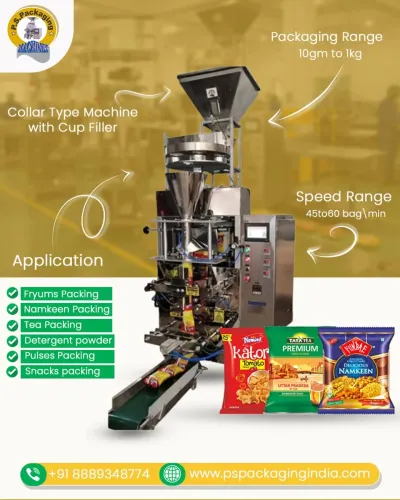
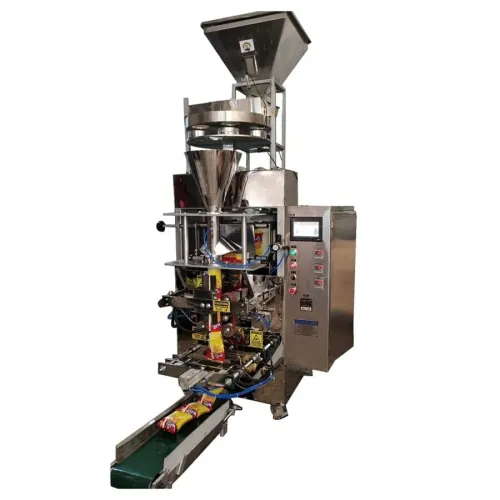
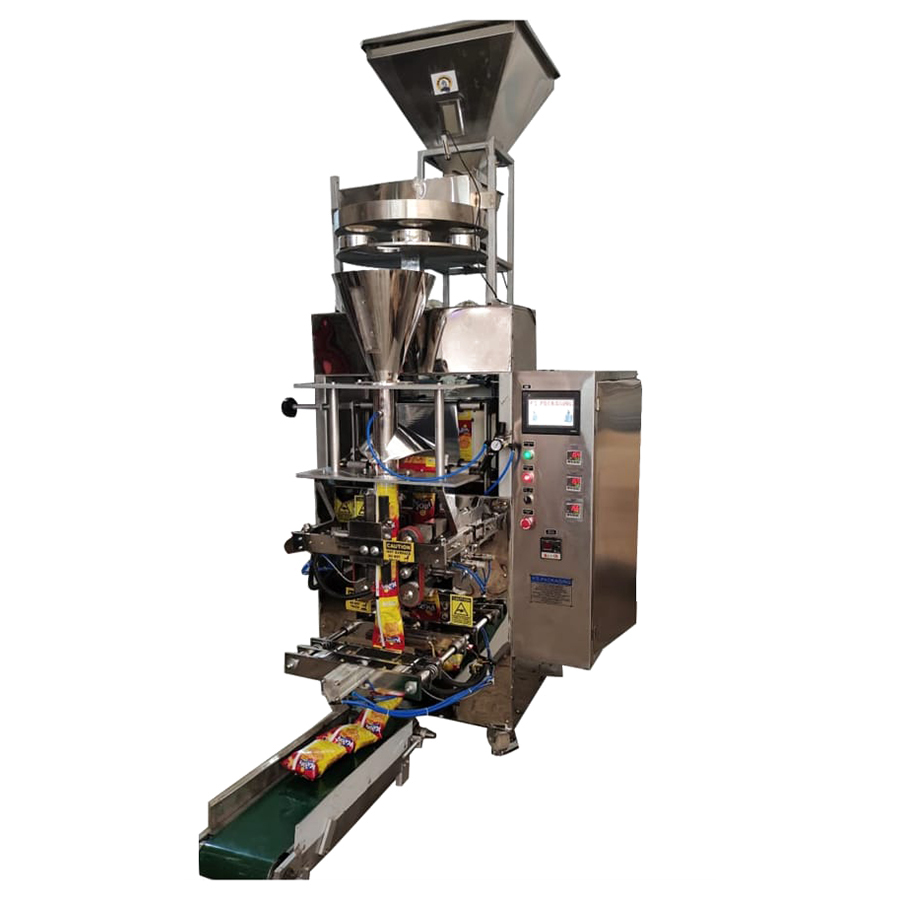 | Industrial Packaging Machine Collar Type Cup Filler Packing Machine The Collar Type Cup Filler Packing Machine is a robust and efficient packaging solution designed to deliver accurate filling and reliable sealing for... View product → |
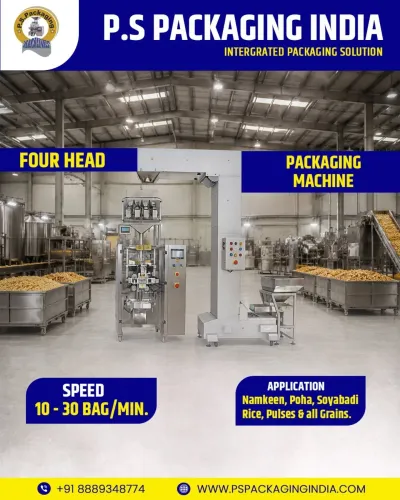
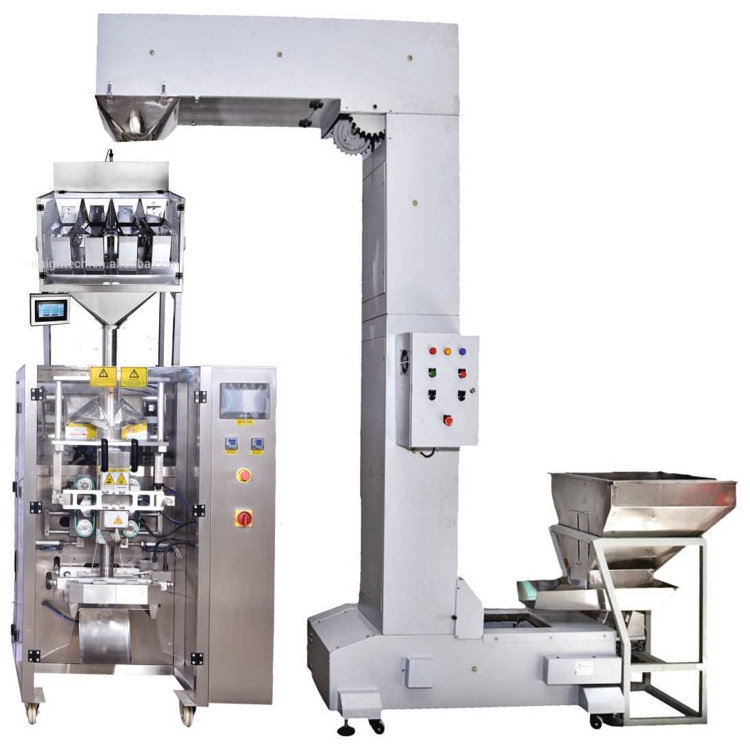 | 4 Head Packing Machine 4 Head Collar Type Packing Machine Manufacturer in Indore, India High-Speed Automatic 4 Head Collar Type Packing Machine by P.S. View product → |
Frequently asked questions
Which capacity specifications should you require for a popcorn packing machine?
Require target packs per minute, popcorn weight range, bag dimensions, accuracy tolerance, hopper capacity and rated operating hours under defined test conditions.
How should you size and verify the dosing cups?
Select cup volume from the popcorn bulk density and target weight, then verify actual weights across repeated fills at minimum and maximum settings.
How does a collar type cup filler form, seal and cut the popcorn bag?
The machine draws film around a forming collar, creates a longitudinal seal, makes a transverse seal below the filled portion, and cuts between bags.
Which popcorn conditions prevent bridging and inconsistent fills?
Control moisture, oil coating, kernel and flake size, fines, bulk density and temperature; remove buildup from the hopper, gates and dosing cups.
What should the final purchase and acceptance specification contain?
Document product limits, pack sizes, speed, accuracy, film requirements, sealing settings, utilities, safety features, included tooling and witnessed performance tests.
Related product
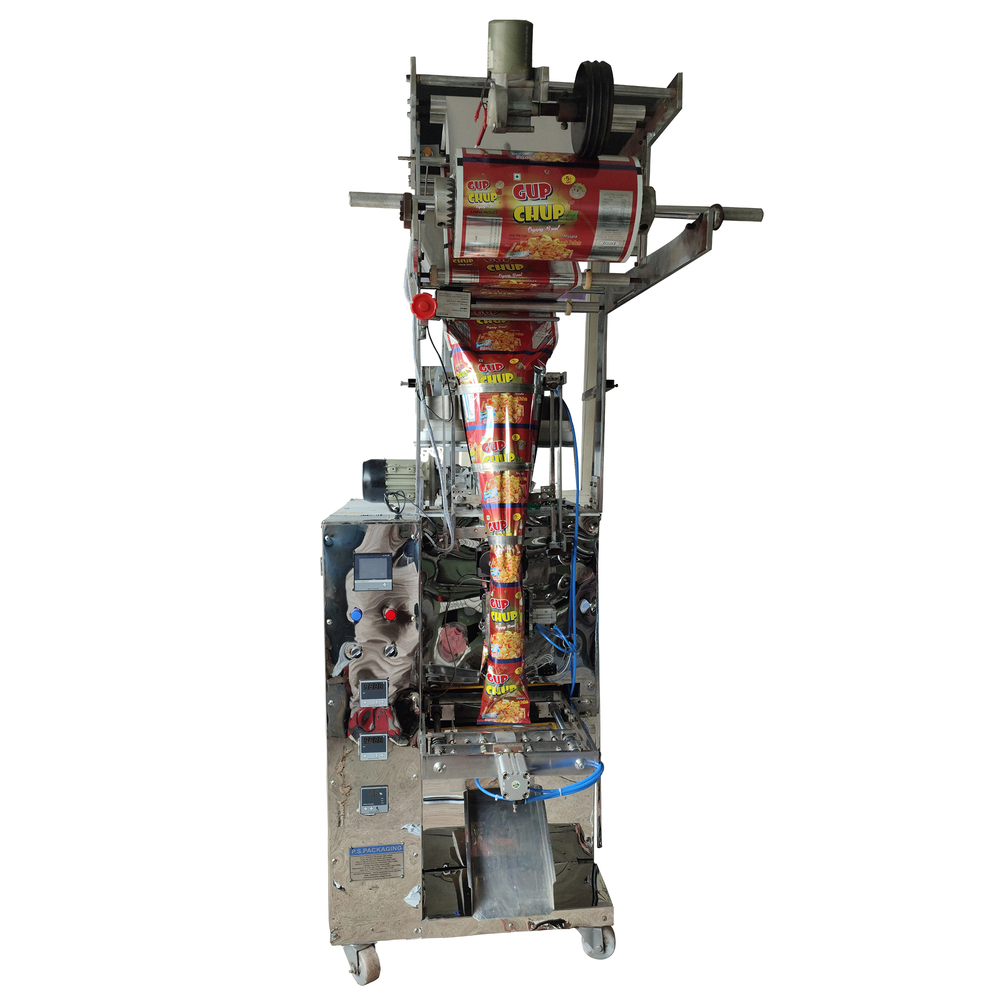 | Industrial Packaging Machine Pneumatic Cup Filler Packing Machine Manufacturer & Supplier in Indore | Patna | Nagpur -PS Packaging The Pnematic Cup Filler Packing Machine from PS Packaging, Indore, Madhya Pradesh is... View product → |